


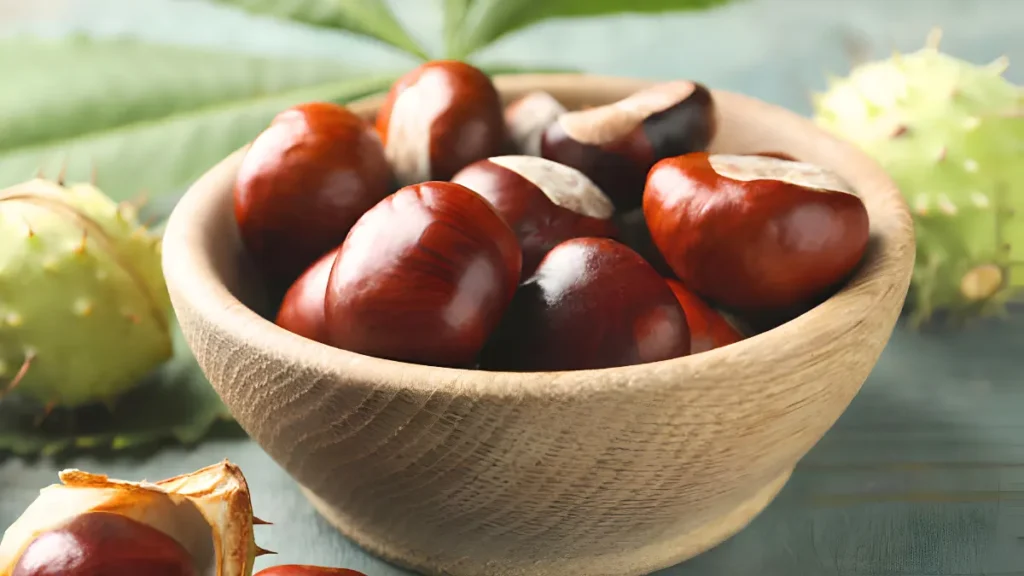
The stately horse chestnut tree, Aesculus hippocastanum, is indigenous to the Balkan Peninsula. For generations, this has been a wealth of benefits, valued for its medical qualities and revered for its beauty. This amazing plant still enthralls scholars and fans despite its modern uses in herbal supplements and its historical use in folk medicine. Let’s explore the plethora of advantages that horse chestnuts provide for people.
Horse chestnut benefits:
Properties that Reduce Inflammation
- Because it has a high flavonoid and saponin content, it has strong anti-inflammatory qualities. Together, these substances lessen inflammation, which makes horse chestnut extract an effective treatment for ailments like edema, arthritis, and joint discomfort.
The benefits of horse chestnuts for managing edema
- Fluid retention, often known as edema, can be difficult to treat. The diuretic qualities of its extract encourage the body to rid itself of surplus fluid, which helps to lessen edema. This makes it a useful home cure for people who have bloating or swollen limbs.
Blood health
- The beneficial effects of horse chestnut on circulatory health are among its most well-known advantages. Aescin, a substance found in these tree seeds, has been shown to strengthen blood vessels and enhance circulation. Because of this, it is a well-liked option for treating ailments like hemorrhoids, varicose veins, and chronic venous insufficiency.
Horse chestnut benefits for skin care
- This is a common ingredient in skincare treatments because of its astringent qualities. In addition to its anti-inflammatory and antioxidant qualities, this extract’s ability to tighten and tone the skin makes it a desirable ingredient in creams, lotions, and serums designed to reduce the visibility of fine lines and wrinkles and enhance the texture of the skin.
Antioxidant impacts
- Horse chestnut, which is high in antioxidants, aids in the body’s defense against oxidative stress and free radical damage. Consistently taking its supplements or applying its extracts topically can improve general health by preventing chronic illness and premature aging of cells.
Conclusion:
Horse chestnut is a very adaptable plant with numerous health advantages, ranging from supporting circulatory health to providing relief from inflammation and edema. The amazing benefits of this chestnut, whether taken orally, applied topically, or utilized in conventional herbal formulations, are still being discovered and valued. Let’s embrace the majestic tree’s holistic potential and harness its offerings for the body and mind’s well-being as we uncover nature’s treasure.
Certainly! If you’d like to learn more, please consider following our WhatsApp Channel, Facebook, Instagram, YouTube, Twitter, and Pinterest.
A frequently asked questions:
Q1: What is a horse chestnut?
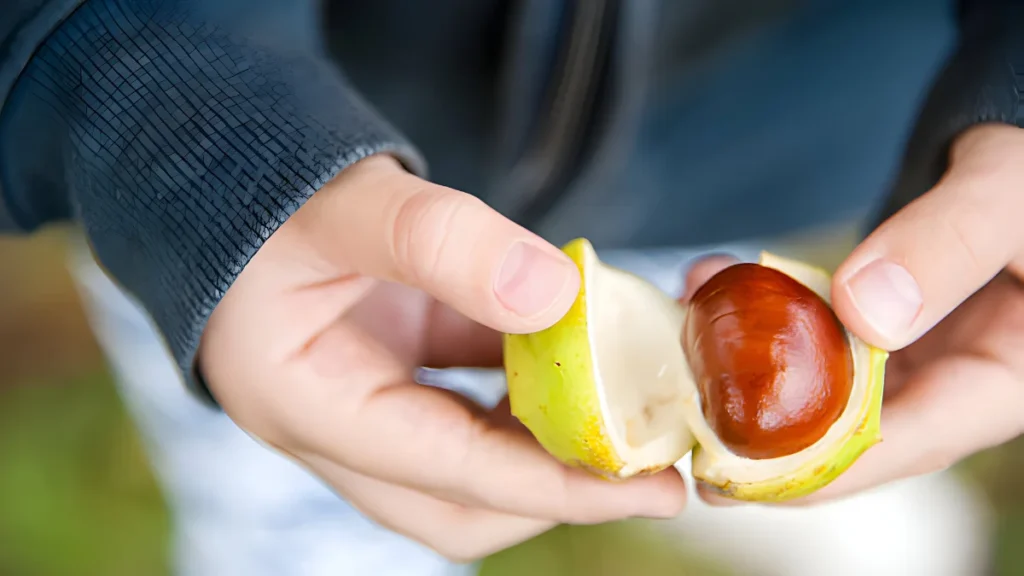
A1: The horse chestnut tree, a deciduous tree, produces huge, lustrous brown seeds coated in spiky green husks. These seeds are often used in traditional medicine to cure hemorrhoids and varicose veins.
Q2: What are the common side effects of horse chestnut?
A2: It frequently causes nausea, upset stomach, itching, and dizziness as adverse effects.
Q3: Can horse chestnut extract be used topically?
A3: Indeed, topical gels or creams containing this extract are also available. These are put directly onto the skin to alleviate varicose vein or hemorrhoidal irritation, edema, and itching.