


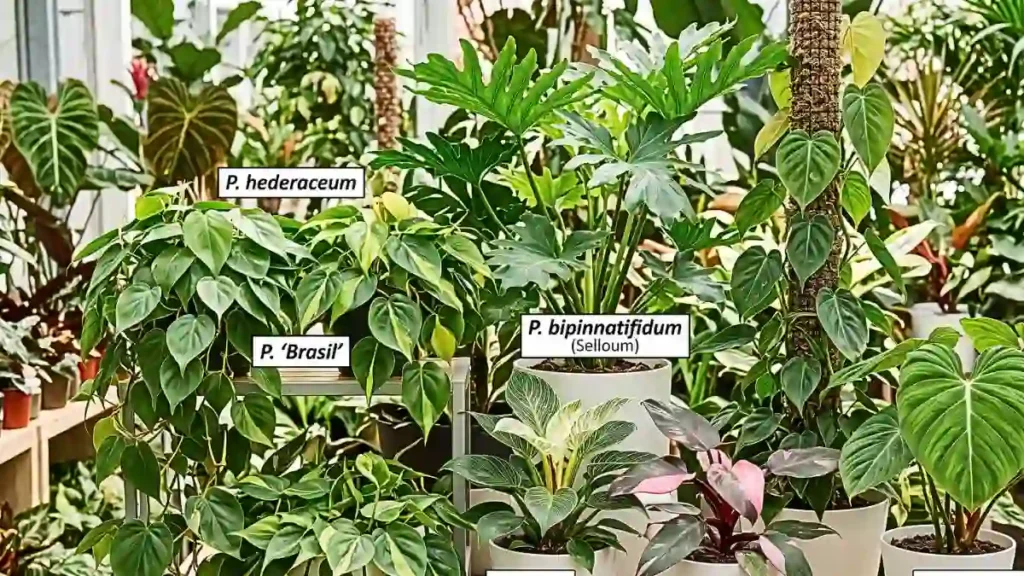
If you’ve ever scrolled through plant accounts and wondered why philodendrons are everywhere, there’s a simple reason: they’re gorgeous, forgiving, and endlessly varied. With leaf shapes ranging from delicate hearts to dramatic split fronds, and colors spanning deep burgundy to neon lime, the types of philodendrons available today can transform any room into a jungle-inspired retreat. Whether you’re a beginner looking for a low-maintenance houseplant or a collector chasing rare variegation, there’s a philodendron variety suited to your space and skill level.
This book explains the most common and special types of philodendrons, how to distinguish between them, and easy ways to make each one flourish.
What is a Philodendron?
Philodendron is a genus of tropical plants from the Araceae family that grow in Central and South American rainforests. The name, which refers to the number of species that climb trees in the wild, is derived from the Greek words “philo” (love) and “dendron” (tree). Philodendrons, of which there are more than 400 kinds, are highly valued for their glossy leaf, capacity to filter the air, and interior adaptability.
Main categories: Climbing vs. non-climbing philodendrons
It is helpful to know the two general growth patterns before delving into particular types.
Climbing (Vining) philodendrons
These types have long, trailing stems that use aerial roots to climb trees or other structures. They look beautiful when trained on a moss pole or cascading from hanging baskets indoors.
Upright (Self-Heading) philodendrons
Non-climbing varieties produce big, frequently striking leaves from a central rosette. These types make great statement plants and tend to grow larger over time.
Popular types of philodendrons
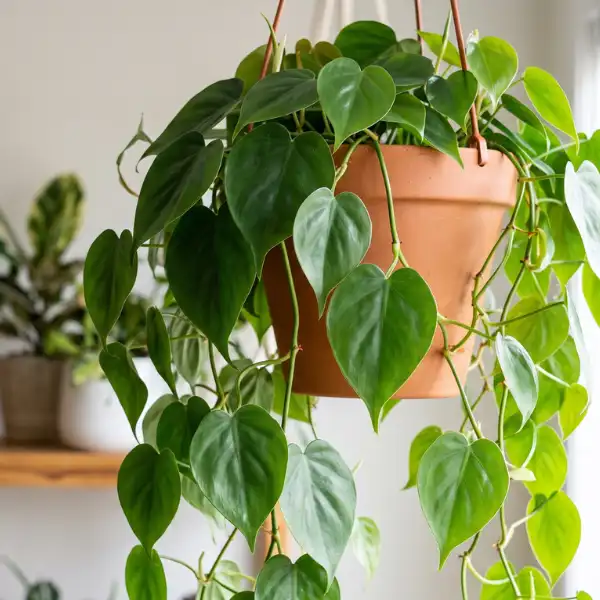
1. Heartleaf philodendron (Philodendron hederaceum)
The most popular type, distinguished by its trailing vines and tiny, heart-shaped green leaves. Perfect for beginners and low-light spaces.

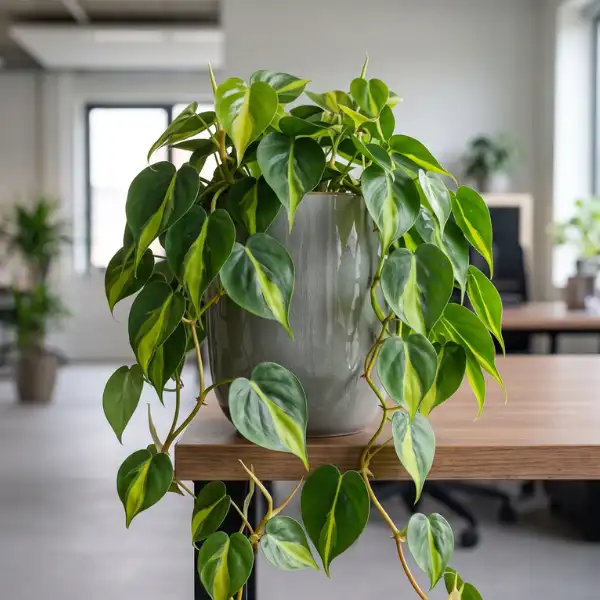
2. Philodendron brasil
A variegated cousin of the heartleaf, featuring lime-green and yellow streaks down the center of each leaf. Extremely easy to grow and propagate.
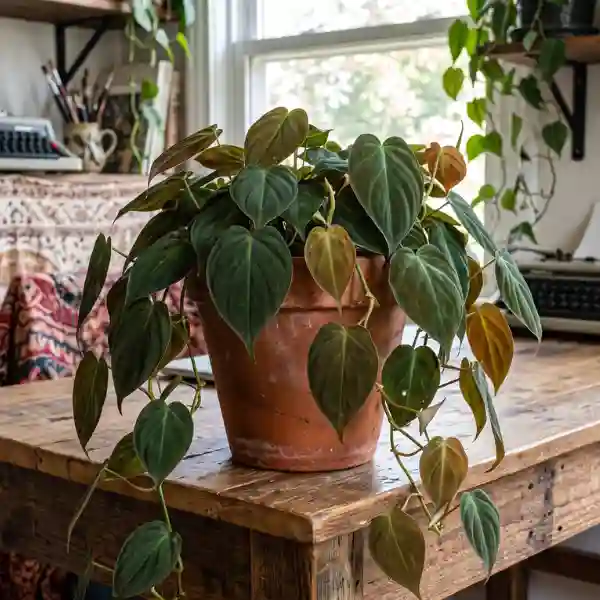
3. Philodendron micans
Loved for its velvety, iridescent bronze-green leaves that shimmer in the light. A favorite among collectors for its unique texture.
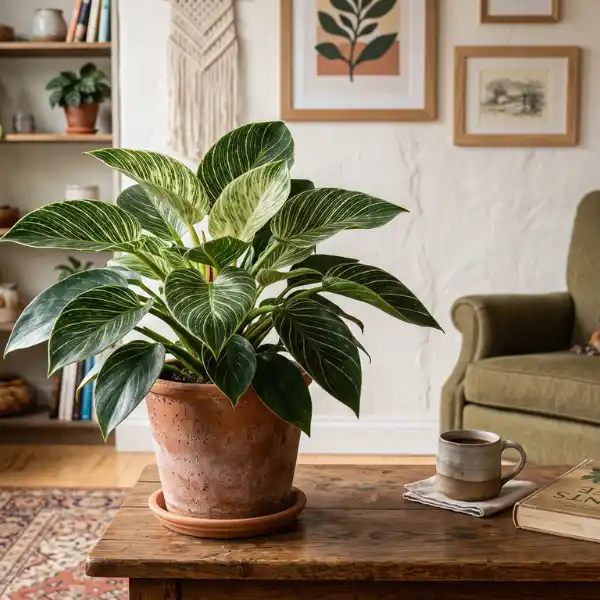
4. Philodendron birkin
Known for its sharp white pinstripes on dark green foliage, this upright species provides a modern, sophisticated touch to any collection.
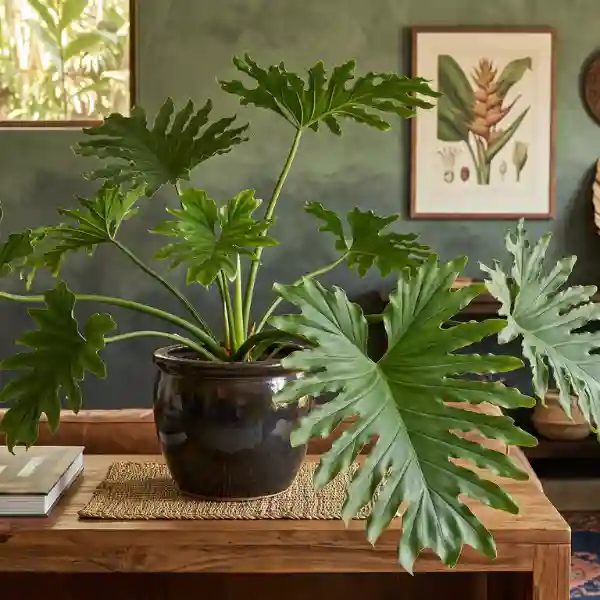
5. Philodendron selloum (Hope plant)
A large, non-climbing type with deeply lobed, feathery leaves. Ideal as a floor plant to fill empty corners with lush greenery.
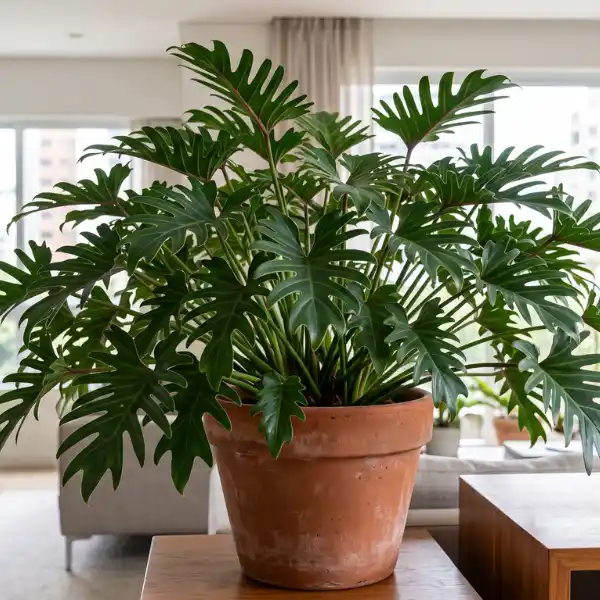
6. Philodendron xanadu
Glossy, deeply cut leaves that are compact and bushy. It is ideal for smaller spaces since, in contrast to Selloum, it remains more manageable in size.
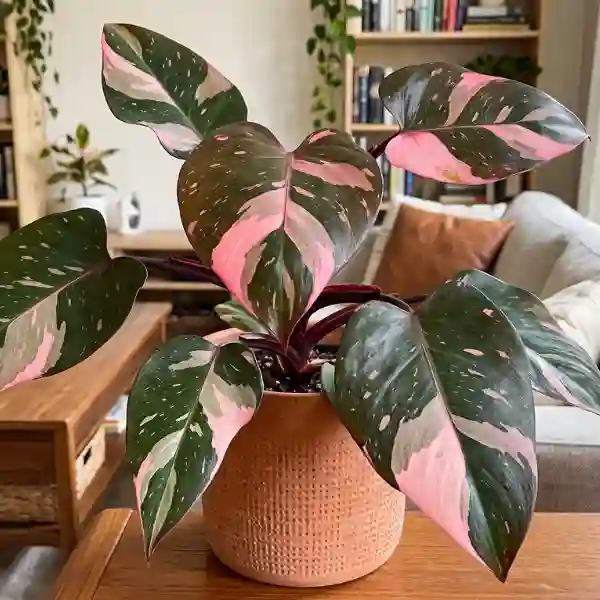
7. Philodendron pink princess
A highly sought-after variety with dark green-to-black leaves splashed with vivid pink variegation. Requires bright, indirect light to maintain its color.
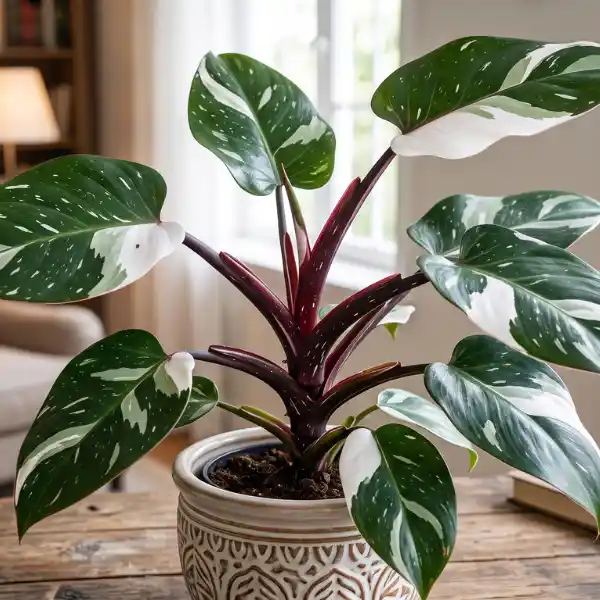
8. Philodendron white knight
Featuring near-black leaves with creamy white variegation and pink-tinged stems, this rare type is a favorite among serious collectors.
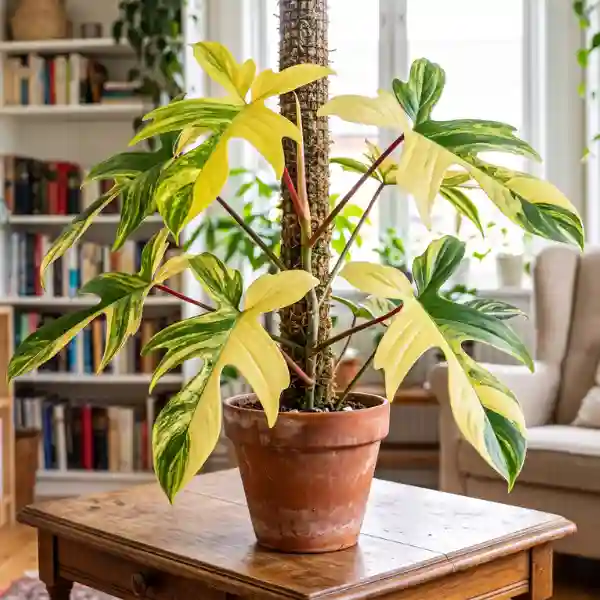
9. Philodendron florida beauty
A peculiar variegated climber with cream, green, and yellow mottled, multilobed leaves.
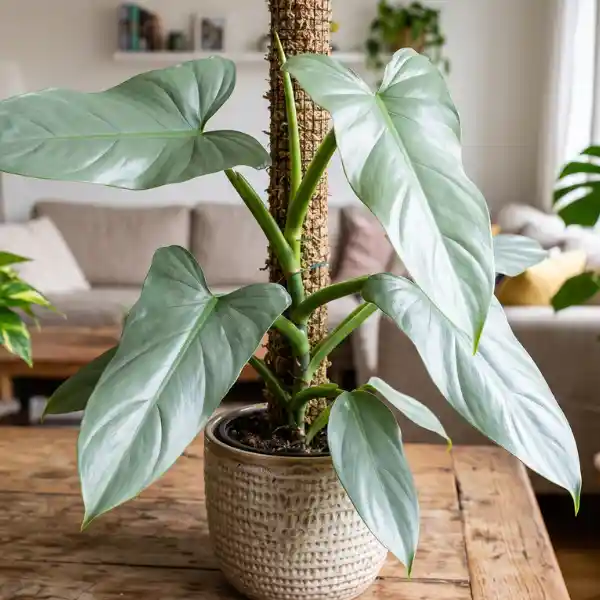
10. Philodendron silver sword
Recognized by its long, narrow, silvery-green leaves with a metallic sheen, giving it a sleek, architectural look.
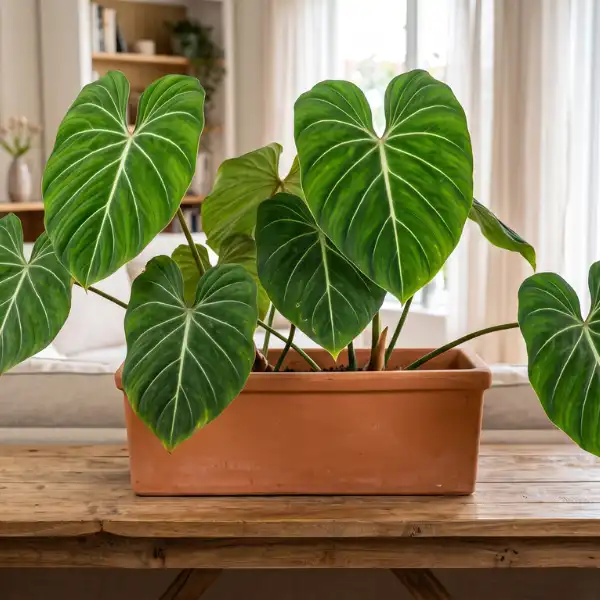
11. Philodendron gloriosum
Often cultivated for its striking foliage rather than height, this creeping cultivar has massive heart-shaped leaves with striking white veins against deep green.
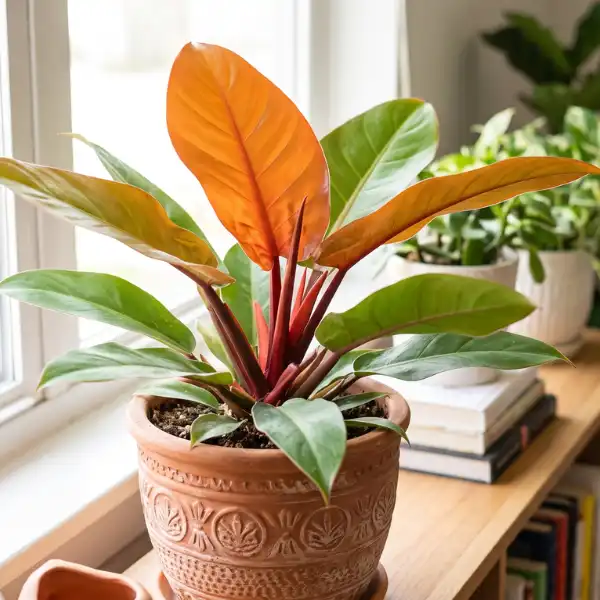
12. Philodendron prince of orange
Renowned for its vibrant orange young leaves that turn green as they mature, providing consistent seasonal colour variations.
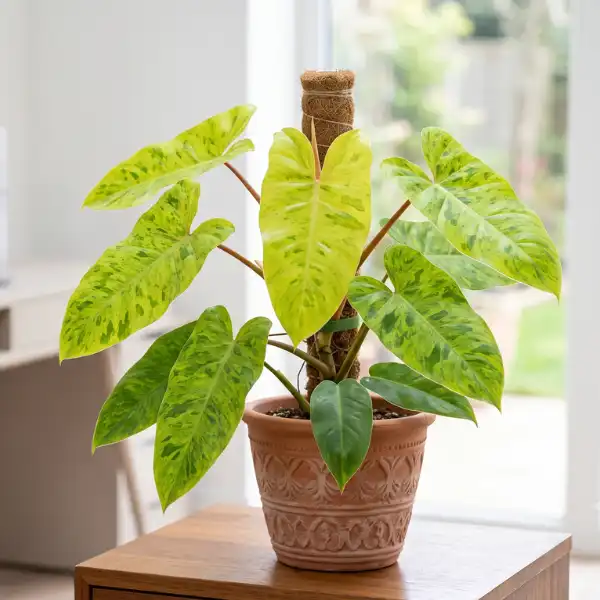
13. Philodendron painted lady
A vibrant climber with lime-yellow leaves marked by dark green speckles, thriving best in bright, indirect light.
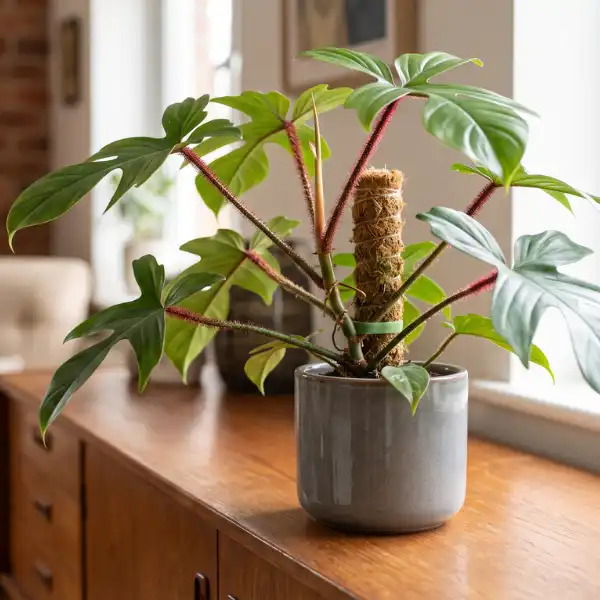
14. Philodendron squamiferum
Distinctive for its fuzzy, red hair-like stems and deeply lobed leaves, giving it a wild, textured appearance.
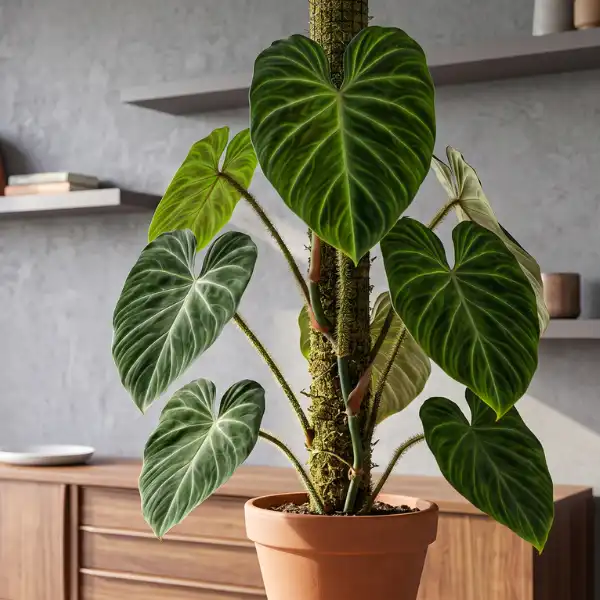
15. Philodendron verrucosum
A velvety-leaved variety with striking silver veining against dark green, popular for its rainforest-like elegance.
How to choose the right philodendron for your home
- Low light spaces: Heartleaf or Brasil philodendrons tolerate dimmer conditions well.
- Statement floor plants: Selloum or Xanadu bring bold, sculptural foliage.
- Collectors seeking rarity: Pink Princess, White Knight, or Gloriosum offer striking variegation.
- Hanging baskets: Micans or Florida Beauty cascade beautifully.
Matching the plant’s natural growth habit to your available space ensures healthier growth and less maintenance stress.
General care tips for philodendrons
- Light: Bright, indirect light works best for most varieties; variegated types need more light to maintain their color patterns.
- Watering: Allow the top inch of soil to dry out between waterings to prevent root rot.
- Humidity: Most philodendrons thrive in 50–60% humidity, mimicking their tropical origin.
- Soil: A well-draining, chunky aroid mix with perlite or orchid bark works best.
- Support: Climbing varieties benefit from a moss pole or trellis to encourage larger, mature leaves.
Conclusion:
With so many different types of philodendrons to pick from, there’s something for everyone, whether you want a trailing vine for your bookshelf or a dramatic, architectural focal point for your living room. Begin with a simple variety like Heartleaf or Brasil, then gradually build your collection with rarer finds like Pink Princess or Gloriosum as your confidence increases.
Certainly! If you’d like to learn more, please consider following our WhatsApp Channel, Facebook, Instagram, YouTube, Twitter, and Pinterest.
Frequently asked questions about types of philodendrons
Q1: What are the rarest types of philodendrons?
A1: Varieties like Philodendron White Knight and Spiritus Sancti are considered among the rarest due to limited availability and slow propagation.
Q2: Are philodendrons safe for pets?
A2: No philodendron is not a pet friendly . Most philodendron varieties contain calcium oxalate crystals, which are toxic to cats and dogs if ingested.
Q3: How can I tell a philodendron from a pothos?
A3: Philodendron leaves typically have a heart-shaped base with a smoother texture, while pothos leaves are thicker and often have a waxy, less defined petiole sheath called a cataphyll.
Q4: How fast do philodendrons grow?
A4: Growth rate varies by type, but most philodendrons are considered fast growers under the right light and humidity conditions, often producing a new leaf every few weeks.
Q5: Can philodendrons grow in water?
A5: Yes, many climbing varieties like Heartleaf and Brasil can grow indefinitely in water, making them popular for low-maintenance propagation displays.