


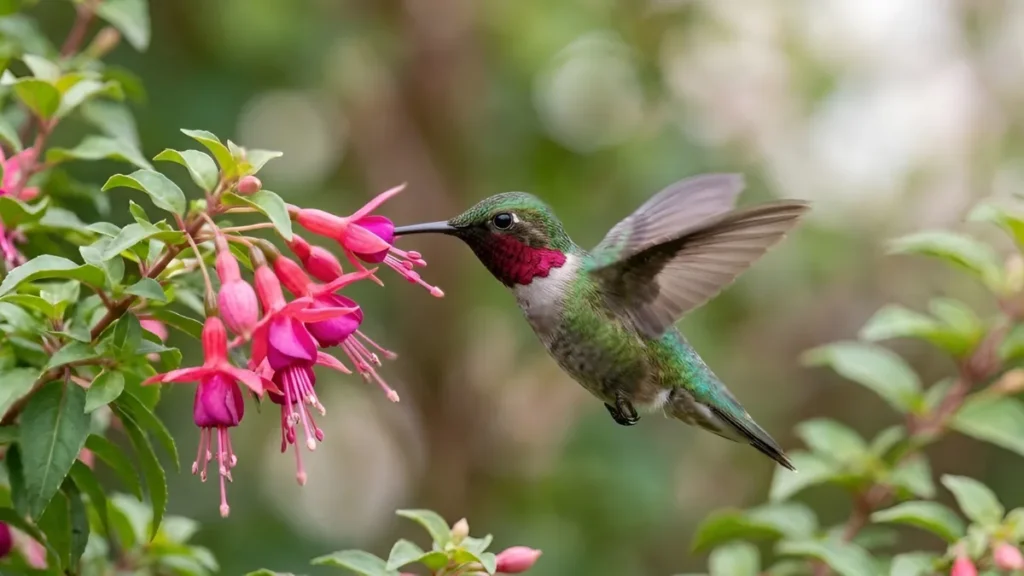
Few garden moments are more wonderful than seeing a hummingbird hover inches above a flower, its wings beating 50 times per second in an iridescent flurry of green and ruby. These remarkable birds—the world’s tiniest and most beloved—are also surprisingly easy to attract if you know what they want. The proper plants, a clean feeder, and a friendly environment are all you need to turn your garden into a hummingbird refuge. This comprehensive handbook provides everything you need to attract hummingbirds organically and reliably throughout the year.
Why attracting hummingbirds transforms your garden
Hummingbirds are not only attractive, but also beneficial to the environment. As they dine on nectar, they transport pollen between flowers with remarkable efficiency, pollinating plants that rely nearly entirely on their visits. A garden that attract hummingbirds benefits from this free pollination service across every flowering plant in the space. Planning a garden around the requirements of these birds has the potential to be truly transformational. Hummingbird-friendly plants, such as salvias, trumpet vines, bee balm, and penstemons, are also some of the most attractive and wildlife-rich plants available, resulting in a visually stunning landscape that is alive with activity.
6 things hummingbirds need from your garden
| Nectar-rich flowers | Tubular red, orange, and pink blooms that can hover to access |
| Clean feeders | Supplemental nectar, especially during migration and early spring |
| Fresh water | A misting fountain or shallow birdbath for drinking and bathing |
| Perching spots | Thin, exposed branches near feeding areas for resting between visits |
| Nesting habitat | Sheltered trees and shrubs with soft plant material for tiny nests |
| No pesticides | Hummingbirds also eat insects; pesticide-free gardens support both needs |
Best plants to attract hummingbirds — the essential planting list
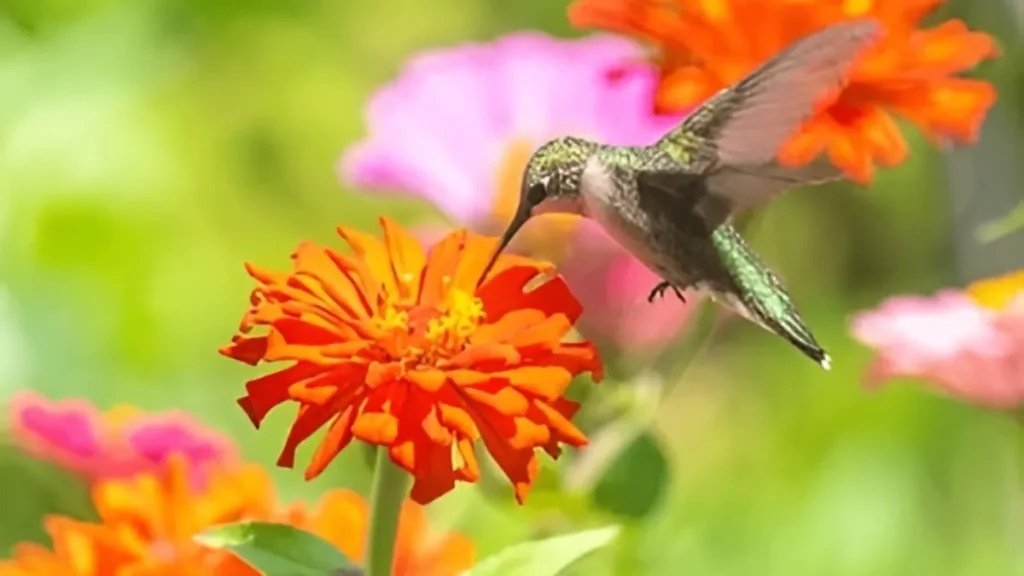
Plants are the foundation of every hummingbird garden. Hummingbirds are drawn to tubular blossoms because their long, thin bills are well suited to access deep nectar reserves that other pollinators cannot reach. They have a strong predilection for red, orange, and pink flowers, but will visit any nectar-rich tubular bloom. Plant in thick groups rather than single individuals; a mass of red salvias is visible from a far greater distance than a solo plant.
Flowers that attract hummingbirds (perennials)
- Bee balm (Monarda) — Hardy perennial. · June–August · Full sunlight.
Hummingbirds can’t get enough of the shaggy, brilliant red and pink flower heads. Spreads steadily, forming enormous clusters. Also attracts butterflies and bumblebees.
- Salvia (ornamental sage) — Perennial · May–November · Full sunlight.
One of the longest-lasting hummingbird plants available. Red varieties, such as ‘Hot Lips’ and Salvia microphylla, are tempting. Hardy salvias can consistently survive the winter outdoors.
- Penstemon—- Perennial · June-September. · Full sunlight.
Tubular bell-shaped blossoms in red, pink, and purple – ideal for hummingbird bills. ‘Husker Red’ and ‘Garnet’ are excellent choices for attracting hummingbirds.
- Crocosmia ‘Lucifer’— Perennial · July–August · Full sunlight.
Arching stems of bright scarlet-orange tubular blooms entice hummingbirds with their color and form combination. Spreads freely, forming spectacular clusters.
Best flowers to attract hummingbirds (annuals and vines)
- Trumpet vine (Campsis radicans)– Hardy climber. · July–September · Full sunlight.
The most successful plant for attracting hummingbirds is one that produces an abundance of brilliant orange-red trumpet blooms. Vigorous climber in need of substantial assistance.
- Fuchsia— Summer tender for annual and patio plants. · Part shade.
Pendant red and purple flowers hang like diamonds; the drop form is ideal for hovering hummingbirds. Excellent for hanging baskets near a dining area.
- Agastache (hyssop)– Perennial · July–September · Full sunlight.
Dense spikes of small tubular blooms in orange, pink, and red—incredibly nectar-rich. ‘Kudos Coral’ and ‘Apache Sunset’ are excellent hummingbird variations.
- Cardinal flower (Lobelia cardinalis)– Perennial · July-September · Part shade.
Brilliant scarlet flower spikes—native to North America and one of the most popular hummingbird plants. Tolerates damp conditions and partial shade well.
Hummingbird feeders — choosing, placing and maintaining them correctly
- Choose a feeder with red highlights; do not add red food coloring to nectar. Look for versions that include built-in bee and wasp protection, large feeding apertures for hovering access, and simple disassembly for complete cleaning.
- Hang feeders near flowers and in front of windows for the best viewing experience. Position in moderate shade; this reduces nectar fermentation. To avoid territorial disputes between hummingbirds, keep feeders at least 10 feet apart.
- Clean feeders every 2-3 days in warm weather and every 4-5 days in cold weather. Fermented or mouldy nectar is toxic to hummingbirds. Use hot water and a bottle brush, not soap, which creates a residue that hummingbirds can detect.
- Mix 1 part white granulated sugar with 4 parts water. Boil briefly to dissolve and kill microorganisms. Cool fully before filling. Never use honey, brown sugar, artificial sweeteners, or red color since they are all hazardous to hummingbirds.
Conclusion
Attract hummingbirds to your garden is one of the most enjoyable things a gardener can do, and it’s more easier than most people think. Plant an abundance of red and orange tubular flowers, hang a clean feeder with fresh nectar, give perching areas and a misting water supply, and remove pesticides from your surroundings. Do those four things regularly, and hummingbirds will find you. Once they do, they will return season after season, delivering a burst of iridescent color, the subtle buzz of magnificent wings, and one of the most personal interactions with nature that any garden can provide.
Certainly! If you’d like to learn more, please consider following our WhatsApp Channel, Facebook, Instagram, YouTube, Twitter, and Pinterest.
Frequently asked questions about attract hummingbirds
Q1: What colours attract hummingbirds most?
A1: Hummingbirds are especially drawn to red, orange, and hot pink flowers, particularly tubular varieties in these colors. They are more attracted to red than any other hue because they have evolved to link it with high-reward nectar blooms in their natural environments. They can also perceive ultraviolet light that humans cannot, making some blooms more appealing to them than they are to us. While they will visit flowers of any hue if nectar is available, warm-colored tubular blooms provide the quickest and most consistent results.
Q2: What is the best plant to attract hummingbirds?
A2: Trumpet vine (Campsis radicans) is usually regarded as the most effective plant for attracting hummingbirds, since its vibrant orange-red tubular blossoms are produced in large quantities and are appealing to these birds. The best herbaceous possibilities include bee balm (Monarda), red salvia, and penstemon. The idea is to plant in huge masses rather than single examples; a mass of red salvia is visible to hummingbirds from hundreds of metres away, indicating a stable nectar source worth visiting.