


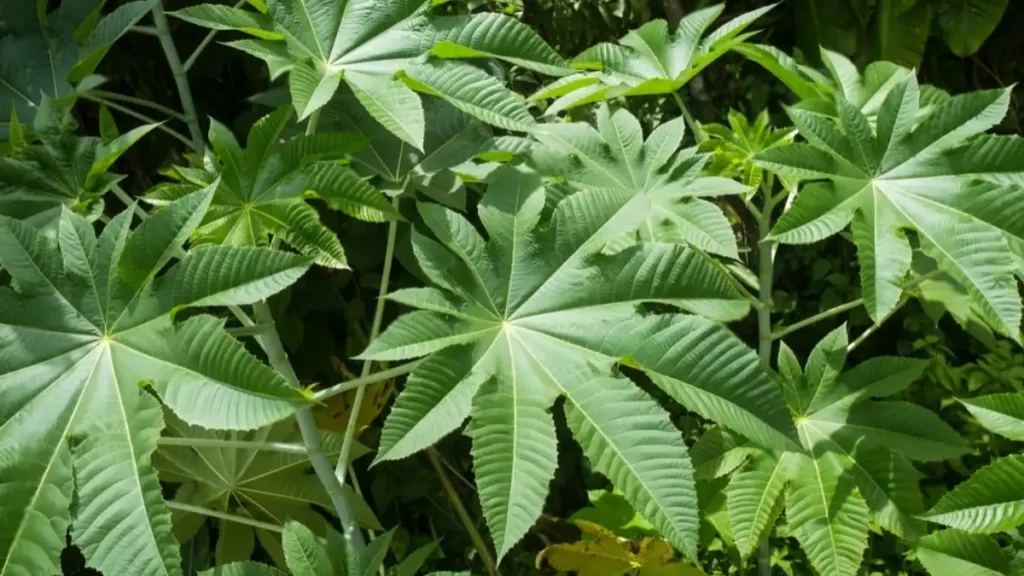
The Castor Bean Plant (Ricinus communis) is visually appealing with its huge tropical leaves and spiky seed pods, but it is also one of the most poisonous plants in America. This fast-growing plant, commonly planted for decorative purposes, has a terrible secret: ricin, one of the most dangerous natural compounds known to science.
The castor bean plant, which is commonly planted as an ornamental plant throughout the United States, contains one of the most deadly naturally occurring chemicals known to humans. Many gardeners grow it without considering the dangers it presents to children, pets, and even people.
Understanding this plant is critical for responsible gardening. Let’s look at why the castor bean plant is regarded America’s most dangerous garden plant and what you need know to remain safe.
What Is the Castor bean plant?
The castor bean plant is a blooming perennial that is often cultivated as an annual in the United States.
Basic plant details
| Botanical name | Ricinus communis |
| Family | Euphorbiaceae |
| Native to | Africa |
| Plant type | Perennial shrub (often grown as annual) |
| Height | 6–15 feet |
| Common in | Southern & Central United States |
| Uses | Ornamental gardening, industrial castor oil production |
Common names in the United States
- Castor Bean Plant
- Castor Oil Plant
- Palma Christi
Why the Castor bean plant is extremely toxic:
The plant is dangerous because its seeds contain ricin, a potent poison. Ricin is a very poisonous protein found in castor bean seeds. Even a little quantity can be lethal if consumed, especially if the seeds are eaten or crushed.
Ricin is a powerful toxin that inhibits protein synthesis in human cells. As protein manufacturing ceases, cell functioning degrades, leading in tissue and organ failure. This disturbance can result in serious health implications, such as internal bleeding, organ failure, and even death.
Which parts of the plant are toxic?
| Plant Part | Toxicity Level |
| Seeds (Beans) | Extremely toxic |
| Seed Pods | Very high |
| Leaves | Mild to moderate |
| Stems | Low |
| Roots | Low |
Castor bean plant toxicity in humans:
Both children and adults can be subject to dangers, but children are in much greater danger. Children’s innate curiosity may lead them to consume items such as seeds, although adults may miss the hazards connected with such plants, especially since they are frequently accessible in garden centers. There is no known antidote for ricin poisoning, thus rapid medical intervention is required; treatment focuses on providing supportive care.
Is the Castor bean plant dangerous to pets and livestock?
The castor bean plant is a serious menace to many animals, including dogs, cats, horses, and cows. Dogs may gnaw on seed pods, whilst cats may consume harmful chemicals when grooming. Horses and cattle may swallow falling seeds from the plant. Ingestion of these seeds or plant components can be lethal to these animals if treatment is not offered immediately.
Is it legal and safe to grow Castor bean plants in the U.S.?
While growing castor bean plants is permitted in most areas, this does not guarantee their safety. To maintain safe gardening techniques, adopt the following precautions: never grow castor beans near children’s play areas, remove seed pods before they develop, use gloves while handling the plant, and dispose of plant debris properly. If safety cannot be guaranteed, avoid growing castor bean plants totally.
Symptoms of castor bean poisoning:
Symptoms often appear 4 to 12 hours after exposure, with early indications including nausea, vomiting, stomach discomfort, and diarrhea.
Severe symptoms may include dehydration, low blood pressure, seizures, liver and kidney failure, and internal bleeding. Each of these signs suggests a serious health concern that needs quick medical treatment.
Safe alternatives to Castor bean plant:
Non-toxic decorative plants include Canna Lily, Banana Plant, Hibiscus, non-toxic Elephant Ear, and Sunflower. These plants provide brilliant foliage while avoiding the dangers associated with poisonous plants.
Castor Bean Plant vs Oleander:
| Feature | Castor Bean | Oleander |
| Main toxin | Ricin | Cardiac glycosides |
| Most toxic part | Seeds | Entire plant |
| Risk to pets | Extremely high | Extremely high |
| Smoke toxicity | No | Yes |
| Fatal dose | 1–2 seeds | 1 leaf |
Conclusion:
The castor bean plant appears dramatic and tropical, yet it is one of the most deadly garden plants in America. Its presence in residential gardens offers significant, frequently overlooked hazards.
Certainly! If you’d like to learn more, please consider following our WhatsApp Channel, Facebook, Instagram, YouTube, Twitter, and Pinterest.
Frequently asked questions:
Q1. Can birds eat castor beans?
A1. Birds are typically resistant, but falling seeds represent a concern to pets.
Q2. Is castor oil poisonous?
A2. No, commercial castor oil is safe since the ricin is removed during processing.
Q3. Are castor bean plants safe for home gardens?
A3. Not advised for households with children or pets.