


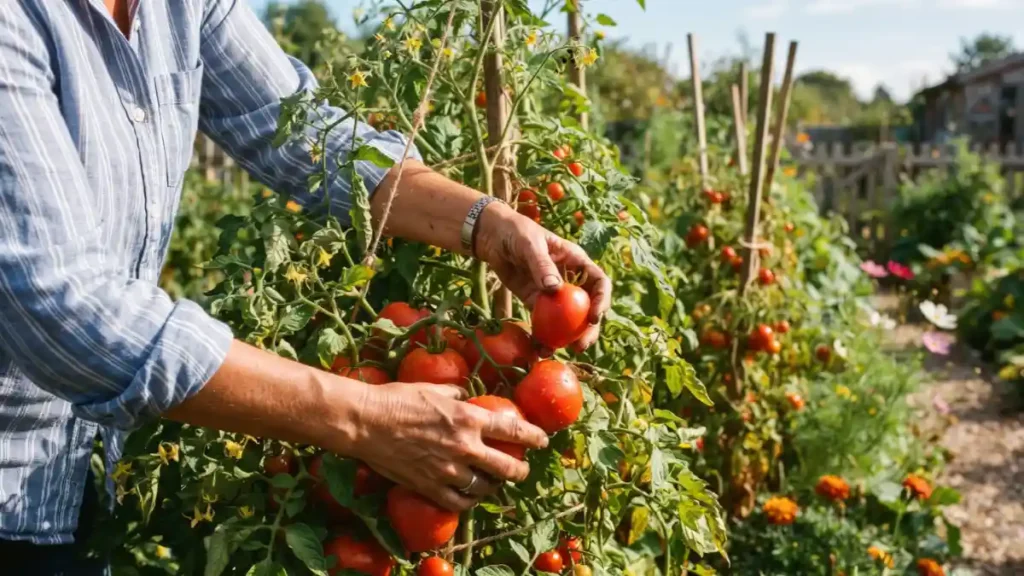
There is a moment every gardener knows well. You have watered, staked, pruned and waited for weeks, and now a cluster of glossy fruit hangs on the vine, looking almost ready. Pick too early and you get pale, mealy, flavorless tomatoes. Wait too long and you lose them to cracks, pests or rot. Knowing exactly how and when to harvest tomatoes is the difference between supermarket-style disappointment and sweet, juicy, sun-warmed fruit that tastes like summer.
The good news? Learning to harvest tomatoes is easy once you understand a few simple signals: color, firmness, timing, and weather. In this complete guide, you will learn when to harvest tomatoes, how to harvest tomatoes without damaging the plant, how to handle different types, what to do before the first frost, and how to store your crop so it stays delicious for days or even months.
Whether you grow two patio plants or a full backyard plot, this step-by-step guide will help you pick every tomato at its absolute best.
Why Knowing How to Harvest Tomatoes Properly Matters
Harvesting may appear to be the easiest part of gardening, but it has a direct impact on flavour, shelf life, and even how much fruit your plant produces throughout the season.
- Flavour: As a tomato ripens on the vine, its sugars, acids, and scent compounds reach their peak. Fruit harvested too soon never achieves its full flavour potential.
- Yield: Regular plucking encourages the plant to continue blossoming and producing new fruit. Leaving overripe tomatoes on the vine reduces yield.
- Plant health: Rotting fruit attracts fruit flies, wasps, slugs, and fungal infections, which can infect healthy tomatoes.
- Storage life: Tomatoes harvested at the proper stage, handled gently, and kept correctly last far longer than bruised or overripe tomatoes.
- Less waste: A timely harvest results in fewer split, sunscalded, or pest-damaged fruits ending up in the compost pile.
In short, a smart harvest routine protects all the effort you put in during the growing season.
When to Harvest Tomatoes: The Complete Timing Guide
The most popular question from newcomers is, “When are tomatoes ready to pick?” The honest answer is that it varies on the kind, weather, and how you want to consume the fruit. Here’s how to get the timing correct.
Check the days to maturity
Every tomato seed packet or plant tag lists days to maturity. This number usually counts from the day you transplant the seedling into the garden, not from the day you sow the seed. As a general guide:
| Tomato Type | Typical Days to Maturity (from transplant) |
| Cherry and grape tomatoes | 55–70 days |
| Early-season slicers | 60–70 days |
| Standard slicers and Roma/paste | 70–85 days |
| Large beefsteak and heirlooms | 80–100+ days |
These numbers are estimates. A cool, cloudy summer can add a week or two, while hot, sunny weather may speed things up. If you are not sure which type you are growing, read our guide to tomato varieties to understand how size, shape, and growth habit affect harvest time.
Know the six tomato ripening stages
Understanding the ripening phases allows you to choose the best time to select. The USDA recognises six levels.
1. Green (immature or mature green): The fruit is completely green and firm. Mature green tomatoes have reached full size and will ripen off the vine, whereas immature tomatoes will not.
2. Breaker: A tinge of pink, yellow, or red occurs on the blossom end (up to 10% of the surface).
3. Turning: Approximately 10-30% of the surface is coloured.
4. Pink: Approximately 30-60% of the surface is coloured.
5. Light red: The fruit is solid yet yielding, with 60-90% of the surface covered with crimson.
6. Red (totally ripe): The surface is more than 90% red, indicating the finest flavour and aroma.
For peak flavor, harvest tomatoes at the pink to light red stage if you can’t pick them daily, or let them reach full red on the vine for immediate eating. Tomatoes picked at the breaker stage will still ripen well indoors with surprisingly good taste.
The best time of day to harvest tomatoes
The ideal time to harvest tomatoes is in the morning, after the dew has dried but before the afternoon heat. Fruit is cool, firm, and full of moisture at that time. Late afternoon is your second-best option. Avoid picking in the hottest part of the day, because warm fruit softens quickly and bruises more easily.
Also avoid harvesting when the plants are wet from rain or dew. Handling wet foliage can spread fungal diseases such as early blight and late blight from plant to plant.
Seasonal and weather timing
Warmth influences the maturation process more significantly than many gardeners understand:
- Preferred ripening range: 68–77°F (20–25°C). Color matures fastest, and taste is finest here.
- Above 85°F (29°C), the plant ceases producing lycopene and carotene, pigments responsible for its red hue. Fruit can become orange-yellow or remain patchy. When a heatwave arrives, pick tomatoes slightly earlier while still pink, then ripen them in a cool, shaded location.
- Under 50°F (10°C), fruit ripening nearly stops, while cold damage may harm its taste and consistency.
- Frost warning (32°F / 0°C): Hurry to gather the crops. See the section below about harvesting tomatoes before frost.
In most temperate zones, the main tomato harvest occurs from midsummer until early fall. In tropical and subtropical areas, you can harvest in cooler, drier months to achieve the finest quality.
Signs Your Tomatoes Are Ready to Harvest
Calendars help, but your eyes, hands, and nose are the best tools. Use these signs to know when tomatoes are ripe.
1. Color
The fruit should have a deep, uniform color for its variety. Red cultivars ought to appear full and consistent, without green shoulders. Keep in mind, not all mature tomatoes are red: yellow, orange, pink, purple, and even striped types mature into entirely distinct shades, so learn how your particular plant should generally appear.
2. Firmness
Gently squeeze the tomato. A ripe fruit feels firm but slightly yielding, similar to a ripe peach. If it feels rock hard, it needs more time. If your finger leaves a dent or the skin wrinkles, it is overripe and best used immediately for sauce.
3. Glossy skin
Ripe tomatoes have a smooth, shiny skin. Dull or leathery skin often means the fruit has stayed on the vine too long or has experienced stress.
4. Easy release from the vine
A ripe tomato separates from the stem with a gentle twist or lift. If you have to tug hard, wait another day or two.
5. Aroma
Smell the stem end. A ripe tomato has a sweet, earthy, vine-like fragrance. No smell often means no flavor.
6. Weight
A ripe tomato feels heavy for its size because it is full of juice. Light, hollow-feeling fruit may be underwatered or past its prime.
How to Harvest Tomatoes by Variety
Not all tomatoes behave the same way. Growth habit and fruit type change how and when you pick them. If you want a deeper look at flavor, size, and growth habit, explore our full breakdown of tomato varieties before choosing what to plant next year.
Determinate tomatoes
Determinate (bush) varieties grow to a predetermined height, bloom and bear fruit simultaneously, then gradually reduce their growth rate. Most of the produce matures over a 2–3 week period, making it perfect for canning and sauce preparation. Aim to harvest every day or two during that surge, then tidy up the plant.
Indeterminate tomatoes
Indeterminate (vining) varieties keep growing, flowering, and fruiting until frost. You will harvest tomatoes continuously for months. Check plants every 2–3 days and pick only the ripe fruit, leaving the rest to keep developing.
Cherry and grape tomatoes
These small, sweet types ripen quickly and in clusters. Pick individual fruits as they turn fully colored, or harvest a whole truss when most of the cluster has ripened. They tend to split if left on the vine after heavy rain, so check them often.
Beefsteak tomatoes
Large beefsteaks take the longest to ripen and are prone to cracking. Harvest them at the pink to light red stage and finish ripening on the counter to avoid splitting and pest damage.
Heirloom tomatoes
Heirlooms often have thin skins and irregular shapes, so color is not always a reliable cue. Rely on firmness, aroma, and the way the fruit releases from the stem. Handle them like eggs, as they bruise easily.
Roma and paste tomatoes
Paste tomatoes feature firm, fleshy interiors with fewer seeds. Harvest them once completely red yet somewhat firm, for preparing sauces and for drying. They hold their form nicely, allowing you to leave them hanging slightly longer without any concern.
Tip: choose several tomato cultivars that mature at different times, for example, an early one, a mid-season, and a late variety. This staggers your picking and provides fresh tomatoes for a much more extended period.
How to Harvest Tomatoes Step by Step
Now for the most practical part. Here is exactly how to harvest tomatoes without harming the fruit or the plant.
What you need
- Clean, sharp pruning shears or garden scissors (optional but helpful)
- A shallow basket, tray, or bucket lined with a soft cloth
- Gardening gloves, as tomato foliage can irritate sensitive skin
- A small bowl for split or damaged fruit
Step-by-step method
Step 1: Choose the right time. Go out in the morning when the weather is dry and the fruit is cool.
Step 2: Inspect the plant. Look at color, firmness, and shine. Check beneath leaves where ripe tomatoes love to hide.
Step 3: Support the fruit. Cup the tomato gently in your palm. Never squeeze or pull it from the top.
Step 4: Lift and twist. Tilt the tomato upward and give it a gentle twist. Most ripe fruit pops off at the joint, called the knuckle, on the stem. If it does not release easily, use shears.
Step 5: Cut cleanly when needed. For stubborn or large tomatoes, snip the stem about 1/4 inch (6 mm) above the fruit. Leaving a small green calyx and stem on can help the tomato last longer, but be sure to trim sharp stems so they do not puncture other fruit.
Step 6: Handle gently. Place, don’t toss, each tomato into your basket. Stack no more than two layers deep. Bruised tomatoes rot quickly.
Step 7: Remove problem fruit. Pick off split, rotting, or pest-damaged tomatoes and discard them away from the garden, not into your compost if disease is present.
Step 8: Sort and store. Bring the tomatoes indoors, wipe off any soil, and sort by ripeness: eat now, eat soon, or ripen later.
How to harvest cherry tomato clusters
For trusses, wait until the first three or four tomatoes near the stem are completely colored, then snip the whole truss with clean shears. The remaining tomatoes will keep getting sweeter on the counter. Or, select them individually to achieve the most delicious outcomes.
Common harvesting mistakes to avoid
- Tugging rather than turning: This may break limbs or harm the plant.
- Harvesting solely red tomatoes during intense heat: Heat-damaged fruit might not become completely red, so gather sooner and let them ripen inside.
- Excessive waiting: Overripe fruit easily attracts pests and may split.
- Using unclean tools: Clean shears with rubbing alcohol between plants to avoid spreading diseases.
- Chilling fresh tomatoes: Cold weakens flavor and makes texture mushy.
- Picking wet plants: This spreads blight and other fungal diseases.
How to Harvest Tomatoes Before Frost
Autumn arrives, nights turn cold, and your plants are still loaded with green fruit. Do not panic. Many green tomatoes can still be saved.
Watch the forecast
Tomatoes are frost-sensitive. At night, temperatures of 32°F (0°C) or lower can blacken leaves and spoil fruit. When the forecasts predict temperatures falling below 40°F (4°C) for multiple nights, begin preparing soon for your final harvest.
Pick mature green tomatoes
A mature green tomato has grown to full size, showing a glossy, pale green or whitish-green coloration. Once you slice one open, the seeds sit inside the gel and resist being cut very easily. These fruits will mature inside. Tomatoes that are tiny, dark green, and firm remain unripe and seldom ripen properly, so prepare them as fried green tomatoes, chutney, or relish instead.
Two ways to save the crop
- Harvest individual fruit: Pick all mature green and breaker-stage tomatoes, wipe them clean, and bring them inside.
- Pull the whole plant: Uproot the plant and hang it upside down in a cool, dry garage or shed. The fruit will gradually ripen on the vine from stored energy.
If frost is only forecast for one night, you can also cover plants with frost cloth, old bedsheets, or buckets overnight to buy another week or two of ripening.
How Often Should You Harvest Tomatoes?
Optimal picking timing varies with climate and the specific crop:
- Peak period (warm weather): Every 1–2 days
- Midway: Every 2–3 days
- Cold weather or season’s close: Repeat every 3–5 days.
Regular harvesting maintains plant productivity and stops fruit remaining on the vine long enough to attract unwanted pests. When traveling or dealing with a hectic week, harvest at the breaker or pink stage before you leave. Keep ripe tomatoes from falling onto the ground, since they draw rodents and slugs and can also spread disease.
Common Problems That Affect Tomato Harvest
Even experienced growers run into troubles. Here is how to spot and handle them.
Cracking and splitting
Caused by suddent changes in watering, such as dry periods followed by heavy rainfall. The fruit grows quicker than its skin can expand. Irrigate thoroughly and uniformly, apply mulch around crops, and pick them when pink if precipitation is predicted. Cracked tomatoes are still safe; use them quickly.
Blossom end rot
A dark, sunken patch on the bottom of the fruit. This is linked to inconsistent watering that limits calcium uptake. Remove affected tomatoes, water consistently, and mulch to keep soil moisture steady.
Sunscald
White or yellow papery patches appear on fruit exposed to intense sun, often after leaves are pruned too aggressively. Keep adequate foliage cover and use shade cloth in extreme heat.
Green or yellow shoulders
Common in hot weather or with certain varieties. The area near the stem fails to ripen properly. Harvest earlier and ripen indoors, or choose varieties bred for uniform ripening.
Pests and birds
Hornworms, stink bugs, slugs, and birds all love ripe tomatoes. Harvest regularly, use netting if birds are an issue, and handpick hornworms. Healthy, regularly harvested plants suffer less damage.
Fruit that won’t ripen
Usually results from extreme temperatures, excessive nitrogen fertilizer, or plants shading one another in crowded conditions. Trim surplus leaves, cut nitrogen, and toward season’s end, top the plant roughly four weeks ahead of first frost, directing energy toward maturing current fruit rather than producing fresh blooms.
How to Store Tomatoes After Harvest
Proper storage preserves the flavor you worked so hard to grow.
Short-term storage (Fresh)
- Never refrigerate unripe or perfectly ripe tomatoes. Temperatures below 55°F (13°C) damage the cell membranes and flavor compounds.
- Store at room temperature, out of direct sunlight, stem side down to reduce moisture loss and bruising.
- Use within 3–7 days for the best taste.
- Keep tomatoes apart from ethylene producers such as bananas if you want to slow ripening.
- If a cut tomato must be stored, wrap it tightly and refrigerate it, then let it come to room temperature before eating.
Long-term preservation
When the harvest outpaces your appetite, preserve it:
- Freezing: Rinse, core, and freeze whole tomatoes on a plate, then bag them. Once defrosted, skins peel away quite readily, making them ideal for soups and sauces.
- Canning: whole, crushed, in sauce, or salsa. Follow approved recipes and add acid (lemon juice or citric acid) for safety.
- Drying: Halve Roma tomatoes, dehydrate or oven-dry them, and preserve in olive oil or airtight containers.
- Roasting: Oven-roast with olive oil, garlic, and herbs, then freeze in servings for winter pasta.
- Sauce and paste: Simmer down, then freeze or can them for the year ahead.
Tips to Get the Best Tomato Harvest Every Season
A great harvest starts long before picking day. Keep these habits in mind:
- Select the suitable plant for your climate and aims. Match growth habit, size, and flavor to your intended use for the fruit. Our guide to tomato types can help you decide.
- Irrigate thoroughly and regularly. Approximately 1–2 inches (2.5–5 cm) each week, delivered to the plant’s base rather than applied to its leaves.
- Groundcover. A 2–3 inch mulch of straw or shredded leaves maintains consistent moisture and minimizes soil splashing and disease.
- Nourish thoughtfully. Use a balanced plant food at planting, then change to a lower-nitrogen, higher-potassium option when fruits begin setting on plants.
- Trim and prop. Air circulation limits disease and lets sunlight reach ripening fruit.
- Reap frequently. Regular harvesting encourages the plant to continue producing.
- Maintain a garden journal. Record sowing dates, earliest ripe fruit, and weather conditions to schedule next year’s harvest with greater precision.
Final Thoughts: Harvest Tomatoes at Their Peak
Learning when to harvest tomatoes at ideal ripeness is one of the most gratifying abilities a home gardener can acquire. Keep watch on the calendar, yet rely on your own senses: seek rich color, feel slight softness when gently pressed, notice sweet vine fragrance, then raise carefully with a twist. Pick fruit every morning, handle it with care, store it at room temperature, and save green fruit before frost arrives.
These easy habits help you enjoy juicier, sweeter, and more plentiful tomatoes throughout the growing season. And if you’re planning next year’s garden, have a look through our guide to tomato varieties to find the ideal types for your space, taste, and planned harvest schedule.
Now take your basket and go outdoors. Your finest tomatoes are waiting.
Certainly! If you’d like to learn more, please consider following our WhatsApp Channel, Facebook, Instagram, YouTube, Twitter, and Pinterest.
Frequently Asked Questions (FAQs) About How to Harvest Tomatoes
Q1: When is the best time to harvest tomatoes?
A1: The best moment to harvest tomatoes comes when they turn pink to pale red (or their variety’s full color), feel firm yet slightly yielding, and release easily from the vine without much resistance. Early morning, once the dew dries, is the best time of day.
Q2: How do you harvest tomatoes without damaging the plant?
A2: Support the fruit in your hand, tilt it upward, and twist gently until it separates at the stem joint. Use clean pruning shears for stubborn stems and avoid pulling or yanking.
Q3: How often should I harvest tomatoes?
A3: During peak season, check your plants every 1–2 days. In cooler weather, every 3–5 days is enough. Regular harvesting encourages the plant to keep producing.