


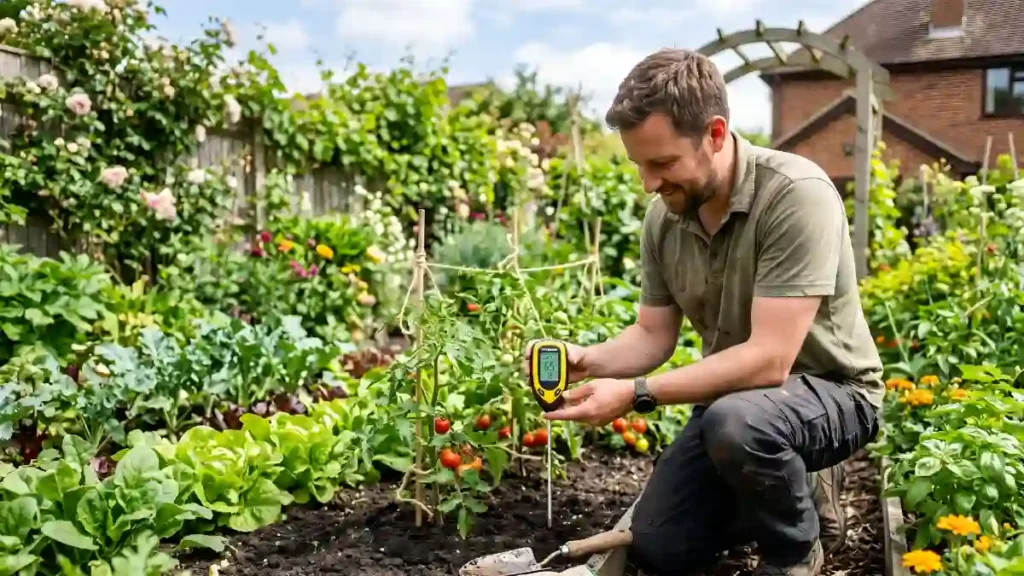
Your garden may be getting everything it needs — except the one item that makes all the difference.
You’ve watered regularly, applied fertilizer, and picked the appropriate plants. But something still feels odd. Leaves become yellow. Growth has stalled. Flowers refuse to blossom. Before you blame the weather or buy another bag of compost, there’s one basic test that most gardeners ignore: soil pH.
Soil pH determines how well your plants can obtain nutrients in the soil. Even a carefully fertilized soil might starve your plants if the pH is too high; nutrients simply become biologically inaccessible to the roots. It’s one of the most common causes of garden failure, and one of the simplest to solve once you know the number.
The good news? Testing soil pH takes less than ten minutes, costs very little, and provides information that will change the way you plant. Whether you’re producing tomatoes, flowers, a lush lawn, or a kitchen herb plot, understanding your soil pH is the first step. This article explains how to test soil pH step by step, with alternatives for any budget.
Why soil pH is the secret behind every thriving garden
You water diligently. You fertilize on schedule. Yet, your plants appear pale, stressed, or stunted. Who is the culprit? Soil pH.
Soil pH is a measurement of how acidic or alkaline your soil is, with a range of 0 to 14. A pH of 7 is neutral; below 7 is acidic, while over 7 is alkaline. Most vegetables, flowers, and lawn grasses flourish between 6.0 and 7.0, a sweet spot where nutrients are most easily absorbed by roots.
When the pH is wrong, nutrients like iron, nitrogen, and phosphorus become “locked out” – no matter how much fertilizer you provide, plants cannot absorb them. Testing soil pH is the first step that any serious gardener should do before planting anything.
What you need before you start
Before getting into the testing methodologies, acquire a few fundamentals:
- A clean trowel or spade—metal contamination might affect the findings.
- Small plastic bags or containers—for collecting soil samples.
- Distilled water – tap water’s pH might impact accuracy.
- Gloves—optional but useful for cleanliness.
Also, gather soil from many sites in your garden — at least three to five — and combine them to create a representative sample. Dig about 4 to 6 inches deeper than the surface layer.
4 reliable ways on how to test soil pH
1. Soil pH test strips (budget-friendly)
pH test strips are the most economical alternative, with a pack costing only a few dollars and providing results in minutes.
How to use them:
- Mix one part dirt and two parts distilled water in a clean container.
- Allow the mixture to settle for approximately 60 seconds.
- Dip the test strip into the liquid and hold it for the required amount of time (15-30 seconds).
- Compare the color change to the accompanying chart.
Test strips are great for rapid inspections and novices. However, they are less exact than digital choices, with an accuracy of ±0.5 pH units.
2. Liquid soil test kits (reliable and colour-coded)
Liquid test kits contain a tiny testing tube, powder reagents, and a color chart. They are commonly accessible at garden centers and online.
How to use them:
- Fill the test tube with the correct quantity of dirt.
- Add distilled water to the specified line.
- Add the pH reagent drops and shake vigorously.
- Wait a few minutes, then compare the resultant color to the chart.
These kits frequently contain tests for nitrogen, phosphate, and potassium, making them an excellent value for a comprehensive soil health evaluation.
3. Digital pH meter (most accurate)
A digital soil pH meter provides exact readings (usually within ±0.1 pH) and soon pays for itself. Basic models start at about $10 to $20.
How to use one:
- Calibrate the meter with the provided calibration solution (do so before each use).
- Insert the probe 2-4 inches into damp soil or into a soil-water mix.
- Wait for the reading to settle (typically 10-30 seconds).
- Record the result and rinse the probe with distilled water after each reading.
Pro tip: For the best accuracy, try many locations and average the results.
4. DIY vinegar & baking soda test (No-Kit Method)
No kit on hand? This basic household test will not provide perfect results, but it will tell you if your soil is acidic or alkaline, which is handy in a situation.
What you need: white vinegar, baking soda, distilled water, and two small basins.
Steps:
- Test for alkalinity: Combine a little soil sample with distilled water to make a paste. Add a couple of drops of white vinegar. If it fizzes, the soil is alkaline (pH more than 7).
- Test for acidity: Combine a fresh soil sample with distilled water to make a paste. Add a sprinkle of baking soda. If it fizzes, the soil is acidic (pH less than 7).
- No reaction to either: Your soil is most likely neutral.
This procedure is remarkably accurate for an initial diagnosis.
Understanding your results
| pH Range | Soil Type | Best For |
| Below 5.5 | Strongly Acidic | Blueberries, azaleas |
| 5.5 – 6.5 | Mildly Acidic | Most vegetables, roses |
| 6.5 – 7.0 | Near Neutral | Lawns, most crops |
| 7.0 – 7.5 | Mildly Alkaline | Lavender, clematis |
| Above 7.5 | Strongly Alkaline | Very few crops |
How to fix soil pH
Too acidic? Adding garden lime (calcium carbonate) will raise the pH. Apply 2-3 kilograms every 10 square metres to get a big displacement. Wood ash is a natural and faster-acting alternative.
Too alkaline? Reduce the pH by using elemental sulfur, composted pine bark, or acidic mulches such as peat moss. Plan 3 to 6 months before planting, since sulfur acts slowly.
Always retest after 6-8 weeks to track development. Soil pH fluctuates gradually, patience is required.
When and how often should you test?
Test your soil at least once a year, preferably in the spring before planting, or in the fall to prepare beds for the next season. If you’re making significant soil amendments or dealing with problematic plants, test every 3-4 months.
New garden beds, container soil, and raised beds should all be evaluated before planting.
Conclusion:
Learning how to test soil pH is one of the easiest yet most effective things you can do for your garden. In only a few minutes, you’ll have a comprehensive understanding of what your soil requires and why your plants respond the way they do. Choose a technique, run the test, and let the results do the guessing for you. A great garden begins in the ground—you only need to know what you’re dealing with.
Certainly! If you’d like to learn more, please consider following us on WhatsApp, Facebook, Instagram, YouTube, Twitter, and Pinterest.
Frequently asked questions about how to test soil pH
Q1: Is a $10 digital pH meter good enough?
A1: Budget meters are adequate for home gardening. Calibrate prior to each use, and replace the probe if readings become inconsistent.
Q2: Can I use tap water instead of distilled water for testing?
A2: Tap water typically has a pH of 7.5 to 8.5, which might artificially elevate your soil’s perceived pH. To ensure accurate results, always use distilled or deionized water.
Q3: How deep should I collect soil samples?
A3: Tap water typically has a pH of 7.5 to 8.5, which might artificially elevate your soil’s perceived pH. To ensure accurate results, always use distilled or deionized water.