


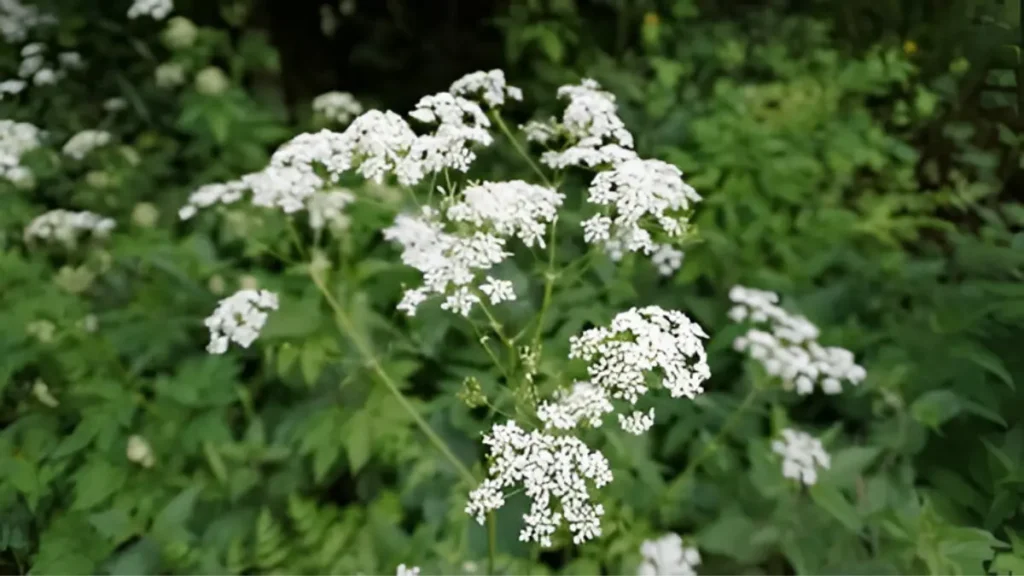
Poison Hemlock (Conium maculatum) is one of the most poisonous plants found in North America and many other temperate locations worldwide. This invasive biennial plant is notorious for its high toxicity to people, animals, pets, and wildlife. Even minor exposure can endanger lives, thus homeowners, gardeners, hikers, and agricultural workers must exercise proper identification and educated safety precautions.
What is poison hemlock?
Poison Hemlock (Conium maculatum) belongs to the Apiaceae family, which includes carrots. This family contains numerous edible plants, which explains why Poison Hemlock is sometimes mistaken.
Scientific classification:
| Kingdom | Apiaceae |
| Family | Apiaceae |
| Genus | Conium |
| Species | C. maculatum |
| Growth | 6–10 feet in height |
| Leaves | Finely split, fern-like green leaves. |
| Flowers | Small white blooms create umbrella-shaped clusters (umbels). |
Historical background:
Poison Hemlock has long been associated with the execution of captives in ancient Greece. Most famously, philosopher Socrates was sentenced to death after swallowing a hemlock-based poison. Even now, Poison Hemlock is just as hazardous.
Poison hemlock identification
Correct identification is crucial. Poison Hemlock frequently fits into its surroundings, making it simple to ignore.
The leaves are characterized as brilliant green and fern-like in appearance. The stems are smooth and hollow, with pronounced purple or reddish streaks. The absence of hair on the stem is a crucial distinguishing feature.
Flowers in this setting are tiny and white, placed in umbrella-like clusters. They normally bloom between late spring and early summer. The seeds produced are tiny, ridged, and very poisonous.
Thick, white taproots are an important part of the root system, sometimes confused with wild parsnip or carrot roots due to their similar look. This can make identification difficult for individuals who are familiar with these plants.
Symptoms of poison hemlock poisoning
Symptoms appear immediately, usually within 30 minutes to 2 hours after contact. The initial symptoms include a burning feeling in the mouth and throat, increased salivation, nausea, vomiting, and abdominal pain.
Advanced symptoms include muscular tremors and weakness, dilated pupils, a reduced heart rate, respiratory paralysis, convulsions, and loss of consciousness. In extreme situations, there is a danger of deadly respiratory collapse if medical attention is not sought immediately.
Poison Hemlock is extremely harmful to grazing animals such as cattle, horses, goats, sheep, and pigs, providing a significant risk during droughts when alternative food sources are scarce. The principal dangers of animal exposure to this plant are eating fresh or dried forms, consuming infected hay, and grazing on overgrown pastures. Domestic pets, like dogs and cats, are also at risk if they chew or mistakenly consume the plant while outside.
Safe handling and prevention measures
Preventing exposure to potentially dangerous plants demands close monitoring and appropriate management measures. Key personal safety guidelines include avoiding direct contact with the plant by not touching it with bare hands; wearing protective gear such as gloves, long sleeves, and eyewear; not burning any plant material, which may release hazardous substances; and thoroughly washing tools and clothing that have come into contact with the plant to reduce risk.
This text discusses critical strategies for controlling undesirable vegetation. It emphasizes the significance of early detection and removal of immature plants in order to avoid their establishment. Furthermore, it encourages mowing before blooming to reduce seed distribution and emphasizes the importance of disposing of cut plants in sealed bags to retain any possible seeds. Finally, it recommends avoiding regrowth by completely removing the roots throughout the eradication procedure.
Public awareness of contamination entails many critical steps, including teaching family members and workers about safety and prevention, clearly identifying polluted places to limit access, and reporting major infestations to local authorities to guarantee effective management and response.
Conclusion
Poison Hemlock may appear innocent, yet it is one of the most poisonous plants you will ever encounter. Understanding the hazards of Poison Hemlock, as well as its identification and safety measures, will help you avoid major consequences. Stay watchful, educate others, and don’t be afraid to seek help when necessary. Awareness saves lives.
Certainly! If you’d like to learn more, please consider following our WhatsApp Channel, Facebook, Instagram, YouTube, Twitter, and Pinterest.
Frequently asked questions
Q1: Does Poison Hemlock smell like carrots?
A1: No. It smells musty and nasty, unlike eating carrots.
Q2: Is Poison Hemlock illegal to grow?
A2: In many areas, landowners are urged or forced to limit its spread.
Q3: Where is poison hemlock commonly found?
A3: Poison hemlock is typically found near roadsides, riverbanks, fields, and disturbed places with damp soil.