


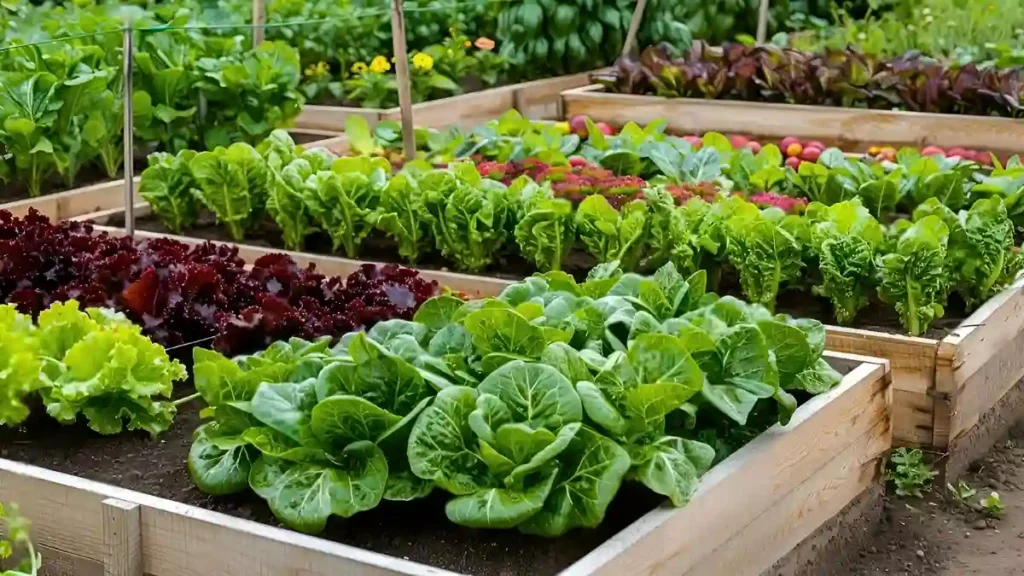
Raised bed gardening is one of the most effective and satisfying methods for growing vegetables, herbs, and flowers. Raised beds provide greater soil management, improved drainage, and increased yield for both novice and expert gardeners.
In this article, we’ll look at 15 innovative and high-yield raised bed gardening ideas that will turn your garden into a profitable and visually beautiful environment.
What is raised bed gardening?
Raised bed gardening is the practice of growing plants in soil that is elevated above the normal ground level, usually within a frame constructed of wood, metal, stone, or another material. Raised beds, unlike traditional in-ground gardening, provide you total control over your growing environment, including soil composition, drainage, and pest management. They are ideal for all skill levels, from novice growers to experienced horticulturists, and thrive in backyards, patios, roofs, and even indoors.
Key benefits of raised bed gardening:
Raised beds alleviate several of the most frequent gardening problems. Here’s why millions of gardeners vouch for them:
- Better soil control – Instead of fighting clay or sandy native soil, you fill beds with the right combination of compost, topsoil, and amendments.
- Improved drainage – Elevated beds avoid waterlogging, which is the major cause of root rot and plant death.
- Fewer weeds – Starting with weed-free soil decreases weed pressure all season.
- Easier on your body —Taller raised beds minimize the need to stoop and kneel, making gardening more accessible to the elderly and disabled gardeners.
- Warmer soil — Raised beds warm up faster in spring, extending your growth season by 2-4 weeks over ground planting.
- Pest and disease control – Physical barriers help to prevent slugs, rabbits, and soil-borne illnesses.
Best materials for raised garden beds:
| Material | Lifespan | Best for |
| Cedar wood | 10–15 years | Classic look, naturally rot-resistant |
| Galvanized steel | 20–30 years | Modern aesthetic, very durable |
| Redwood | 15–20 years | Premium builds, beautiful grain |
| Composite lumber | 25+ years | Low maintenance, eco-friendly |
| Pressure-treated pine | 10–20 years | Budget builds — use ACQ treated only |
| Cinder block / stone | Indefinite | Permanent installations |
| Untreated pine / fir | 3–5 years | Temporary or trial beds |
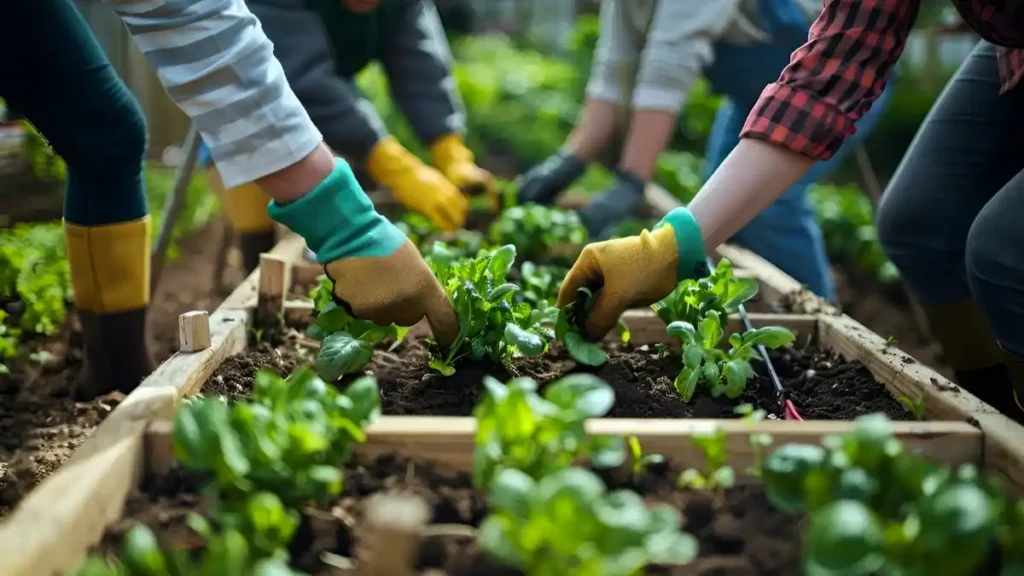
Creative raised bed gardening ideas:
1. Keyhole raised bed
A keyhole bed is a circular elevated bed with a thin slot carved into one side, resulting in a D-shaped path to the center. This ingenious design allows you to access every inch of soil without walking on it, preventing compaction and increasing growth space. Ideal for tiny gardens, the keyhole layout pairs well with a central compost basket that delivers nutrients straight to plant roots as it decomposes.
2. L-shaped corner raised bed
L-shaped beds are designed to fit into garden corners, which are typically underutilized. The two arms provide a natural, protected planting space, while the inner angle is ideal for a garden seat, tool storage, or a small water butt. Plant taller crops on the rear wall and shorter ones along the front arm to ensure that all plants receive adequate sunlight.
3. Herb spiral raised bed
The herb spiral is a three-dimensional raised bed that wraps up in a clockwise coil, resulting in numerous unique microclimates within a 1.5m area. The top of the spiral is dry and sun-drenched, making it excellent for Mediterranean herbs like rosemary, thyme, and sage. The base retains moisture better, making it ideal for mint, chives, and parsley. One spiral may produce 15-20 different herbs at the same time, without the need for additional irrigation infrastructure.
4. Galvanized steel trough bed
Galvanized steel stock troughs are one of the most popular raised bed options for modern and urban gardening. They are food-safe, rust-resistant, and will last 20-30 years with little maintenance. Their sleek oval or rectangular form looks great on patios and decks. Drill drainage holes in the foundation, top with gravel, then fill with quality compost mix for instant productive growth.
5. Vertical pallet raised bed wall
A repurposed wooden pallet stood on its end and lined with hessian or landscape fabric becomes a dramatic vertical planting wall in under an hour. Fill each slat gap with compost and plant salad leaves, herbs, strawberries, or trailing nasturtiums. Leaned against a sunny fence or wall, three pallets side by side creates an impressive edible feature that takes up virtually no floor space.
6. Tiered pyramid raised bed
A pyramid bed consists of three or four increasingly smaller frames stacked on top of one another, resulting in a striking tiered structure that is both attractive and productive. The tiered design improves drainage, increases growing surface area by up to 60%, and provides an excellent environment for strawberries, lettuce, and herbs to cascade down each layer. For long-lasting construction, choose cedar or painted pressure-treated wood.
7. Hugelkultur raised bed
Hugelkultur (from German meaning “hill culture”) is an old practice in which the foundation of a raised bed is filled with decaying logs and woody waste before being covered with soil and compost. As the wood decomposes over time, it produces a gradual feed of nutrients and works as a moisture sponge, lowering watering requirements by up to 50% in the summer. Hugelkultur beds increase with age, yielding remarkable crops by year two.
8. Wicking raised bed (self-watering)
A wicking bed features a sealed foundation and a water reservoir under the soil. Plants take moisture up by capillary action when needed, minimizing the possibility of over- or under-watering. Water consumption is decreased by up to 70% compared to surface-irrigated beds. A simple fill pipe protruding out the side allows you to top off the reservoir without disturbing the earth. Ideal for tomatoes, peppers, and aubergines, which require regular hydration.
9. Three Sisters companion planting bed
The Three Sisters is a Native American polyculture system that grows corn, climbing beans, and squash all in the same bed. Each plant benefits the others: corn acts as a trellis for beans, beans fix nitrogen to feed corn and squash, and squash’s large leaves shade the soil, retaining moisture and suppressing weeds. The end result is a highly productive, nearly self-sustaining bed that requires little external input.
10. Square foot gardening bed
Mel Bartholomew popularized the square foot gardening method, which involves dividing a raised bed into 30cm x 30cm squares and planting each with a different crop at ideal density. This avoids wasted space between rows while producing significantly more yield than standard row planting. A 120×240cm bed with square foot spacing is similar to a 9-meter conventional row garden.
11. Wheelchair-accessible tall raised bed
Raising beds to 75-90cm height makes gardening easier for wheelchair users and anyone who struggles to bend or kneel. Keeping the bed width to 60-70cm allows for easy access to the entire planting area from a sitting position. These elevated beds also have great drainage and warm up faster than normal raised beds, providing a longer growth window. With a smooth-edged broad lip across the top, it doubles as a seat.
12. Cinder block raised bed
Cinder blocks placed two or three courses high provide an exceedingly robust and lasting raised bed that requires no joinery. Each block’s empty cells serve as additional planting spaces, perfect for trailing herbs, succulents, and annual flowers to give color to the structure. Cinder brick beds are long-lasting, heat-retaining, and may be painted or rendered to complement your garden’s design.
13. Cottage garden flower raised bed
Raised beds aren’t only for vegetables. A dedicated cottage-style flower bed filled with sweet peas, cornflowers, foxgloves, cosmos, and dahlias forms a gorgeous cutting garden that provides fresh blooms from May to October. A raised bed’s controlled environment allows you to create the ideal free-draining, rich conditions for cottage flowers, resulting in higher stems and more profuse blossoming than ground-planted beds.
14. Succession planting raised bed
A succession planting bed is a year-round planting approach that ensures your raised bed is productive throughout the growing season. Divide your bed into four zones, with sowings spaced every 3-4 weeks. As one crop is harvested, another is planted in its place. When combined with cold frames or fleece covers, a well-managed succession bed may produce fresh lettuce, radishes, or Asian greens for eleven months of the year in temperate climes.
15. Pollinator border raised bed
Planting a separate raised bed with pollinator-friendly flowers and herbs beside your vegetable beds can boost yields by up to 30% due to enhanced pollination. Borage, phacelia, lavender, echinacea, and calendula are all great options. When placed near fruiting crops such as tomatoes, courgettes, beans, and strawberries, a pollinator bed acts as an invisible fertilizer, increasing fruit production without the need of chemicals.
Best vegetables & plants for raised bed gardening:
Almost any plant thrives in a raised bed, but some are especially suited to the regulated atmosphere and limited area.
Top veggies for raised beds
Tomatoes grow in deep, warm soils. Pair with basil as a companion plant. Lettuce and salad greens mature quickly, making them perfect for cut-and-come-again harvests. Carrots and radishes thrive in deep, loose raised bed soil free of stones. Courgettes and squash are prolific growers in rich compost-heavy soil. Kale and chard’s outer leaves are harvested continually from spring to winter. Beans and peas are vertical climbers that make good use of the area above beds. Garlic and onions are low-maintenance, ideal for novices, and cover gaps in the planting schedule.
History or evolution of raised bed gardening:
Raised bed gardening is a practice that originated in ancient civilizations and is used to increase agricultural output by elevating soil beds. Key historical developments include the usage of raised plots in Ancient Egypt, notably along the Nile River; the founding of kitchen gardens in Medieval Europe; and the current emergence of urban gardening, which has made raised beds a popular choice among modern gardeners.
Future trends in raised bed gardening:
- Smart irrigation systems.
- Self-watering raised beds.
- Sustainable and environmentally friendly materials
- Integration with Vertical Farming
Conclusion:
Raised bed gardening is one of the best investments you can make for your health, diet, and outside space. There is an ideal raised bed design for any garden, budget, and skill level. Begin with one design that matches your area and goals, whether it’s a basic square foot bed for organized novices, a dramatic herb spiral as a garden focal point, or a wicking bed for easy high-yield tomatoes. The beauty of raised bed gardening is that you can construct, adapt, and grow your arrangement from year to year. Start with one bed this season; you’ll almost surely want more by next spring.
Certainly! If you’d like to learn more, please consider following our WhatsApp Channel, Facebook, Instagram, YouTube, Twitter, and Pinterest.
Frequently asked questions about raised bed gardening:
Q1: How deep should a raised garden bed be?
A1: For most veggies, a depth of 15-20cm (6-8 inches) is enough. For deep-rooted vegetables such as carrots, parsnips, and tomatoes, aim for 30-45 cm (12-18 inches). Shallower beds (10cm) are ideal for herbs and salad greens. More depth equals greater water retention and a stronger root system.
Q2: How many plants can I fit in a raised bed?
A2: This is determined by the plant and the technique of spacing used. Using square foot gardening, a conventional 120×240cm bed may accommodate 16-32 plants (tomatoes, peppers, cabbages) in big squares, 64 medium plants (lettuce, garlic), or up to 256 tiny plants (carrots, radishes), which is significantly more than a regular row garden of the same space.
Q3: Which raised bed gardening idea is best for beginners?
A3: The square foot gardening bed idea is suitable for beginners. It provides a clear, organized strategy for deciding what to plant where, eliminates uncertainty about spacing, and makes the most of a tiny space. For the simplest start, pair it with a basic cedar frame 30cm deep and a high-quality compost-soil mix.