


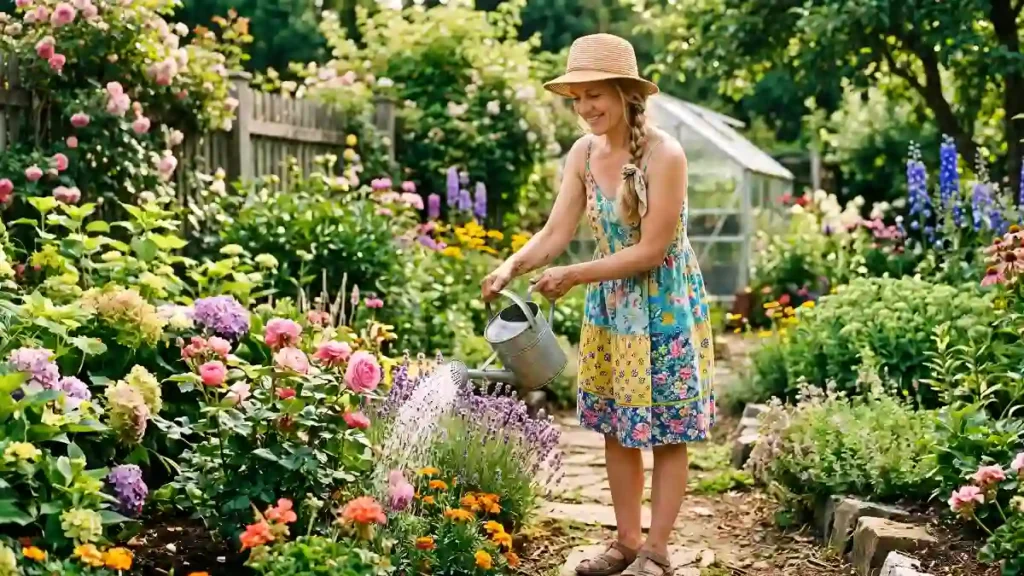
Summer is a double-edged sword for gardeners. Long sunny days promote great growth, but blazing heat, drought stress, and persistent pests may rapidly transform a healthy garden into a wilting disappointment. Whether you’re growing veggies, flowers, or beautiful grass, learning how to work with the seasons rather than against them makes all the difference.
This book will cover the most effective summer gardening tips to keep your outside area healthy, productive, and attractive from June to September.
1. Master your watering strategy
Water deep, not often
The golden rule of summer gardening is to water strongly but rarely. Shallow daily watering causes roots to remain near the surface, making plants more susceptible to heat. Instead, water every 2-3 days, wetting the soil to a depth of 6-8 inches, allowing roots to chase liquid downward.
Water at the right time
Always water in the early morning, preferably before 9 a.m. This allows foliage to dry before the heat of the day, lowering the danger of fungal infection. Evening watering leaves plants moist overnight, allowing mildew and rot to thrive.
Consider drip irrigation
Drip irrigation or soaker hoses send water directly to the root zone, saving up to 50% more water than overhead sprinklers. It’s one of the most prudent expenditures a summer gardener can make.
2. Mulch is your best friend
Applying a 2-4 inch layer of organic mulch (such as straw, wood chips, or crushed leaves) around your plants is one of the most effective summer gardening ideas you’ll ever use. Mulch:
- Retains soil moisture, lowering how frequently you need to water.
- Regulates soil temperature, keeping roots cool even when air temperatures rise.
- Controls weeds that compete for nutrients and water.
- Gradually enriches the soil as it degrades
To avoid rot, keep mulch several inches away from plant stems.
3. Feed your plants the right way
Summer is the peak growing season, and your plants are hungry. However, over-fertilization with nitrogen-rich feeds during a heatwave can result in lush, fragile growth that scorches readily.
Best Practices for Summer Fertilization
- Use a balanced, slow-release fertilizer at the start of the summer.
- Mid-season, switch to a potassium-rich diet to strengthen the stems and enhance fruiting.
- Avoid fertilizing stressed or wilting plants—rehydrate them first.
- Container plants require more frequent feeding (every 1-2 weeks), as nutrients wash off with regular watering.
4. Stay ahead of weeds and pests
Weed weekly
Weeds explode in the summer. Keep on top of them with a weekly 10-minute weeding effort before they set seed and spread. This is a lot easier than dealing with an established plant infestation.
Watch for common summer pests
Aphids, spider mites, whiteflies, and caterpillars emerge when the temperature warms up. Check the underside of the leaves on a regular basis. The majority of soft-bodied insects are dislodged by a powerful hose blow. Neem oil spray is a safe and organic remedy for chronic issues.
5. Deadhead, prune, and harvest regularly
Keep flowers blooming
Deadheading, or removing dead flower heads, instructs the plant to continue producing flowers rather than setting seed. For annuals like petunias and marigolds, repeat every few days for nonstop color throughout summer.
Harvest vegetables often
The more you select, the more your plants will produce. Leaving overripe veggies on the plant causes it to slow down production. Check courgettes, beans, and cucumbers on a daily basis throughout peak season.
6. Protect plants during extreme heat
When temperatures rise above 35°C (95°F), even heat-loving plants may suffer. Use the following strategies:
- Shade cloth (30-50% shade) put over sensitive crops such as lettuce and spinach avoids bolting.
- Move container plants to a shadier place during the warmest portion of the afternoon (12-4 p.m.).
- Avoid pruning heavily during a heatwave—exposed core branches might burn.
7. Grow the right plants for summer
Working with the season is always more logical than battling it. The greatest plants for hot, sunny weather are:
- Vegetables: tomatoes, peppers, aubergine, sweetcorn, courgette, and basil
- Flowers: lavender, marigolds, zinnias, sunflowers, and cosmos
- Herbs: rosemary, thyme, oregano, and sage.
These kinds are designed for summer and will repay you with little effort.
8. Prepare your soil and compost
Summer is also an excellent time to flip your compost pile and spread organic materials around established plants. Healthy, nutrient-rich soil holds moisture better and promotes stronger root systems, laying the groundwork for a hardy summer garden.
Conclusion:
A successful summer garden does not arise by chance; it is the consequence of thoughtful, persistent attention. By perfecting your watering regimen, mulching liberally, feeding intelligently, and being watchful against pests, you’ll be rewarded with a garden that looks stunning all season.
Apply even a few of these summer gardening tips, and you’ll see a change within weeks. Your plants will appreciate you for it.
Certainly! If you’d like to learn more, please consider following us on WhatsApp, Facebook, Instagram, YouTube, Twitter, and Pinterest.
Frequently asked questions about summer gardening tips
Q1: What is the best time to garden in summer?
A1: Early morning (before 10 a.m.) and late evening (after 6 p.m.) are the best times to garden in summer. The midday heat stresses both you and your plants. Morning is ideal for watering and harvesting; evening suits planting and pruning.
Q2: Can I plant new plants in summer?
A2: Yes, but select carefully. Established perennials, potted transplants, and heat-tolerant types can be planted in summer with caution. Water thoroughly before planting, add mulch right after, and shelter from direct afternoon light for the first 1-2 weeks.
Q3: How do I prevent my vegetable garden from bolting in summer?
A3: Heat and lengthy days cause bolting (the premature development of seeds). To avoid it, harvest often, give midday shade for cool-season crops, keep soil continuously moist, and select “bolt-resistant” lettuce, spinach, and coriander.