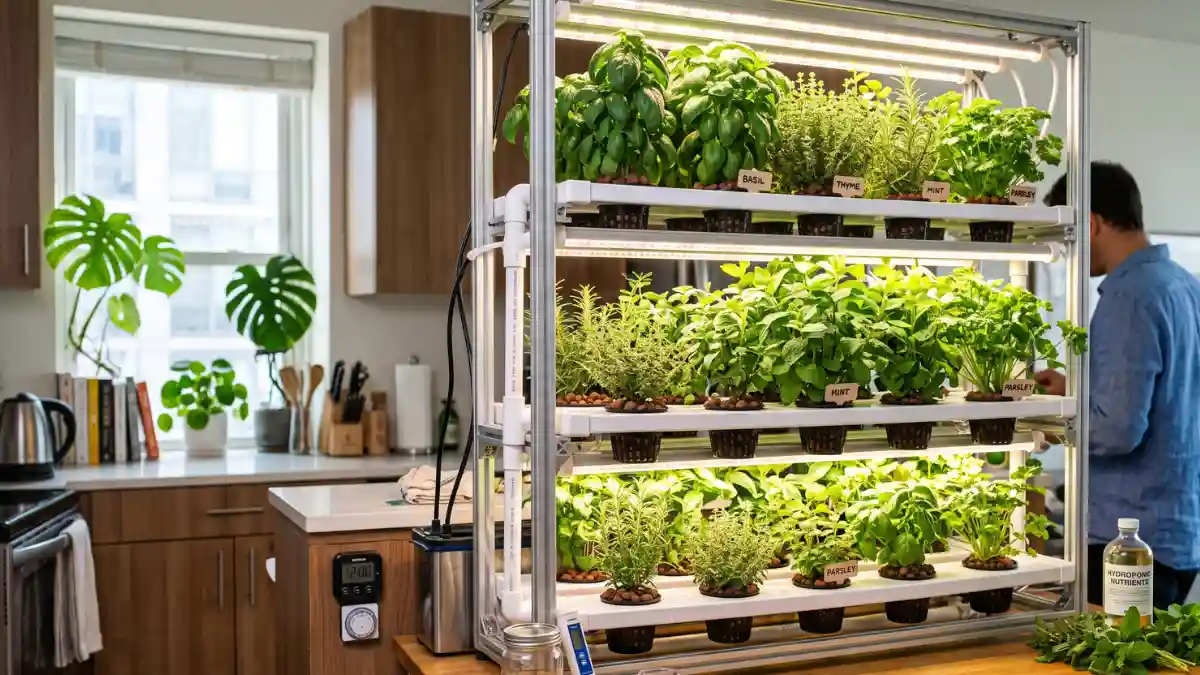
Imagine snipping fresh basil, mint, or cilantro straight from your kitchen counter, any day of the year, regardless of the season outside. That’s the everyday reality for anyone who grows hydroponic herbs. No soil, no muddy hands, no waiting for the “right” growing season — just clean, fast, and remarkably productive herb gardening that fits into apartments, offices, and backyards alike.
In this tutorial, we’ll cover everything you need to know about hydroponic herbs, including what they are, why they’re taking over modern kitchens, which systems work best, how to put one up, the best herbs to grow, typical mistakes, and answers to the most often asked questions.
What are hydroponic herbs?
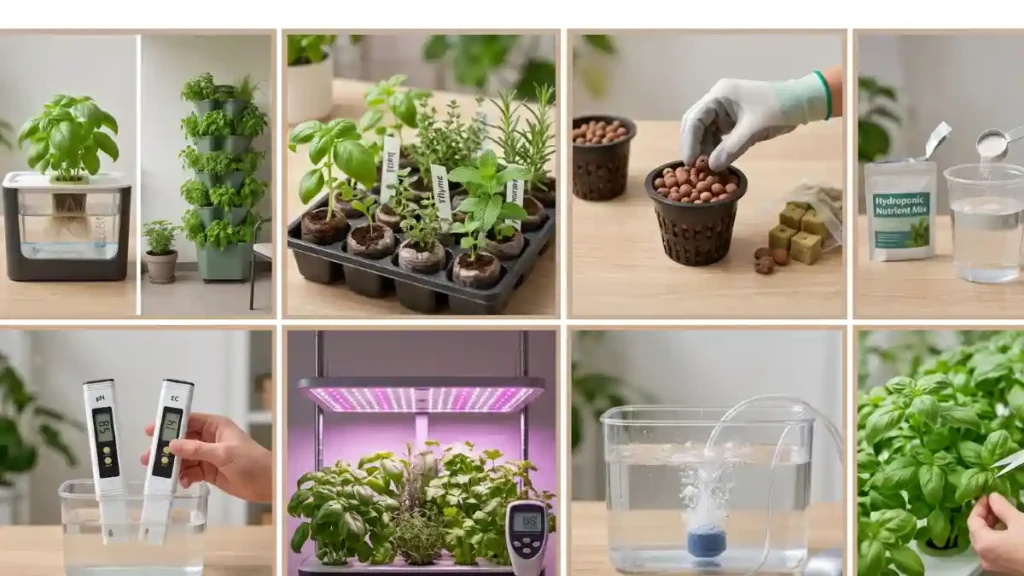
Hydroponic herbs are grown in a nutrient-rich water solution rather than soil. The roots are either directly immersed in the nutrient solution or supported by an inert growing material like rockwool, clay pebbles, coco coir, or perlite. Hydroponic herbs often develop quicker and stronger than soil-grown herbs because their roots have constant access to water, oxygen, and nutrients.
This method isn’t new — hydroponics has been used in various forms for centuries — but recent advances in compact home systems, LED grow lights, and smart automation have made it dramatically easier for everyday home cooks and gardening enthusiasts to grow herbs hydroponically indoors.
Why herbs are perfect for hydroponics
Herbs are famously well-suited to hydroponic growing for a few reasons:
- They have shallow, fast-developing root systems that thrive in water-based setups.
- Most culinary herbs have short growth cycles, so you see results quickly.
- Herbs don’t require the deep root space that larger vegetables need.
- Many herbs (basil, mint, chives) can be propagated from cuttings and rooted directly in water.
Benefits of growing hydroponic herbs
1. Faster growth and higher yields
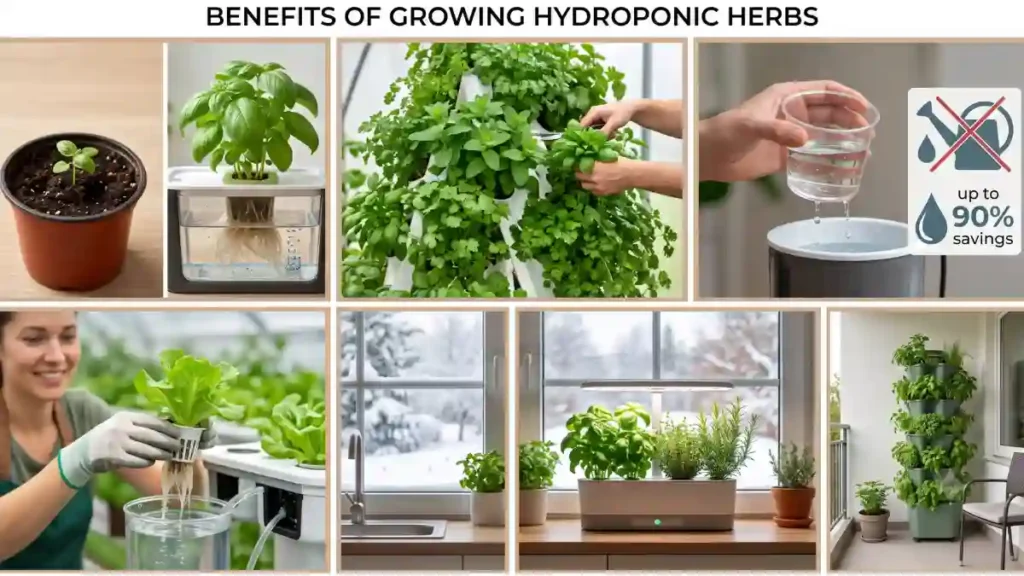
Hydroponic herbs save energy by delivering nutrients directly to the root zone rather than digging through soil for sustenance. This frequently leads in growth rates that are 30-50% faster than those of traditional soil gardening, as well as considerably bushier and more scented plants.
2. No soil, no mess
Without soil, there is no digging, weeding, or risk of soil-borne pests or illnesses. This makes hydroponic herb gardens perfect for kitchens, patios, and small indoor locations where cleanliness is essential.
3. Water efficiency
Hydroponic systems recycle water within a closed loop, using up to 90% less water than conventional gardening. This makes it a genuinely sustainable option, especially in drought-prone regions.
4. Year-round harvests
Hydroponic herbs can be cultivated indoors 365 days a year with the correct lighting and temperature control, eliminating the need for fresh basil during the winter months.
5. Space-saving design
Vertical and compact hydroponic units let you grow a surprising volume of herbs in a small footprint, making them perfect for apartments, dorms, and urban homes.
Best hydroponic systems for growing herbs
Choosing the right system depends on your space, budget, and how hands-on you want to be.
Deep water culture (DWC)
In DWC, plant roots are directly immersed in an oxygenated nutritional solution. It’s simple, inexpensive, and suitable for beginners, making it an excellent starting point for herbs such as basil, mint, and lettuce-like greens.
Nutrient film technique (NFT)
A thin, continuous film of nutritional solution runs past the roots along a sloping channel. NFT systems are effective and widely utilised in small-scale home kits and countertop herb gardens.
Ebb and flow (Flood and drain)
This system periodically floods the grow tray with nutrient solution, then drains it back into a reservoir. It offers strong oxygenation and works well for larger herb collections.
Kratky method
The Kratky method is a passive hydroponic technique that uses no energy and places plants over a static nutrient pool. It’s the simplest and most beginner-friendly choice, perfect for those looking for a low-maintenance hydroponic herb garden.
All-in-one smart herb gardens
Countertop kits with built-in LED lights, pumps, and app-based monitoring have become extremely popular. They automate lighting schedules and nutrient dosing, making hydroponic herb growing accessible even to complete beginners.
How to set up a hydroponic herb garden at home
Step 1: Choose your system
Pick a system that matches your experience level and space. Beginners often start with Kratky or DWC setups; those wanting a fuss-free experience may prefer an all-in-one smart garden.
Step 2: Select your herbs
Choose herbs based on your cooking habits and the system’s capacity (more on the best herbs below).
Step 3: Prepare the growing medium
Use an inert medium like rockwool cubes, coco coir, or clay pebbles to anchor seeds or seedlings without introducing soil-borne contaminants.
Step 4: Mix your nutrient solution
Use a hydroponic-specific nutrient formula containing the right balance of nitrogen, phosphorus, potassium, and micronutrients. Follow the manufacturer’s dosing instructions and monitor pH regularly.
Step 5: Maintain the right pH and EC levels
Most herbs thrive with a pH between 5.5 and 6.5. Electrical conductivity (EC) should be monitored to ensure nutrient concentration stays within a safe range — too high can burn roots, too low can starve the plant.
Step 6: Provide adequate light
If growing indoors without direct sunlight, use full-spectrum LED grow lights for 12–16 hours per day. South-facing windows can supplement but rarely replace grow lights for consistent results.
Step 7: Monitor water temperature and oxygenation
Keep the nutrient solution between 65–75°F (18–24°C). Use air stones or pumps in systems like DWC to keep the solution oxygenated and prevent root rot.
Step 8: Harvest regularly
Regular harvesting encourages bushier growth. Snip from the outer leaves and stems, leaving enough foliage for the plant to continue photosynthesizing.
Best herbs to grow hydroponically
Basil
Basil is the poster child of hydroponic herb gardening. It grows quickly, responds beautifully to nutrient-rich water, and can be harvested continuously for months.
Mint
Mint thrives in hydroponic systems and, unlike in soil gardens, won’t aggressively spread and take over your entire growing space.
Cilantro
Cilantro grows fast hydroponically, although it’s sensitive to heat, so cooler indoor temperatures help extend its harvest window.
Parsley
A slower grower but extremely reliable, parsley does well in NFT and DWC systems with consistent nutrient delivery.
Chives
Chives are compact, low-maintenance, and perfect for smaller hydroponic units or windowsill kits.
Thyme and oregano
These Mediterranean herbs prefer slightly drier root zones but still perform well in well-oxygenated hydroponic setups with careful moisture management.
Dill
Dill grows tall and fast hydroponically, making it a satisfying herb for gardeners who want visible progress quickly.
Common problems and how to fix them
Yellowing leaves
Usually a sign of nutrient deficiency or incorrect pH. Test and adjust your nutrient solution’s pH and EC levels.
Root rot
Caused by low oxygen levels or warm water. Add an air stone, keep the temperature below 75°F, and replace the nutrient solution on a regular basis.
Leggy, weak growth
Often a lighting issue. Increase light intensity or duration, and make sure grow lights are positioned close enough to the canopy.
Algae growth
Algae thrives in light-exposed nutrient reservoirs. Use opaque containers or reservoir covers to block light from reaching the water.
Slow germination
Seeds may need a more consistent moisture level. Keep growing media damp (not soaked) and maintain warm ambient temperatures during germination.
Hydroponic herbs vs. Soil-grown herbs
| Factor | Hydroponic Herbs | Soil-Grown Herbs |
| Growth Speed | Faster | Slower |
| Water Usage | Highly efficient | Less efficient |
| Space Needed | Compact/vertical | Larger footprint |
| Pest Risk | Lower | Higher |
| Setup Cost | Moderate to high | Low |
| Maintenance | Requires monitoring | More forgiving |
| Year-Round Growing | Yes, with lighting | Season-dependent |
Tips to maximize your hydroponic herb harvest
- Rotate herb varieties seasonally to keep your kitchen supply diverse.
- Prune regularly to prevent legginess and encourage denser growth.
- Label your nutrient reservoirs and track feeding schedules to avoid over- or under-fertilizing.
- Group herbs with similar nutrient and light needs in the same system for easier management.
- Clean your system between grow cycles to prevent algae and bacterial buildup.
Conclusion
Hydroponic herbs are a clean, effective, and extremely satisfying way to grow fresh flavour at home, regardless of the season or the size of your living area. Whether you start with a simple Kratky jar on your windowsill or invest in a fully automated smart garden, the basics are the same: the right system, constant fertilisers, proper lighting, and a little frequent attention. When you’ve experienced the ease and quickness of hydroponic herb cultivation, going back to soil-based gardening can feel like a step back.
Start small, select a herb you use frequently, and watch how rapidly hydroponics transforms your kitchen into a live, always-ready herb garden.
Certainly! If you’d like to learn more, please consider following our WhatsApp Channel, Facebook, Instagram, YouTube, Twitter, and Pinterest.
Frequently asked questions about hydroponic herbs
Q1: Are hydroponic herbs healthier than soil-grown herbs?
A1: Nutritionally, hydroponic and soil-grown herbs are generally comparable, though hydroponic herbs can sometimes have higher nutrient density due to precise nutrient control and faster, less stressed growth.
Q2: How long does it take to grow hydroponic herbs?
A2: Most herbs like basil and mint can be harvested within 3–4 weeks of germination, while slower growers like parsley may take 6–8 weeks to reach a full harvest size.
Q3: Do hydroponic herbs need sunlight?
A3: Natural sunlight helps, but it’s not required. Full-spectrum LED grow lights can fully replace sunlight and are often more reliable for consistent, year-round growth.
Q4: What’s the difference between growing hydroponic herbs and hydroponic vegetables?
A4: Herbs generally have shallower roots, shorter grow cycles, and lower nutrient demands than most vegetables. Vegetables like tomatoes or cucumbers need higher light intensity, more nutrients, and often trellising or support as they mature.