


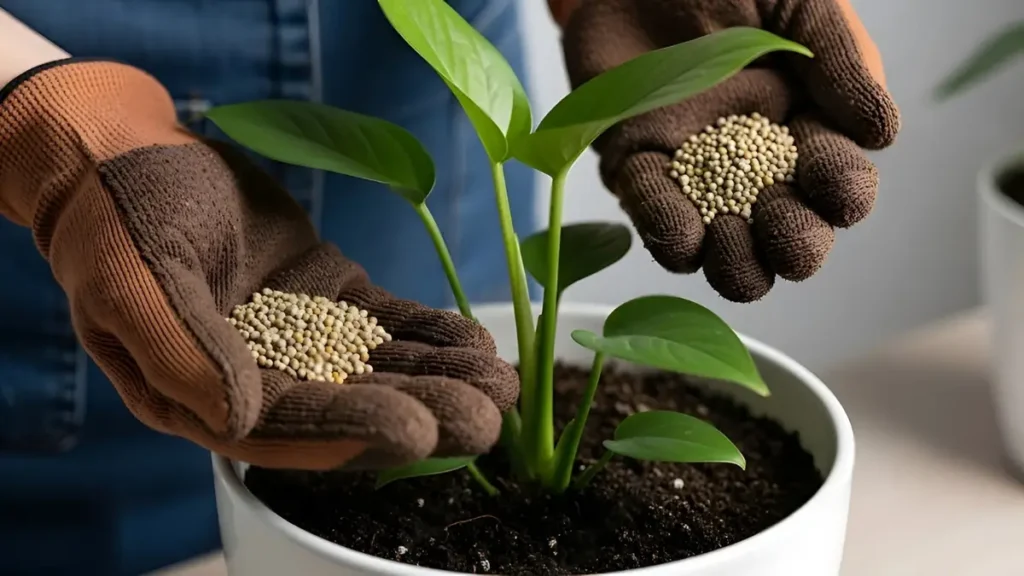
Fertilize houseplants is one of the most misunderstood elements of indoor plant care; most plant owners either don’t feed their plants at all or feed them too much, causing major injury. The reality is that understanding how to fertilize houseplants properly is one of the easiest things you can do to improve the overall health, growth, and vibrancy of your indoor collection. This comprehensive guide covers everything you need to know, including which fertilizer to use, how frequently to apply it, when to stop, how to interpret your plant’s signals, and how to save a plant that you have mistakenly overfed.
Why fertilizing houseplants is important
Houseplants have a disadvantage over organically growing plants since they are limited to a small amount of compost, which depletes their nutrients in 4-6 weeks. Without fertilization, houseplants experience nutrient depletion, resulting in smaller leaves, poorer color, and stunted growth—symptoms that are sometimes misattributed to disease, pests, or insufficient light.
Fertilizing replaces depleted nutrients and provides your plants with the building blocks they require to grow strong, healthy, and bright. The good news is that properly fertilizing houseplants takes less than five minutes per plant every month, and the benefits may be significant within a few weeks of establishing a regular feeding schedule.
The 3 essential nutrients every houseplant needs (NPK explained)
The NPK ratio, which is displayed on every fertilizer label, consists of three figures such as 10-10-10 or 20-20-20. These figures indicate the proportion of the three key macronutrients in the fertilizer. Understanding what each one accomplishes allows you to select the best fertilizer for your plant’s individual requirements at each stage of its development cycle.
| N Nitrogen | P Phosphorus | K Potassium |
| Drives leafy, green growth. Vital for foliage plants. Deficiency causes pale yellow leaves and stunted shoots. Too much produces lush but weak, floppy growth. | Supports root development, flower production, and fruit set. Essential for flowering houseplants and newly repotted plants establishing root systems. | Builds overall plant health, disease resistance, and strong cell walls. Promotes flowering and fruiting. Deficiency shows as brown leaf edges and poor overall vigour. |
For most foliage houseplants (monstera, pothos, ferns, palms), a balanced fertilizer with equal NPK ratios (such as 10-10-10 or 20-20-20) works well throughout the growth season. To enhance and preserve blooms in blooming houseplants such as orchids, peace lilies, and anthuriums, switch to a higher-phosphorus or high-potassium fertilizer during the flowering period.
Types of houseplant fertiliser — which one is right for you?
| Liquid fertilizer | Mix with water and apply while watering. Provides the greatest exact control over dosage and frequency. Takes action rapidly; effects are noticeable within 1-2 weeks. The most popular choice for indoor plants. |
| Slow-release granules | Coated pellets can be blended into compost or sprinkled directly on the soil surface. Nutrients are released gradually over a period of 3-6 months. Excellent for busy plant owners who choose a low-maintenance feeding method. |
| Fertiliser spikes | Solid sticks are inserted into the soil near plant roots. Convenient, but nutrient delivery is unequal – roots near a spike receive too much, while roots farther away receive too little. Ideal for casual plant caretakers. |
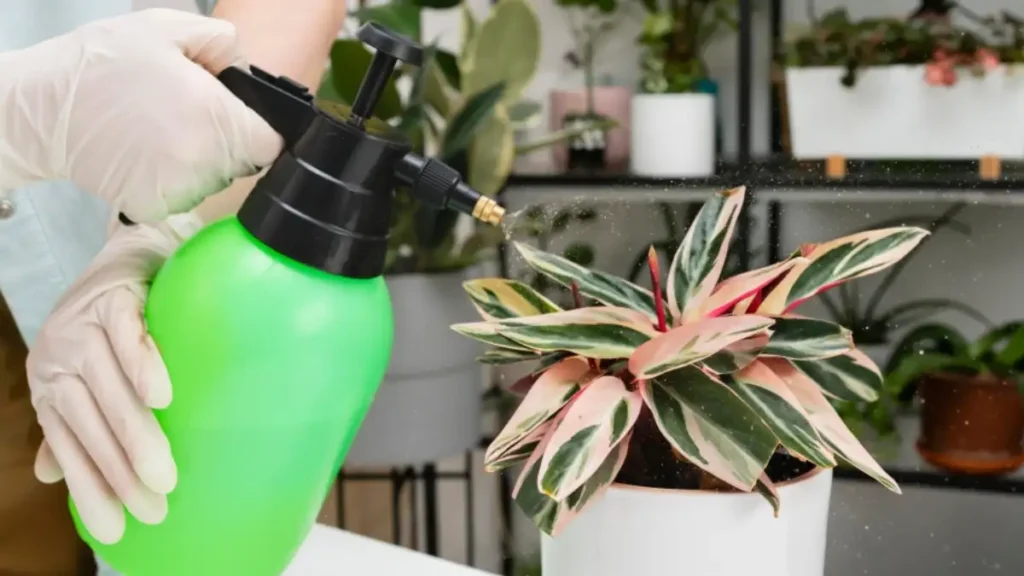
| Foliar spray fertiliser | Diluted fertiliser sprayed directly onto leaves — nutrients are absorbed through the leaf surface. Fast-acting supplement for plants showing deficiency symptoms. Best used alongside regular soil feeding, not as a replacement. |
| Organic fertilisers | Worm castings, seaweed extract, fish emulsion, and compost tea. Nutrients are released slowly and softly, making it nearly difficult to apply too much. Improve soil biology over time. Ideal for individuals who like a natural approach. |
| Specialist fertilisers | Plant-specific formulas include orchid fertiliser, cactus and succulent feed, and citrus fertiliser. Worth utilizing if you have a large collection of one type. In most cases, it is just a conventional recipe that has been tailored to the unique requirements of that facility. |
When to fertilize houseplants
Timing is essential when feeding your indoor plants.
Growing season (spring & summer)
Plants require more nutrients during their active growth phase, which happens in various seasons. It is advised that these plants be fertilized every 2 to 4 weeks with a balanced fertilizer to ensure they obtain the nutrients they require for optimum growth.
Dormant season (fall & winter)
During the dormancy period, most houseplants exhibit slow growth or a state of rest. It is advisable to reduce fertilizing to every 6–8 weeks or to cease fertilization entirely, as over-fertilizing during this time can be detrimental to the plants.
How to fertilize houseplants — step by step
Fertilising houseplants correctly is simple if you understand the technique. Follow these instructions every time you feed to maximize efficacy and reduce the chance of plant harm.
- Check the season first. Only fertilize during the active growth season, which is from spring to early fall (March to September in the UK). Do not fertilize throughout the winter, when most houseplants are dormant and unable to absorb nutrients. Fertilizing a dormant plant produces salt buildup in the soil, which can harm the roots.
- Water the plant before fertilizing. Never apply fertilizer to dry soil since it collects around the roots and can cause fertilizer burn. Water the plant well first, then wait 30 minutes before applying the fertilizer. Moist soil evenly distributes nutrients throughout the root zone.
- Dilute by half the recommended strength. Use half the quantity recommended on the label. Most commercial fertilizer recommendations are geared at outdoor plants or maximizing growth at the expense of plant health. Half-strength administered frequently is always safer and more effective than full-strength applied just sometimes.
- Apply evenly to the soil surface. Pour diluted liquid fertilizer gently and evenly over the entire soil surface, not just around the stem. Roots expand to the outside of the pot and beyond; the entire root zone, not just the center, need nourishment.
- Let the fertilizer drain through. Water the plant until liquid runs freely through the drainage pores. This guarantees that nutrients reach the deepest roots while preventing salt accumulating in the bottom compost. Empty the saucer after 30 minutes to avoid root rot.
- Note what you did and when. Mark the date on a little sticker or keep a basic plant diary. Forgetting when you last fed a plant results in either skipping feeds completely or mistakenly doubling up, both of which hurt your plant. A steady feeding regimen yields the best long-term outcomes.
How often to fertilize houseplants — by season and plant type
| Season / period | Liquid fertiliser | Slow-release | Notes |
| Spring (Mar–May) | Every 2 weeks | Apply once | Growth beginning — increase gradually |
| Summer (Jun–Aug) | Every 2 weeks | Check / top up | Peak growth — full feeding schedule |
| Early autumn (Sept) | Once per month | Last application | Reduce as growth slows |
| Late autumn (Oct–Nov) | Stop feeding | No new application | Plant entering dormancy |
| Winter (Dec–Feb) | Do not fertilise | Do not apply | Dormant — nutrients not absorbed |
| Newly repotted | Wait 6–8 weeks | Wait 6–8 weeks | Fresh compost has nutrients already |
Conclusion:
Learning how to fertilize houseplants is critical for keeping your indoor garden alive and well. With the appropriate fertilizer, timing, and application, your plants will repay you with lush growth and stunning foliage.
Begin slowly, examine your plants, and adapt your feeding schedule as necessary. Every plant is unique, but with constant care, you’ll soon understand the art of indoor plant feeding.
Certainly! If you’d like to learn more, please consider following our WhatsApp Channel, Facebook, Instagram, YouTube, Twitter, and Pinterest.
Frequently asked questions about how to fertilize houseplants
Q1: What are the signs that my houseplant needs fertiliser?
A1: The most obvious signs that a houseplant requires fertilization are pale or yellowing leaves (especially on lower, older leaves), noticeably smaller new leaves than existing ones, very slow growth during the active spring and summer season, dull or faded leaf color, and flowering plants that fail to produce blooms or buds that drop before opening. If your plant exhibits these characteristics during the growing season while receiving appropriate light and water, it is almost probably in need of feeding.
Q2: Should I fertilize houseplants in winter?
A2: No, for the great majority of houseplants, winter fertilization is not only unneeded, but also hazardous. Most indoor plants slow down or become dormant between October and February owing to limited light and cooler temperatures. During this time, they are unable to absorb fertilizer, so excess nutrients build as salts, causing root system damage. Stop feeding in the autumn and continue in the spring, when new growth begins.
Q3: Can you over-fertilize houseplants?
A3: Yes, over-fertilisation is one of the leading causes of houseplant deterioration and mortality. Too much fertiliser causes mineral salt to collect in the compost, which sucks water out of plant roots by osmosis and produces the same symptoms as drought stress – wilting, brown leaf tips, and root damage. To avoid salt buildup, always use half of the suggested quantity, never fertilize in the winter, and flush the soil with plain water every 2-3 months.