


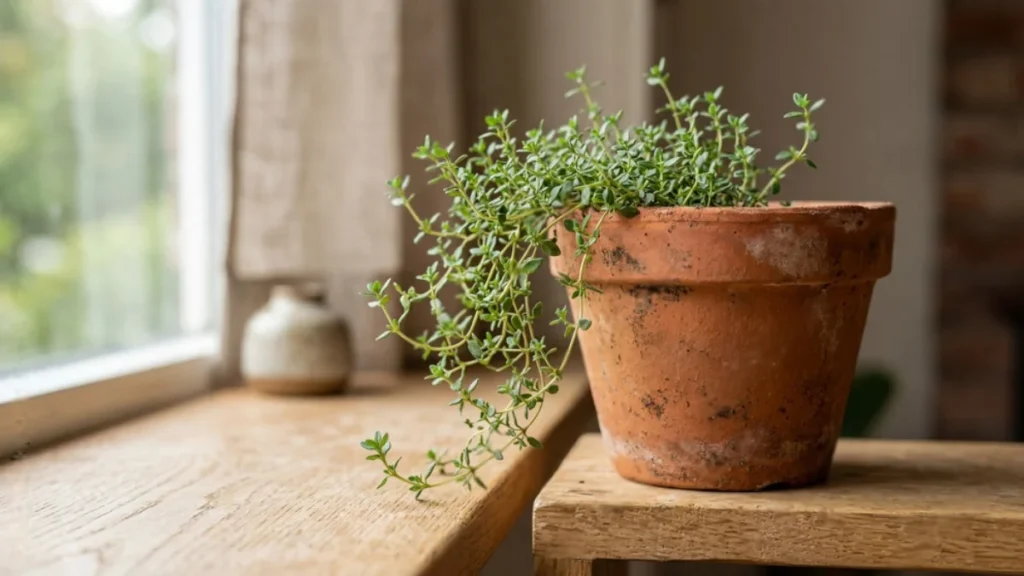
If you’ve ever desired a low-maintenance herb that can flourish practically anywhere, growing thyme in pots is one of the simplest and most gratifying options. Whether you live in an apartment, have a limited garden area, or simply enjoy having fresh herbs on hand, thyme is the ideal plant to start with.
This hardy Mediterranean herb is prized for its fragrant leaves, culinary adaptability, and durability. With the appropriate procedures, you can cultivate thick, delicious thyme on your balcony, windowsill, or patio.
Let’s be honest—many novices struggle with herbs because they overwater or utilize the incorrect soil. That’s precisely why this guide exists. If you follow these foolproof steps, you’ll have a thriving thyme plant in no time.
Why choose thyme for container gardening?
- Thrives under sunny conditions.
- Requires minimal watering
- Grows nicely in smaller pots.
- Commonly used in cooking.
- It attracts pollinators like bees.
Choosing the right pot for thyme
Choosing the right container is critical for successful planting. The perfect pot should be at least 6-8 inches deep, composed of terracotta to avoid overwatering, and fitted with drainage holes. Avoid using plastic pots because they retain too much moisture, which is bad for thyme.
Best soil for growing thyme in pots
Thyme thrives in well-drained, somewhat sandy soil and requires a specific soil mix for maximum growth. The best mix is 40% garden soil, 30% sand or perlite, and 30% compost. Thyme roots decay easily in damp circumstances, proper drainage is essential.
Sunlight requirements
Thyme grows in direct sunshine, requiring at least 5 to 6 hours each day, with 6 to 8 hours being optimum. For best indoor development, place the pot near a south-facing window to guarantee adequate light exposure.
Watering thyme the right way
Overwatering is the most common mistake made while planting thyme in pots. Key watering guidelines include watering only when the topsoil is dry, avoiding everyday watering, and allowing excess water to drain. Thyme should be considered a “less is more” plant in terms of water requirements.
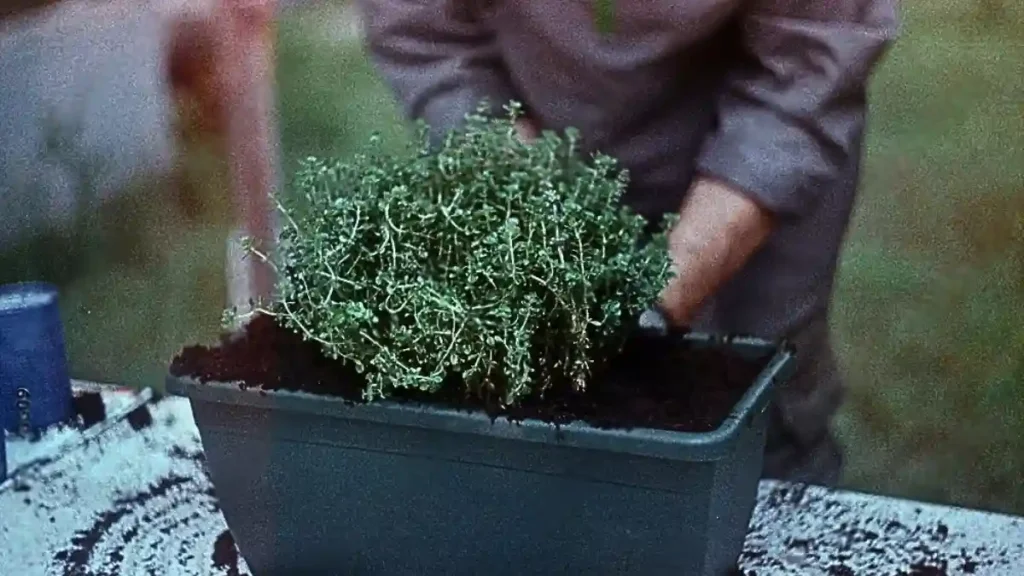
Growing thyme in pots
Method 1: From seeds
- Fill the container with prepared dirt.
- Sprinkle the seeds lightly.
- Cover with a thin layer of dirt.
- Keep moist (but not damp) until germination.
Method 2: From cuttings (Recommended)
- Take a 4-5-inch cut.
- Remove the lowest leaves.
- Plant in wet soil.
- Keep in moderate shade until the roots grow.
Fertilizing thyme plants
Thyme is a plant that grows well without a lot of fertilizer. Fertilization recommendations include using organic compost on a regular basis and avoiding nitrogen-rich fertilizers. It is vital to remember that excessive fertilizing might reduce the flavor of thyme, whilst less fertilizer improves the herb’s perfume and taste.
Pruning and maintenance
Regular pruning is required to keep a bushy and fruitful thyme plant. The pruning procedure entails clipping the top growth on a regular basis, cutting no more than one-third of the plant at a time, and eliminating any woody stems. This method encourages the production of fresh, delicate growth suitable for culinary applications.
Common problems and solutions
Even hardy plants might face a variety of challenges. Aphids and spider mites are among the pests that may harm them; one recommended treatment is to apply neem oil regularly. Regarding infections, root rot caused by overwatering is a major problem that may be addressed by improving drainage and lowering watering frequency.
Harvesting thyme
Harvesting is a satisfying process that should be completed after the plant has grown to a height of 5-6 inches. The best time to pick is in the morning since it boosts taste. To harvest, cut the stems just above the leaf node. The gathered material can be used fresh or dried for later use.
Conclusion
Growing thyme in pots is one of the most basic methods to begin your herb-growing experience. With minimum maintenance, the perfect sunshine, and regular watering practices, you may have a steady supply of fresh, scented thyme at home.
Whether you’re making wonderful meals or beautifying your landscape, thyme is a little plant with tremendous benefits.
Certainly! If you’d like to learn more, please consider following our WhatsApp Channel, Facebook, Instagram, YouTube, Twitter, and Pinterest.
FAQs about growing thyme in pots
Q1: Why is my potted thyme turning yellow?
A1: Yellowing leaves are typically caused by excessive watering or inadequate drainage, which can lead to root rot.
Q2: How do I prevent thyme from becoming woody?
A2: Regular trimming and harvesting protect the plant from becoming overly woody and prolific.
Q3: Can thyme be grown with other herbs in the same pot?
A3: Yes, thyme may be planted with other herbs that thrive in similar dry circumstances, such as rosemary or oregano.
Q4: What are the main health benefits of thyme?
A4: Thyme provides antioxidants, supports immunity, aids digestion, and helps relieve cough and respiratory issues.