


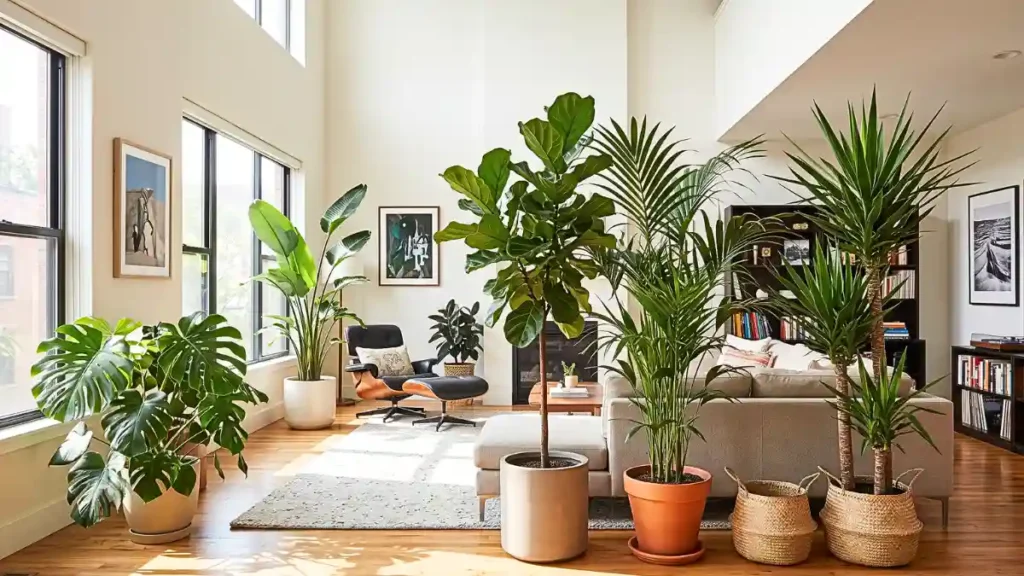
If your living room feels flat, forgettable, or just… missing something — a tall indoor plant might be exactly what it needs. Nothing transforms a space quite like a floor-to-ceiling green giant standing proudly in the corner. Tall indoor plants for living room styling aren’t just a trend — they’re a timeless design tool that adds life, texture, and a breath of fresh air (quite literally) to any home.
This guide covers the 15 finest tall indoor plants for living rooms, including care instructions, styling suggestions, and answers to the most often asked questions—everything you need to confidently select the right statement plant.
Why choose tall indoor plants for your living room?
Before diving into the list, let’s talk about why tall plants work so well in living spaces:
- They fill vertical space — most rooms have unused wall and ceiling height that plants exploit beautifully.
- They act as natural dividers — tall plants define zones in open-plan layouts without walls.
- They purify air — larger leaf surface area means more air filtration.
- They create a focal point — one dramatic plant can anchor a whole room’s design.
- They reduce stress — biophilic design (bringing nature indoors) is proven to improve mood and productivity.
The 15 best tall indoor plants for living room
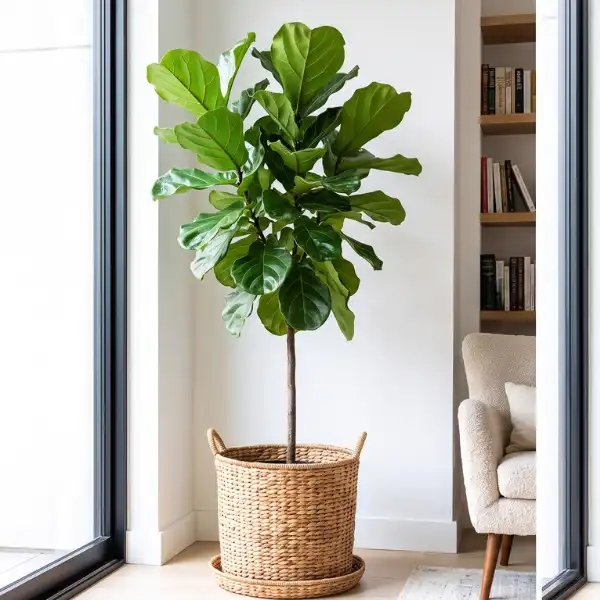
1. Fiddle leaf fig (Ficus iyrata)
The Fiddle Leaf Fig, the uncontested king of Instagram-worthy indoor plants, can grow up to 6 feet indoors and boasts massive, violin-shaped leaves that make an instant statement.
Best for: Bright, indirect light corners near east- or west-facing windows. Care tip: Keep it away from drafts and cold air vents — it’s a drama queen about temperature swings. Height: 4–6 feet indoors

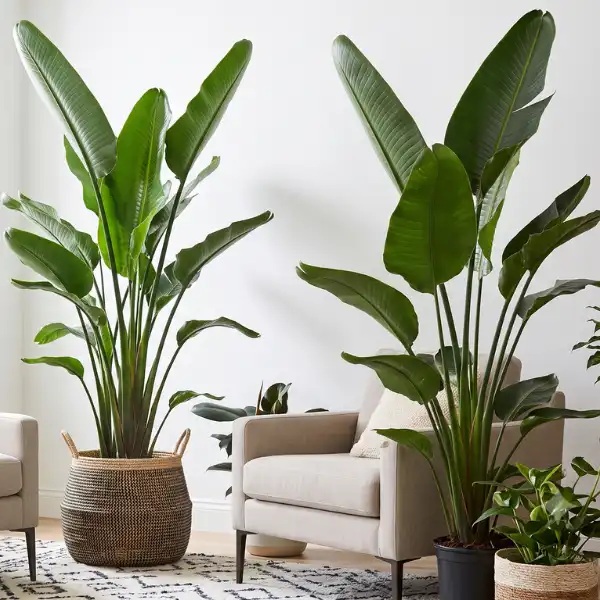
2. Bird of paradise (Strelitzia nicolai)
If you want a plant that exudes “tropical luxury,” the Bird of Paradise is it. Its huge paddle-shaped leaves and erect, architectural style make it a favorite in magazine-worthy living spaces.
Best for: Bright, sunny spots — it genuinely loves direct sunlight. Care tip: Give it a large pot so the roots can spread; cramped roots mean stunted growth. Height: 5–8 feet indoors
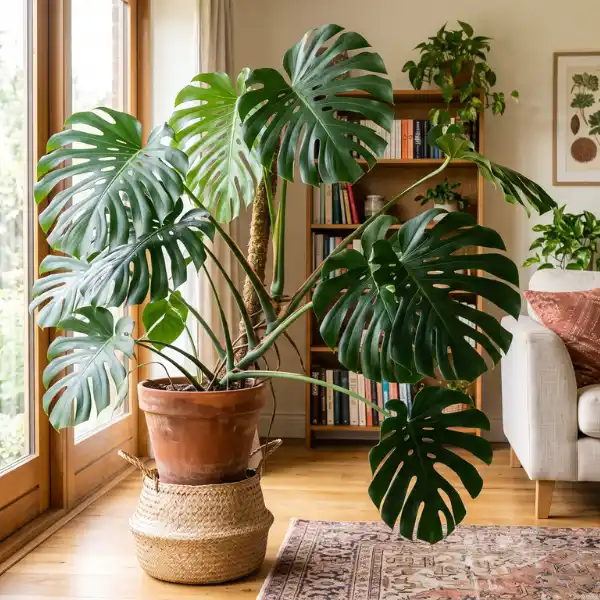
3. Monstera deliciosa (Swiss cheese plant)
You’ve seen it everywhere—and for good reason. The Monstera’s dramatic split leaves and aggressive growth habit make it one of the most popular tall indoor plants for living room decor across the world.
Best for: Indirect bright to medium light. Care tip: Use a moss pole to train it upward and keep its growth tidy. Height: 4–8 feet indoors
4. Areca palm (Dypsis iutescens)
Want to experience tropical feelings without the fuss? The Areca Palm is delicate, feathery, and extremely flexible. It fits nicely in both minimalist Scandi rooms and boho jungle styles.
Best for: Bright indirect light; tolerates some direct morning sun. Care tip: Keep the soil evenly moist and mist the fronds occasionally in dry seasons. Height: 5–7 feet indoors
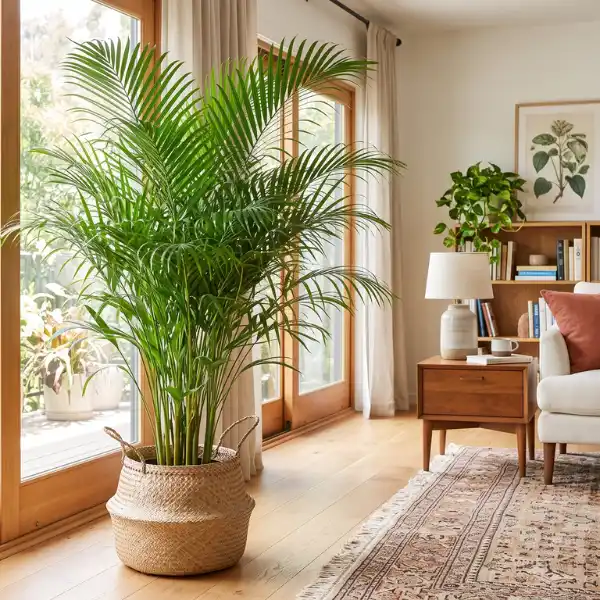
5. Kentia palm (Howea forsteriana)
The Kentia Palm is the Areca’s stylish, low-maintenance counterpart. It performs better in low light than other palms and has graceful, arching fronds that create movement in a space.
Best for: Medium to bright indirect light — excellent for north-facing rooms. Care tip: Very drought-tolerant once established; overwatering is its main enemy. Height: 5–10 feet indoors
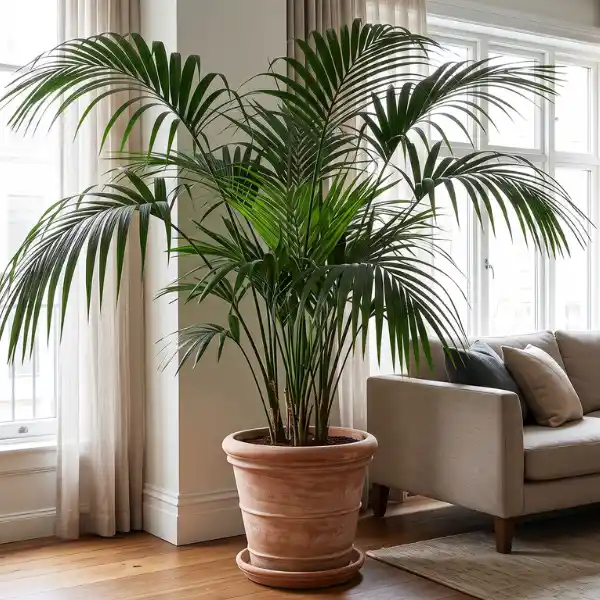
6. Rubber plant (Ficus elastica)
The Rubber Plant, with its bold, shiny, and architectural design, grabs attention. Its rich green (or burgundy) leaves have a glossy shine that looks great in photos and complements earthy, warm interiors.
Best for: Bright indirect light; adapts to medium light. Care tip: Wipe leaves with a damp cloth monthly to keep them glossy and help the plant breathe. Height: 4–8 feet indoors
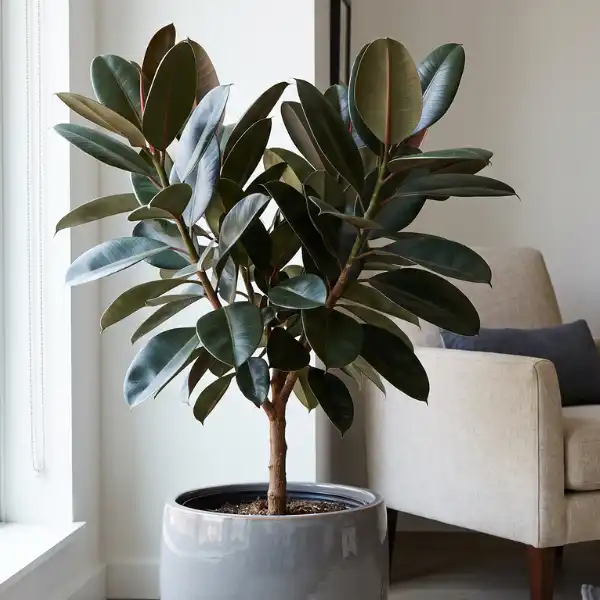
7. Dracaena marginata (Dragon tree)
The Dragon Tree is dramatic, spiky, and almost sculpture-like, making it excellent for modern and contemporary living spaces. Its thin stem and vibrant red-edged leaves give architectural interest without taking over the area.
Best for: Medium to bright indirect light; tolerates lower light. Care tip: Sensitive to fluoride in tap water; use filtered or rainwater if tips turn brown. Height: 4–8 feet indoors
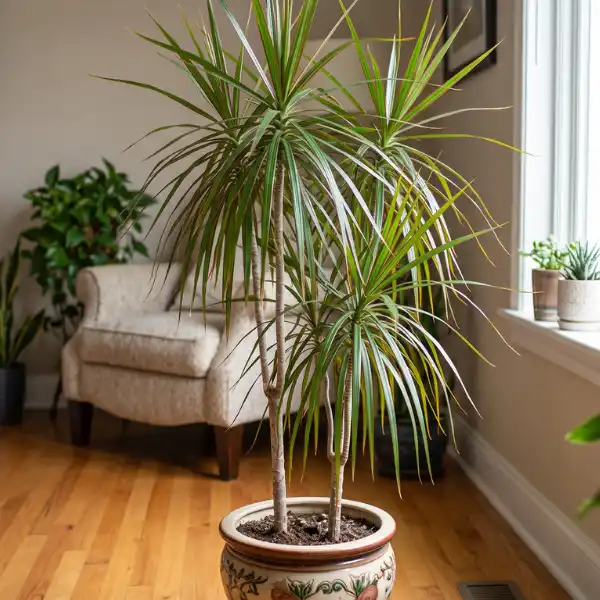
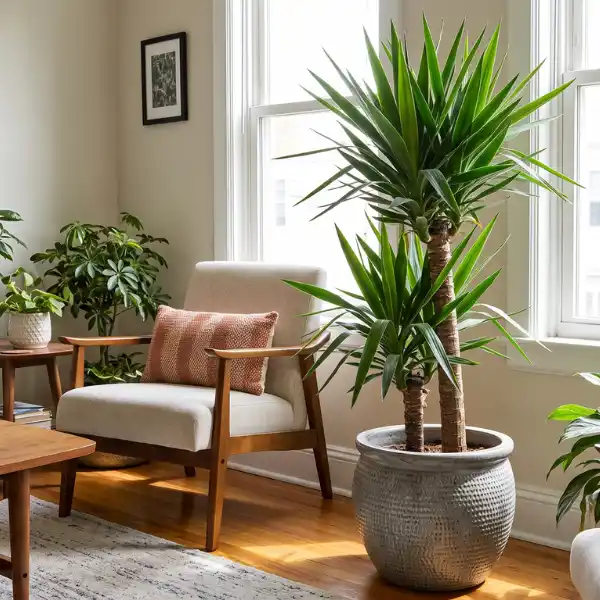
8. Yucca plant
The Yucca is bold, desert-inspired, and very unbreakable. Its spiky rosette of leaves atop a tall stem makes it a standout statement plant, particularly in industrial, rustic, or minimalist settings.
Best for: Bright, direct light — a sun-lover through and through. Care tip: Water sparingly; this plant wants to dry out completely between waterings. Height: 4–8 feet indoors
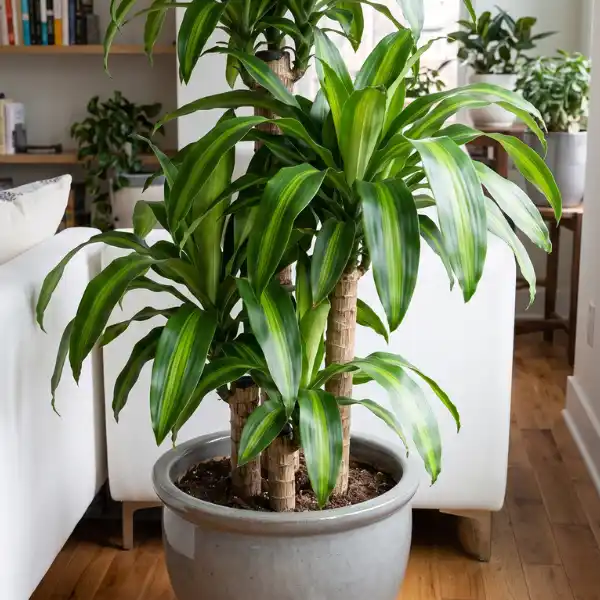
9. Corn plant (Dracaena fragrans)
With its cane-like stem and rich, arching foliage, the Corn Plant exudes effortless grace. It’s one of the most adaptable tall indoor plants for living room placement, tolerating erratic watering and lower light levels well.
Best for: Low to medium light — one of the best options for dim rooms. Care tip: Avoid direct sunlight, which scorches the leaves. Height: 4–6 feet indoors
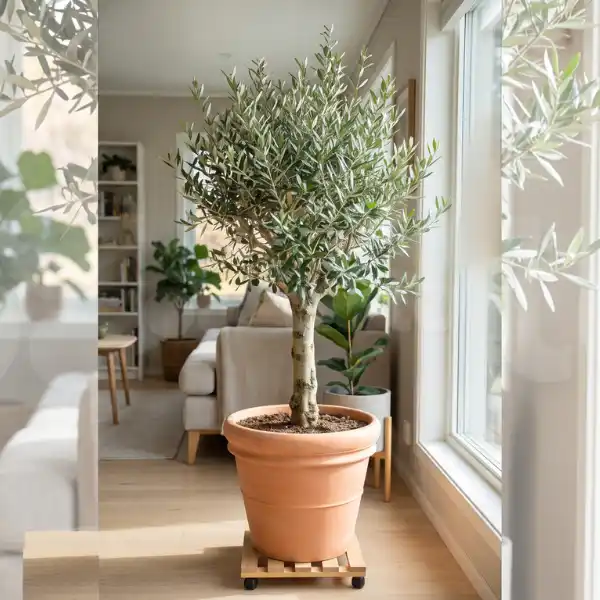
10. Olive tree (Olea europaea)
Olive trees aren’t limited to Mediterranean gardens. Indoors, they add a rustic, romantic touch with silvery-green foliage and twisted branches that seem effortlessly journalistic. They’re also officially fruiting plants—bonus!
Best for: Bright, direct sun — the sunniest spot in the room. Care tip: They need a cool, dry rest period in winter to thrive; avoid overheating. Height: 4–6 feet indoors
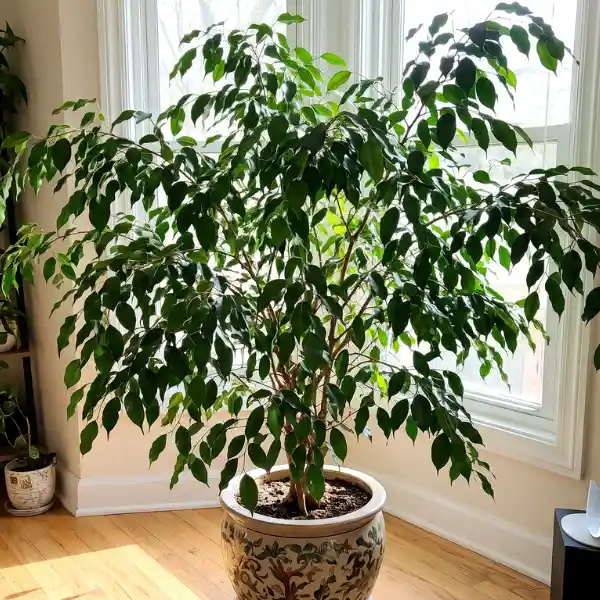
11. Weeping fig (Ficus benjamina)
The Weeping Fig has a majestic, tree-like structure with arching limbs and rich, glossy foliage, making it a perennial favorite. It complements both classic and transitional home designs well.
Best for: Bright indirect light; consistent conditions (it hates being moved). Care tip: Once you find a spot it’s happy in, don’t move it — leaf drop follows any disruption. Height: 4–8 feet indoors
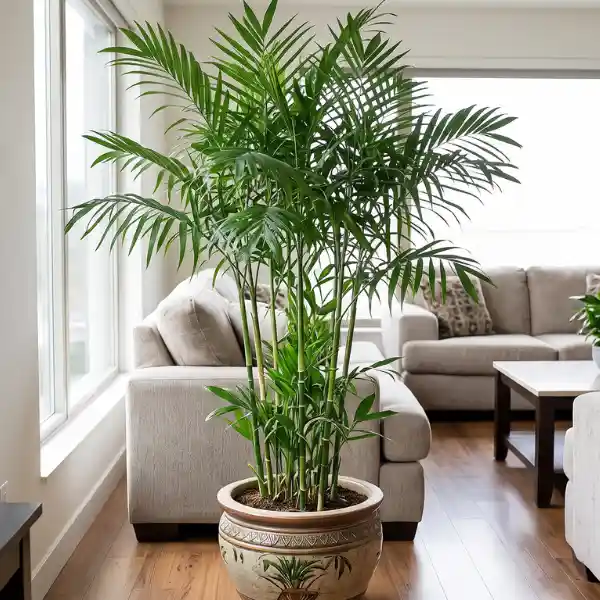
12. Bamboo palm (Chamaedorea seifrizii)
If you have a gloomy living area and require a tall plant, the Bamboo Palm is the finest option. According to NASA’s Clean Air Study, it is one of the best plants for air purification and manages low-light situations better than virtually any other palm.
Best for: Low to medium indirect light — a true low-light champion. Care tip: Keep away from cold drafts and provide moderate humidity. Height: 4–8 feet indoors
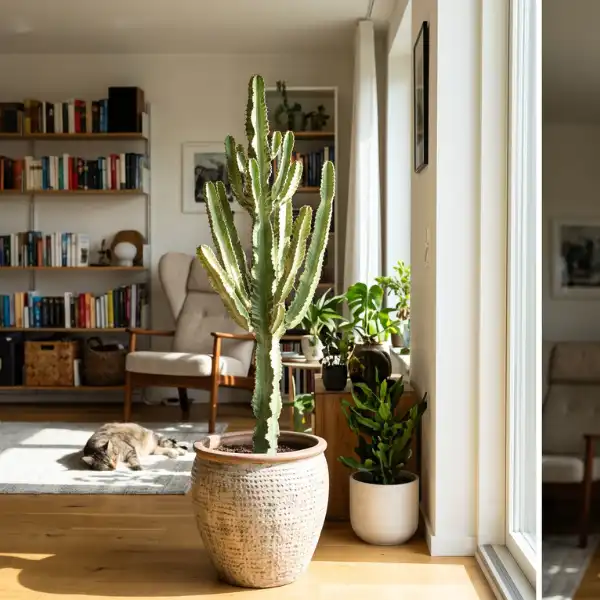
13. African candelabra (Euphorbia ammak)
For those who appreciate an architectural, statement-making silhouette, the African Candelabra cactus is unparalleled. Its tall, ribbed columns offer a surreal focal point in contemporary or minimalist settings.
Best for: Bright, direct sun — south-facing windows are ideal. Care tip: Handle with care — the milky sap is toxic and irritating to skin; wear gloves when pruning. Height: 5–8 feet indoors
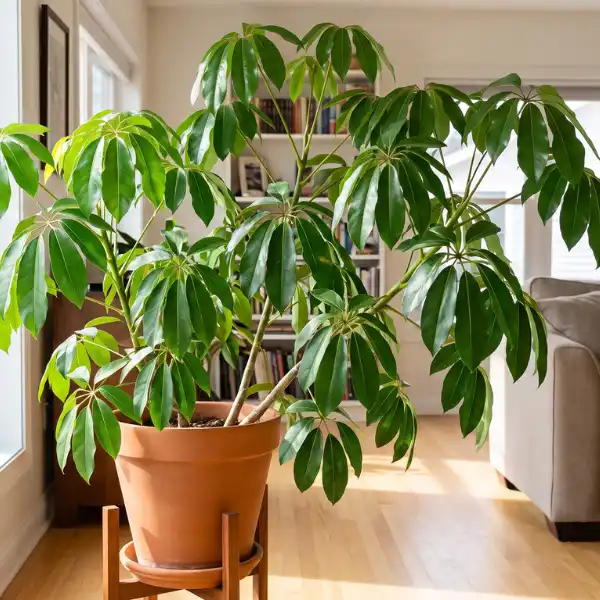
14. Schefflera (Umbrella tree)
The Schefflera’s spreading leaf clusters resemble green umbrellas, giving it a distinctive tropical appearance. It grows swiftly and reacts nicely to trimming, allowing you to easily regulate the form and height.
Best for: Bright to medium indirect light. Care tip: Prune leggy growth in spring to encourage a bushy, full shape. Height: 4–8 feet indoors
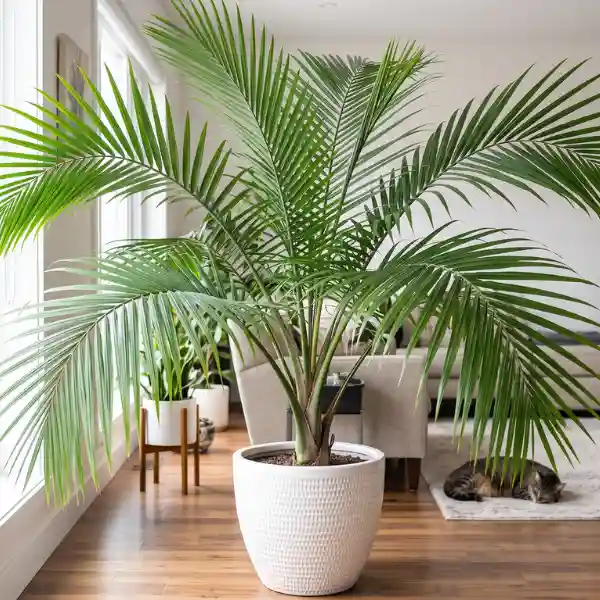
15. Majesty palm (Ravenea rivularis)
Finish out the list with the Majesty Palm, a classic, beautiful palm with fluffy arching fronds that lend soothing, tropical movement to any living area.
Best for: Bright indirect light; appreciates some direct morning sun. Care tip: Loves humidity; consider a pebble tray with water beneath the pot or a nearby humidifier. Height: 5–10 feet indoors
How to style tall indoor plants in your living room
Use corners strategically
In most rooms, corners are useless. A tall plant placed in a corner immediately engages the space, bringing the eye upward and generating a sense of fullness.
Create layered plant groups
Combine a tall statement plant with medium and tiny plants at its base. This tiered method replicates nature and results in a rich, manicured effect without the need for many statement-sized plants.
Match the plant to your interior style
- Minimalist / Scandinavian: Rubber Plant, Dragon Tree, Fiddle Leaf Fig
- Bohemian / Eclectic: Monstera, Areca Palm, Schefflera
- Modern / Contemporary: Bird of Paradise, Yucca, African Candelabra
- Traditional / Classic: Weeping Fig, Kentia Palm, Corn Plant
Choose the right pot
A tall plant deserves a container to finish the effect. Terracotta complements rustic and bohemian themes; matte ceramic in neutral tones is appropriate for modern spaces; and woven rattan pot coverings bring warmth to any room.
Care essentials for tall indoor plants
| Factor | General Guidance |
| Watering | Most prefer to dry out slightly between waterings; overwatering is the #1 killer |
| Light | Match the plant to your room’s actual light levels, not your wish levels |
| Humidity | Tropical plants benefit from regular misting or a humidifier |
| Repotting | Repot every 1–2 years or when roots emerge from drainage holes |
| Feeding | Liquid fertiliser monthly in spring and summer; none in winter |
| Cleaning | Wipe large leaves monthly to remove dust and improve light absorption |
Common mistakes to avoid
Overwatering — It accounts for the majority of houseplant deaths. When in doubt, wait another day.
Wrong light placement — A sun-loving Yucca will languish in a dark corner just as a Bamboo Palm will scorch in a south-facing window. Know your light before you buy.
Ignoring pot size — Too small a pot stunts growth; too large a pot holds excess moisture and causes root rot.
Buying the wrong size — Consider the mature height when purchasing. A Bird of Paradise in a low-ceiling flat will hit the ceiling quickly.
Conclusion:
Choosing the right tall indoor plants for your living room is one of the most impactful, affordable changes you can make to your home. Whether you go bold with a Fiddle Leaf Fig, tropical with a Bird of Paradise, or sculptural with a Dragon Tree — a floor-standing plant immediately elevates the feel of the entire room.
Match your plant to your lighting, your pot to your aesthetic, and don’t overthink watering. The plants on this list are among the most adaptable, gorgeous, and readily available in the world, ready to elevate your living area from ordinary to spectacular.
Start with one. You will quickly desire more.
Certainly! If you’d like to learn more, please consider following our WhatsApp Channel, Facebook, Instagram, YouTube, Twitter, and Pinterest.
FAQs: Tall indoor plants for living room
Q1: What is the best tall indoor plant for a low-light living room?
A1: The Kentia Palm, Bamboo Palm, and Corn Plant (Dracaena fragrans) are among the best tall indoor plants for low-light living rooms. They tolerate indirect and even artificial light better than most tall species and still look lush and full.
Q2: Are tall indoor plants safe for pets?
A2: Not all of them are pet-friendly plants. Plants like Monstera, Yucca, Dracaena, and Fiddle Leaf Figs are toxic to cats and dogs. If you have pets, consider the areca palm, Kentia palm, or bamboo palm—all of which are non-toxic to most household animals. Always verify with the ASPCA toxic plant database before buying.
Q3: What is the easiest tall indoor plant for beginners?
A3: The Corn Plant (Dracaena fragrans), Rubber Plant, and Kentia Palm are the most forgiving options for beginners. They tolerate inconsistent watering, adapt to a range of light levels, and rarely suffer from serious pest problems.
Q4: How much do tall indoor plants cost?
A4: Prices vary by species and size. Small starter plants (1–2 feet) typically cost ₹200–₹800. Statement-sized specimens (4–6 feet) range from ₹1,500 to ₹8,000 or more depending on the species and seller. Rare varieties like large Fiddle Leaf Figs or mature Bird of Paradise can cost significantly more.