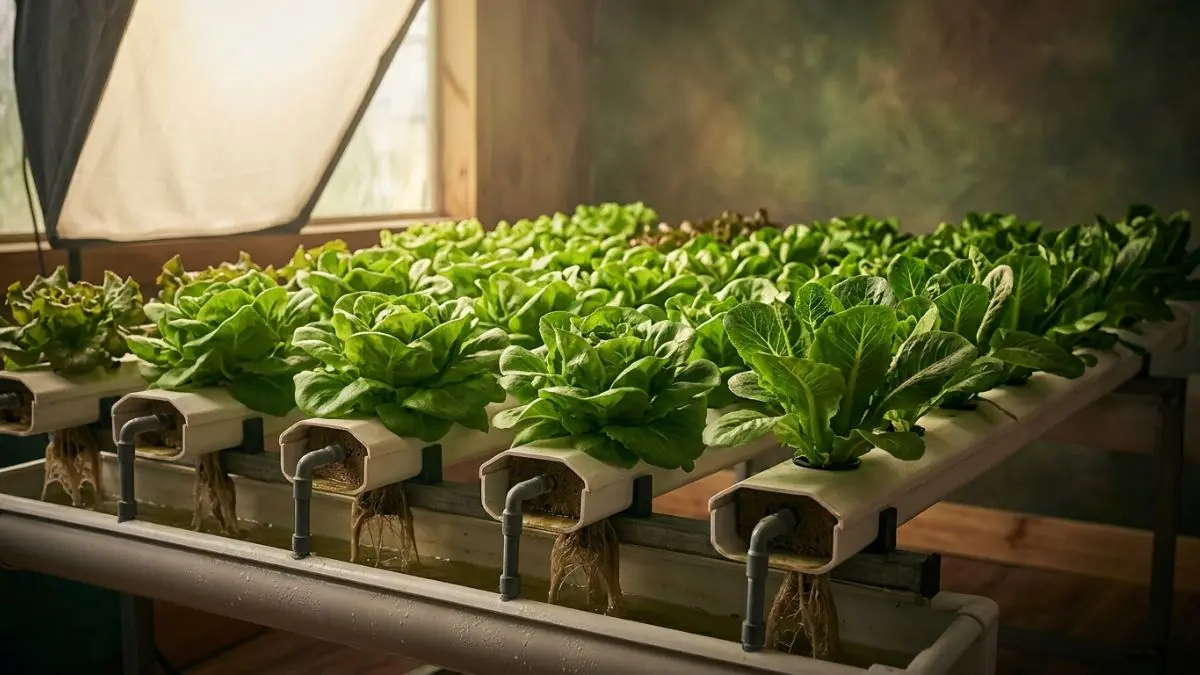
Hydroponic lettuce is lettuce grown without soil, using a nutrient-rich water solution to deliver everything the plant needs directly to its roots. Instead of relying on soil to hold nutrients, hydroponic lettuce systems suspend the roots in water, air, or an inert growing medium like rockwool or coco coir. This method has become one of the most popular entry points into hydroponic gardening because lettuce grows quickly, has shallow roots, and tolerates a wide range of conditions.
Because hydroponic lettuce doesn’t compete with weeds, soil-borne pests, or unpredictable weather, growers can produce consistent, high-quality crops year-round — indoors or in a greenhouse.
Why grow hydroponic lettuce? key benefits
1. Faster Growth Rate: Hydroponic lettuce typically matures 25–30% faster than soil-grown lettuce because the roots have direct, constant access to oxygen and nutrients, removing the energy the plant would otherwise spend searching for food in soil.
2. Higher Yields in Less Space Vertical hydroponic systems allow growers to stack multiple layers of lettuce, dramatically increasing yield per square foot compared to traditional farming.
3. Water Efficiency Hydroponic lettuce uses up to 90% less water than field-grown lettuce because the water recirculates through the system instead of draining into the ground.
4. Fewer Pests and Diseases Without soil, many common soil-borne pathogens and pests simply can’t establish themselves, reducing the need for pesticides.
5. Year-Round Production Indoor hydroponic lettuce setups aren’t limited by seasons, giving growers consistent harvests every few weeks regardless of outdoor climate.
6. Cleaner, Longer-Lasting Produce Since hydroponic lettuce isn’t grown in dirt, it requires less washing and tends to have a longer shelf life after harvest.
Best hydroponic systems for growing lettuce
Not all hydroponic systems perform equally well for lettuce. Below are the most common setups used by home growers and commercial farms alike.
| System Type | How It Works | Best For | Difficulty Level |
| Deep Water Culture (DWC) | Roots hang directly into an oxygenated nutrient solution | Beginners, home growers | Easy |
| Nutrient Film Technique (NFT) | A thin film of nutrient solution flows continuously over roots in a sloped channel | Commercial-scale lettuce production | Moderate |
| Ebb and Flow (Flood and Drain) | Grow tray is periodically flooded with nutrient solution, then drained | Small to medium setups | Moderate |
| Wick System | Nutrient solution is drawn up passively through a wick into the growing medium | Absolute beginners, low-tech setups | Very Easy |
| Aeroponics | Roots are suspended in air and misted with nutrient solution | Advanced growers, high-yield operations | Advanced |
Ideal growing conditions for hydroponic lettuce
To get the best results from hydroponic lettuce, keep these conditions in mind:
- pH Level: 5.5–6.5 for optimal nutrient absorption
- Water Temperature: 60–68°F (15–20°C) to prevent root rot and promote healthy oxygen levels
- Light: 12–16 hours of light daily; LED grow lights in the 6500K spectrum work well for leafy greens
- Nutrient Solution: A balanced hydroponic nutrient mix with adequate nitrogen for leaf growth
- Air Circulation: A small fan helps strengthen stems and prevents mold or mildew buildup
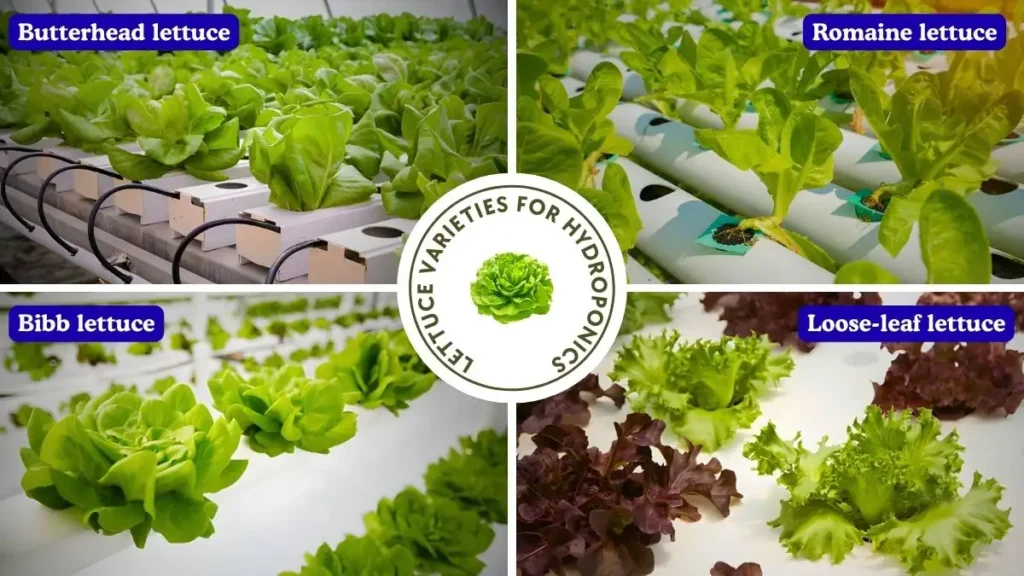
Best lettuce varieties for hydroponics
Certain lettuce varieties thrive better in hydroponic systems than others:
- Butterhead lettuce – soft, tender leaves and fast growth
- Romaine lettuce – crisp texture, great for commercial hydroponic operations
- Bibb lettuce – compact size, ideal for small home systems
- Loose-leaf lettuce (Green/Red Oak, Lollo Rossa) – quick-growing and visually appealing for retail
How to grow hydroponic lettuce: Step-by-step
- Germinate seeds in rockwool cubes or growing plugs until roots emerge.
- Transplant seedlings into your chosen hydroponic system once roots are 1–2 inches long.
- Set up your nutrient solution with a balanced hydroponic fertilizer and check pH levels.
- Monitor light and temperature daily to keep conditions stable.
- Check nutrient levels weekly and top off or replace the solution as needed.
- Harvest in 30–45 days, either by cutting the whole head or picking outer leaves for continuous growth.
Nutrients needed for hydroponic lettuce
Lettuce requires a balanced nutrient solution containing:
- Nitrogen (N)
- Phosphorus (P)
- Potassium (K)
- Calcium
- Magnesium
- Sulfur
- Iron
- Zinc
- Boron
- Manganese
Using a complete hydroponic nutrient formula ensures healthy growth.
Common problems when growing hydroponic lettuce
- Root rot: Usually caused by low oxygen levels or water that’s too warm.
- Tip burn: Often linked to calcium deficiency or high humidity.
- Slow growth: Typically a sign of incorrect pH or insufficient light.
- Algae growth: Caused by light exposure to the nutrient reservoir — keep reservoirs covered.
Conclusion
Hydroponic lettuce combines speed, sustainability, and space efficiency, making it one of the most rewarding crops for beginner and experienced hydroponic growers alike. Whether you’re setting up a small countertop system or scaling a commercial operation, understanding the right system, nutrients, and growing conditions will help you produce consistently healthy, high-quality lettuce all year long.
Certainly! If you’d like to learn more, please consider following our WhatsApp Channel, Facebook, Instagram, YouTube, Twitter, and Pinterest.
Frequently asked questions about hydroponic lettuce
Q1. What is hydroponic lettuce?
A1: Hydroponic lettuce is lettuce grown without soil using a nutrient-rich water solution. The plant’s roots absorb essential nutrients directly from the water, resulting in faster growth, cleaner leaves, and efficient water use.
Q2. How long does hydroponic lettuce take to grow?
A2: Most hydroponic lettuce varieties are ready to harvest within 30 to 45 days. Baby leaf lettuce can often be harvested in as little as 20 to 25 days, depending on the variety and growing conditions.
Q3. Is hydroponic lettuce healthy?
A3: Yes, hydroponic lettuce is highly nutritious. It provides the same vitamins and minerals as soil-grown lettuce—such as vitamins A, K, and folate—while offering a cleaner profile. Grown in controlled environments, it typically requires no pesticides or herbicides and minimizes contamination risks from soil-borne pathogens.
Q4. What are the 5 disadvantages of hydroponics?
A4: The main drawbacks of hydroponics include high setup costs, vulnerability to power outages, and the risk of waterborne diseases. Because systems rely on complex equipment and precise nutrient solutions, a failure can cause rapid crop failure compared to traditional soil farming.