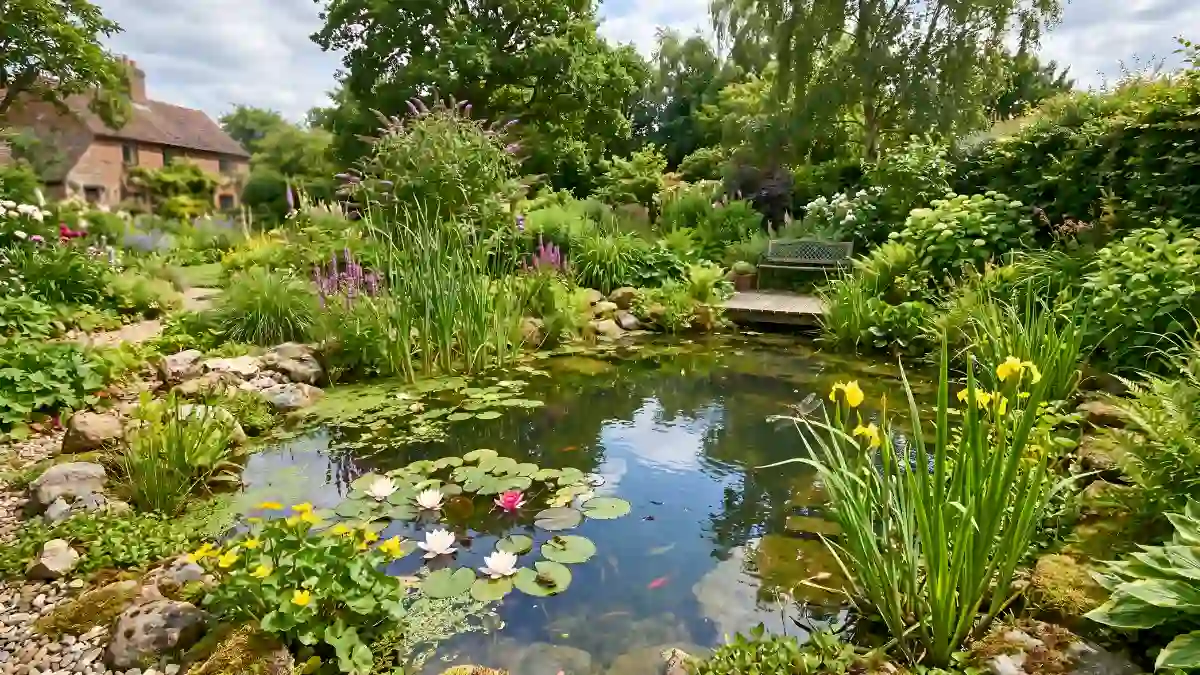
A wildlife pond is one of the single most powerful things you can do for nature — right in your own backyard. Studies show that a garden pond can attract over 300 species of wildlife within just a few years of being built. Frogs, toads, newts, dragonflies, hedgehogs, and countless birds will find their way to your garden once water is present.
Unlike ornamental ponds filled with pumps and koi, a wildlife pond is designed for nature, not against it. It relies on natural processes, which makes it remarkably low-maintenance once established.
Whether you have a large yard or a small urban plot, there is a wildlife pond design that works for you.
Choosing the perfect spot for your wildlife pond
Location is everything. Before you dig, consider:
- Sunlight: Place your pond where it receives at least 5–6 hours of sunlight daily. This encourages aquatic plant growth and warms the water for amphibians.
- Avoid overhanging trees: Fallen leaves decompose, spike nutrient levels, and can suffocate pond life.
- Gentle slope on one side: A gently sloping bank allows hedgehogs, birds, and frogs to enter and exit safely — this is non-negotiable for a true wildlife pond.
- Away from chemical runoff: Keep distance from lawns treated with herbicides or fertilisers.
A north-facing pond is better than no pond at all — don’t let the “perfect spot” stop you from starting.
How to build a wildlife pond: Step-by-step
Step 1 — Dig your pond shape
Aim for irregular, natural-looking edges than a precise oval. Variate the depth:
- Shallow margins (5–10 cm): Perfect for marginal plants and amphibians to spawn.
- Mid-zone (30–40 cm): Aquatic plant roots, insect larvae, and frogs overwinter here.
- Deep zone (60–90 cm): Protects wildlife from freezing in winter.
Step 2 — Line the pond
Use a butyl rubber liner (at least 0.75mm thick) for durability — it can last 20+ years. Lay a geotextile underlay first to protect against sharp stones.
Calculate liner size with this formula:
Length = pond length + (2 × max depth) + 0.6m overlap
Step 3 — Fill with the right water
Rainwater is best.Tap water includes chlorine and high quantities of phosphate, which promote algal blooms. Connect a water butt to your downpipe and gently fill, or let rainwater to do the job naturally.
Step 4 — Add soil and gravel
Line the shallow zones with a thin layer of poor, sandy soil or washed gravel, not garden compost. Algae thrive on fertile soil. The gravel at the base provides a place for invertebrates to hide and reproduce.
The best plants for a wildlife pond
Plants are the foundation of a healthy wildlife pond. They oxygenate the water, give shelter, and help the food chain. Aim for three types.
Submerged oxygenators
- Hornwort (Ceratophyllum demersum) — excellent for clarity and tadpole cover
- Water crowfoot (Ranunculus aquatilis) — beautiful white flowers loved by insects
Marginal plants
- Yellow flag iris (Iris pseudacorus) — striking and a favourite for invertebrates
- Brooklime (Veronica beccabunga) — low-growing, great for shallow edges
- Water forget-me-not — delicate blue flowers adored by pollinators
Floating & deep-water plants
- White water lily (Nymphaea alba) — provides shade to reduce algae and shelter fish
- Frogbit (Hydrocharis morsus-ranae) — native, floats freely, easy to manage
Tip: Always buy native species from reputable aquatic nurseries. Never introduce plants collected from the wild — it's illegal in many regions and risks spreading invasive species.
Attracting wildlife to your pond
Frogs and toads
They’ll find you — usually within the first spring. Don’t introduce spawn; let nature do its work. Leave a log pile or stone pile nearby for daytime shelter.
Dragonflies and damselflies
These spectacular insects need emergent plants (like reeds or iris stems) to climb out of the water as adults. They’ll colonise fast — sometimes within weeks.
Birds
A shallow beach edge is irresistible to bathing birds. Add a flat stone just below the waterline for easy access.
Hedgehogs
A ramp or gentle slope isn’t optional — hedgehogs drown in steep-sided ponds. A plank of wood or a stack of stones into the water can save lives.
Wildlife pond maintenance through the seasons
| Season | Key Tasks |
| Spring | Remove excess blanketweed, check for spawn |
| Summer | Top up with rainwater, thin vigorous plants |
| Autumn | Skim fallen leaves, cut back marginals |
| Winter | Never break ice by force — float a ball or pour warm water gently to create a gas-exchange hole |
Never use chemicals in a wildlife pond. If you have algae problems, install extra submerged oxygenators and eliminate nutrient sources. Patience is your finest tool.
Conclusion:
A wildlife pond is more than just a yard feature; it provides a lifeline for threatened species throughout the UK and beyond. Building one is a concrete, direct act of conservation that rewards you every day with views and sounds that no other garden feature can provide.
Start small. Start today. Nature will handle the rest.
Certainly! If you’d like to learn more, please consider following our WhatsApp Channel, Facebook, Instagram, YouTube, Twitter, and Pinterest.
Frequently asked questions about wildlife pond
Q1: Can I add fish to a wildlife pond?
A1: It’s best not to. Fish eat tadpoles, frog spawn, newt larvae, and aquatic invertebrates — effectively gutting the wildlife value. A pond without fish is a far richer habitat.
Q2: How big does a wildlife pond need to be?
A2: Even a pond the size of a washing-up bowl on a balcony can support life. Ideally, aim for at least 2m × 2m in the garden — but any water feature is better than none.
Q3: My pond is going green — is it dying?
A3: Green water (algae bloom) is common in new ponds. Add more submerged plants, reduce direct sunlight with floating leaves, and be patient — most ponds self-correct within one season.
Q4: Do I need a pump or filter?
A4: No. A well-planted wildlife pond maintains its own balance without pumps or UV filters. In fact, pumps can harm invertebrate larvae and disrupt natural stratification.