

If you’ve ever wanted a vegetable that practically grows itself, zucchini is your answer. One plant can produce dozens of fruits over a single season, making it the ultimate bang-for-your-buck crop for home gardeners. But growing zucchini well — juicy, flavour-packed, and pest-free — takes a little more than just throwing seeds in the ground.
This guide covers everything about how to grow zucchini, from choosing the right variety to preparing your soil, planting, watering, troubleshooting, and knowing exactly when to harvest. Whether you’re a first-timer or a seasoned grower, you’ll find actionable tips to maximize your yield.
What you need to know before you plant
Zucchini basics at a glance
| Factor | Ideal Condition |
| Sunlight | Full sun (6–8 hours/day) |
| Soil pH | 6.0–7.0 |
| Planting depth | 1 inch (2.5 cm) |
| Spacing | 2–3 feet apart |
| Days to harvest | 45–65 days |
| Watering | 1–2 inches per week |
| USDA Zones | 3–10 (warm season) |
Best zucchini varieties to grow
Not all zucchini are equal. Here are the top varieties worth planting:
- Black Beauty — The classic. Dark green, reliable, and incredibly productive. Best for beginners.
- Costata Romanesco — An heirloom Italian variety with ridged skin and a rich, nutty flavour. Great for foodies.
- Golden Zucchini — Yellow-skinned with a slightly sweeter taste. Adds colour to salads and stir-fries.
- Patio Star — Compact and bushy, perfect for containers and small gardens.
- Dunja — Powdery mildew-resistant, making it ideal for humid climates.

How to prepare the soil for growing zucchini
Zucchini are heavy feeders. Getting the soil correct before planting is the single most important element in determining harvest size.
Step 1: Choose the right location
Choose a location that receives at least 6-8 hours of direct sunshine every day. Zucchini will thrive in partial shade, but fruit yield is severely reduced. Avoid planting in low-lying, moist areas to ensure proper air circulation.
Step 2: Enrich your soil
Dig the planting area to a depth of 12 inches (30 cm). Work in:
- 2–4 inches of compost to boost organic matter and drainage
- A balanced slow-release fertilizer (10-10-10) at planting time
- A handful of aged manure per planting hole, if available
Zucchini prefer a slightly acidic to neutral pH of 6.0–7.0. If your soil is too acidic, add agricultural lime. Too alkaline? Work in sulphur or peat moss.
Step 3: Create hills or raised beds (Optional but Recommended)
Many experienced gardeners plant zucchini on little mounds or “hills” — elevated areas around 6-8 inches tall. This promotes drainage, heats the soil faster in the spring, and prevents roots from resting in soggy circumstances.
How to grow zucchini: seeds vs. transplants
Starting from seeds indoors
Start seeds indoors 2–4 weeks before your last expected frost date. Zucchini doesn’t like its roots disturbed, so use biodegradable peat pots that can go straight into the ground.
- Fill peat pots with seed-starting mix
- Sow 2–3 seeds per pot, about 1 inch (2.5 cm) deep
- Water gently and cover with plastic wrap
- Place in a warm spot (70–85°F / 21–29°C) — seeds germinate in 7–10 days
- Once seedlings appear, remove the plastic and thin to the strongest plant
- Harden off for 7–10 days before transplanting outdoors
Direct sowing outdoors
Direct sowing is actually preferred by zucchini. Sow seeds directly into warm soil after the last frost, when soil temperature reaches at least 60°F (15°C).
- Sow 2–3 seeds per hole, 1 inch deep
- Space holes 24–36 inches apart (or 3–4 feet for bush varieties)
- Thin to one plant per spot once the true leaves appear
Transplanting store-bought seedlings
If buying seedlings, transplant on a cloudy day or in the evening to reduce transplant shock. Water thoroughly and avoid disturbing the root ball.
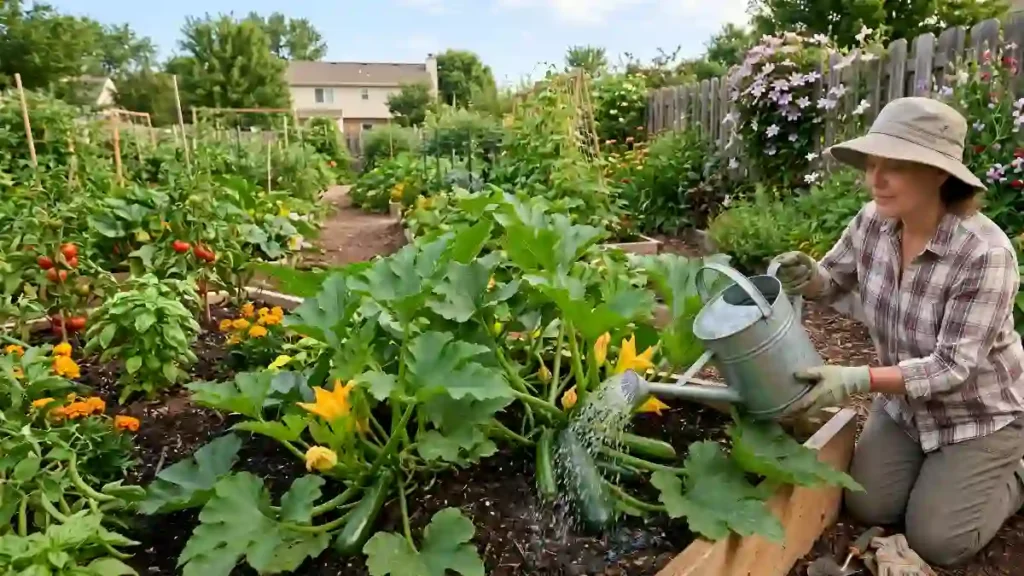
Watering zucchini: getting it right
Zucchini need regular moisture—but not wet feet. Inconsistent watering causes blossom end rot, deformed fruit, and bitter meat.
How much water does a zucchini need?
Aim for 1-2 inches of water every week, either by rainfall or irrigation. During heatwaves during peak fruiting season, raise to two inches each week.
Watering Best Practices
- Water at the base of the plant, not over the leaves — wet foliage invites powdery mildew
- Water deeply and less frequently rather than shallow and daily — this encourages deeper root growth
- Use drip irrigation or a soaker hose for the most efficient delivery
- Check soil moisture by pushing a finger 2 inches into the soil — if it’s dry, it’s time to water
- Mulch heavily with straw or wood chips to retain moisture and suppress weeds
Feeding your zucchini for maximum yield
Zucchini are greedy plants that reward generous feeding.
Fertilising schedule
| Stage | Fertiliser Type | Frequency |
| At planting | Balanced 10-10-10 (granular) | Once |
| First 4 weeks | Nitrogen-rich (e.g., 21-0-0) | Every 2 weeks |
| Flowering begins | Low-nitrogen, high potassium (e.g., 5-10-10) | Every 2 weeks |
| Mid-season | Compost tea or liquid seaweed | Weekly |
Once flowers bloom, switch to a low-nitrogen fertilizer; too much nitrogen at this point promotes green growth at the price of fruit.
Pollination: The secret to fruit production
Many first-time zucchini growers are baffled when their plants flower beautifully but produce no fruit. The culprit? Poor pollination.
Male vs. female flowers
Zucchini produces separate male and female flowers on the same plant:
- Male flowers appear first, on straight, thin stems
- Female flowers appear a week or two later and have a small miniature zucchini at their base
Only female flowers produce fruit — and only if they’re pollinated.
How to encourage pollination
- Plant pollinator-friendly flowers nearby — marigolds, borage, and nasturtiums attract bees
- Avoid pesticides during flowering, especially during morning hours when bees are most active
- Hand-pollinate if bees are scarce: use a small paintbrush to transfer pollen from a male flower’s centre to a female flower’s centre, or break off a male flower and dab it directly into the female
Common zucchini pests and diseases — and how to beat them
Pests to watch for
Squash Vine Borer: The most damaging zucchini pest. The larvae crawl into the stems, resulting in abrupt withering. Prevention is crucial.
- Cover the plants with row cover until blossoming starts.
- Check the stems regularly for sawdust-like frass (excrement).
- Rotate crops annually.
Cucumber beetles are yellow and black striped or spotted insects that consume plants and transmit bacterial wilt. Handpick them or use yellow sticky traps.
Aphids Clusters form on the undersides of leaves. Remove with a vigorous water jet or neem oil spray.
Diseases to prevent
Powdery Mildew is a white, flour-like covering on leaves. Very prevalent in late summer. Choose resistant kinds (such as Dunja), provide adequate ventilation, and spray with a weak baking soda solution (1 tbsp per litre of water) at the first symptom.
Blossom End Rot: A soft, black spot on the bloom end of the fruit. Calcium insufficiency is caused by uneven watering. Fix: distribute water evenly and add calcium to the soil.
Mosaic Virus causes mottled, deformed leaves. Aphids are responsible for their spread. There is no treatment; thus, damaged plants should be removed and destroyed promptly.
When and how to harvest zucchini
Knowing when to harvest is the difference between a soft, tasty zucchini and a watery, seed-filled club that went unnoticed for a week.
The golden harvest window
Harvest zucchini when it is 6-8 inches (15-20 cm) long and 2 inches (5 cm) in diameter. At this size, they are:
- Tender with thin skin.
- Flavorful with little and delicate seeds.
- At maximal nutritional value.
How to harvest without damaging the plant
Using a sharp knife or garden scissors, cut the zucchini from the stem, leaving approximately 1 inch attached. Never twist or pluck the main vine; this might destroy it and spread illness.
How often should you harvest?
Check plants every 1-2 days during peak season. Zucchini grow quite quickly; a fruit overlooked after three days might develop into a marrow-sized giant. The more often you harvest, the more the plant produces.
How to grow zucchini in Containers
No garden? No problem. Zucchini can thrive in containers with the right setup:
- Use a container at least 15–20 gallons in volume with excellent drainage
- Choose compact varieties like Patio Star or Bush Baby
- Fill with a premium potting mix blended with compost
- Water daily in hot weather — containers dry out fast
- Feed every 7–10 days with a liquid fertilizer
Place containers in the sunniest spot available and expect slightly lower yields than in-ground plants.
Conclusion:
Learning how to grow zucchini is one of the most rewarding activities a home gardener can perform. With the correct soil, continuous water, diligent pollination, and a keen eye for pests, you’ll be drowning in fresh zucchini within two months of planting — and most likely exchanging bags with your neighbours.
What’s the true secret? Check your plants every day. Zucchini rewards diligent gardeners richly while punishing negligence with massive, seedy clubs that no one wants to eat.
Plant boldly, water regularly, and harvest frequently. Your garden will thank you.
Certainly! If you’d like to learn more, please consider following our WhatsApp Channel, Facebook, Instagram, YouTube, Twitter, and Pinterest.
Frequently asked questions about how to grow zucchini
Q1: Why is my zucchini plant wilting even though I’m watering it?
A1: Sudden wilting despite adequate watering is a classic sign of squash vine borer damage. Check the base of the stem for entry holes and sawdust-like frass. You can attempt to remove the larvae with a thin wire, then mound soil over the wound to encourage re-rooting.
Q2: Why are my zucchini flowers falling off without producing fruit?
A2: This is usually a pollination problem. The first flowers to appear are male flowers, which will drop naturally. Female flowers (with the tiny zucchini at the base) need bee visits to set fruit. If bees are scarce, try hand-pollinating using a paintbrush or a picked male flower.
Q3: How to grow zucchini vertically?
A3: Growing zucchini vertically is a brilliant space-saver for small gardens. Simply install a sturdy trellis, fence, or cage at least 5–6 feet tall at planting time, then gently train the main vine upward as it grows, securing it loosely with soft garden ties or strips of cloth every 6–8 inches. Choose vining varieties like Black Forest or Astia rather than bush types, as they naturally want to climb. As fruits develop, they’ll hang freely — though larger zucchinis may need a small fabric sling tied to the trellis for support so the weight doesn’t snap the vine. Water and feed exactly as you would for ground-grown plants, but check daily since vertical plants dry out slightly faster. The bonus? Better airflow means far less powdery mildew, and harvesting becomes effortless — no more crouching through giant leaves hunting for hidden fruits.