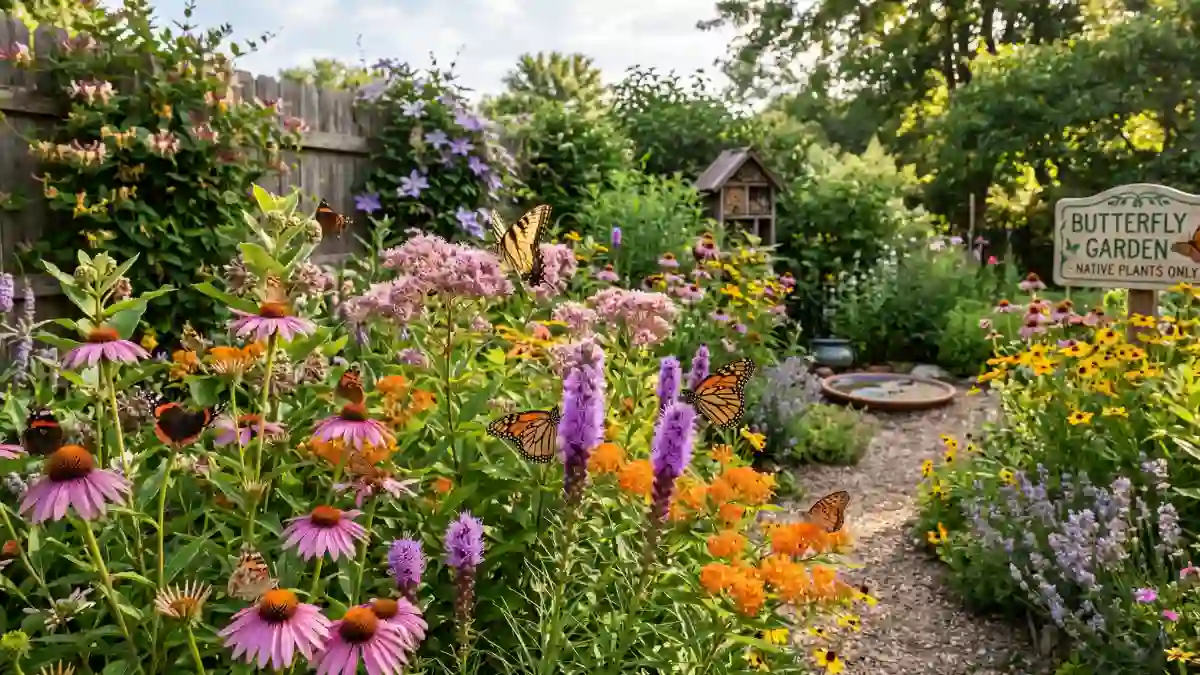
Butterflies are disappearing. Habitat loss, pesticides, and climate change have wiped out nearly a third of North America’s butterfly populations in the last two decades. But here’s the good news — your backyard can be part of the solution.
The right butterfly garden plants do more than simply add vibrant color and movement to your outdoor environment. They actively promote pollinator habitats, increase biodiversity, and create a living garden that benefits you every day of the growing season.
Whether you have a large backyard or a little balcony container, this book will teach you all you need to know to create a genuinely functional butterfly garden.
The two types of butterfly garden plants you must have
Before picking up a single seedling, understand this critical distinction:
Nectar plants — The dining table
Nectar plants nourish adult butterflies. These are the colorful, flower-filled plants that entice butterflies once they emerge. They provide the sugary fuel that butterflies require for flying, reproduction, and migration.
Host plants — The nursery
Host plants are where butterflies lay their eggs and caterpillars feed and develop. Without host plants, there are no caterpillars and hence no future butterflies. Many gardeners skip this stage altogether, resulting in gardens that attract tourists but do not support populations.
A true butterfly garden requires both types.
Top 7 nectar plants for a butterfly garden
1. Butterfly bush (Buddleja davidii)
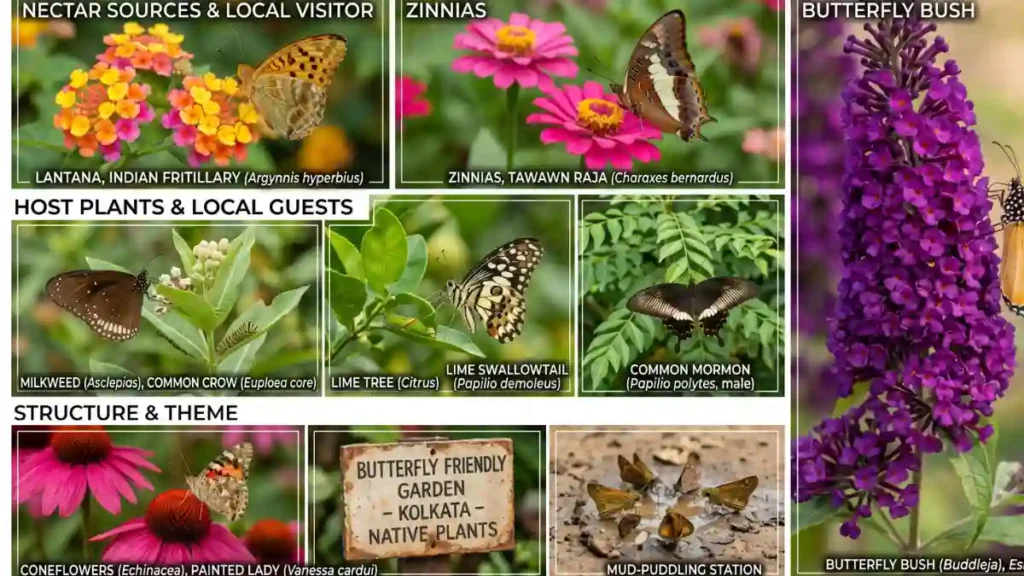
It’s named for a reason. The long, fragrant flower spikes of butterfly bush are irresistible to swallowtails, painted ladies, and skippers. It blooms from midsummer through autumn — right when butterflies are most active. Choose sterile cultivars like ‘Miss Ruby’ or ‘Lo & Behold’ to prevent unwanted spreading.
Best for: Most butterfly species | Sun: Full sun | Bloom time: July–October
2. Coneflower (Echinacea purpurea)
A North American native that produces nectar for butterflies in the summer and seeds for birds in the winter. The flat, open flower heads are ideal for butterfly feeding. Once established, the plant is extremely drought-tolerant.
Best for: Monarchs, fritillaries, skippers | Sun: Full to partial sun | Bloom time: June–September
3. Lantana (Lantana camara)
Few plants are as effective in attracting butterflies as lantana. The thick clusters of small blooms in sunset tints of orange, yellow, and pink act as a magnet. It grows as a perennial in warm areas, although it is treated as a long-blooming annual elsewhere.
Best for: Swallowtails, monarchs, sulfurs | Sun: Full sun | Bloom time: Spring to frost
4. Milkweed (Asclepias spp.)
Technically both a nectar and host plant, milkweed is the single most important butterfly garden plant you can grow — because it’s the only plant monarch butterflies will lay their eggs on. Without milkweed, monarchs cannot reproduce. Plant native species like common milkweed (A. syriaca) or butterfly weed (A. tuberosa).
Best for: Monarchs (essential) | Sun: Full sun | Bloom time: June–August
5. Verbena (Verbena bonariensis)
Tall, airy, and almost transparent, verbena bonariensis lends elegance to any garden bed, while its flat-topped purple flower clusters attract nearly every butterfly species on the wing. It self-seeds dependably, which means that a single plant can form a colony.
Best for: All species | Sun: Full sun | Bloom time: June–October
6. Zinnias
The most beginner-friendly butterfly garden plant. Zinnias grow quickly, are affordable, and available in every color conceivable. They also flower for months. Butterflies prefer single-flower variants to puffy doubles.
Best for: Monarchs, swallowtails, fritillaries | Sun: Full sun | Bloom time: June–frost
7. Joe pye weed (Eutrochium purpureum)
A tall, striking native perennial that blooms in late summer, after many other plants have ended. The mauve-pink domed flower heads attract migrating monarchs and swallowtail butterflies as they prepare to migrate south in the autumn.
Best for: Monarchs, swallowtails | Sun: Full to partial sun | Bloom time: August–September
Top 3 host plants — Where butterflies raise their young
1. Milkweed (Monarchs)
As mentioned — this is non-negotiable if you want monarch butterflies to complete their lifecycle in your garden.
2. Fennel, parsley & dill (Black swallowtails)
Black swallowtail caterpillars are beautiful green-and-yellow striped creatures that exclusively feed on plants in the carrot family. Plant a patch of fennel, flat-leaf parsley, or dill and prepare to share your herbs.
3. Native willows, cherries & plums (Various swallowtails)
Tiger swallowtails and viceroys lay eggs on native willows, cherry, and plum trees. Even a small native tree can support a surprising number of broods each season.
Pro tips for designing a high-impact butterfly garden
Plant in drifts, not dots — butterflies spot large colour masses from the air far more easily than single isolated plants.
Avoid pesticides completely. Even “butterfly-friendly” pesticide products can harm caterpillars and chrysalises.
Add a shallow water dish filled with pebbles and water. Butterflies need to puddle — drinking mineral-rich moisture from the ground.
Choose plants that offer staggered bloom times from spring through autumn so the garden supports butterflies across the entire season.
Leave some bare, sunny ground — many butterfly species puddle on warm soil and some nest in the ground.
Conclusion:
Creating a butterfly garden is one of the most rewarding and purposeful things a gardener can do. By choosing the right butterfly garden plants — a thoughtful mix of nectar-rich bloomers and essential host plants — you’re not just beautifying your outdoor space, you’re actively rebuilding a habitat that butterflies desperately need. From the monarch-saving milkweed to the beginner-friendly zinnia, every plant you put in the ground is a small act of conservation. Start with just a few key plants, go pesticide-free, and watch your garden come alive with colour, movement, and wings. Nature will take care of the rest.
Certainly! If you’d like to learn more, please consider following our WhatsApp Channel, Facebook, Instagram, YouTube, Twitter, and Pinterest.
Frequently asked questions about butterfly garden plants
Q1: What is the single best butterfly garden plant for beginners?
A1: Zinnias. They’re cheap, easy to grow from seed, bloom all summer, and attract an enormous variety of butterfly species with zero fuss.
Q2: Are butterfly garden plants also good for bees?
A2: Yes — the majority of butterfly-attracting plants are equally valuable to bees, and also attract hummingbirds, and other pollinators, making a butterfly garden a powerful multi-species habitat.
Q3: When should I plant butterfly garden plants?
A3: Most nectar plants are best planted after the last frost in spring. For areas with mild winters, late summer planting works well for autumn butterfly activity.
Q4: Do I need a large garden to attract butterflies?
A4: Not at all. Even a collection of containers on a balcony planted with milkweed, lantana, and verbena can attract significant butterfly activity in an urban area.