String of dolphins are endemic to the southwest of South Africa, where they thrive in an arid region with scorching summers and chilly winters. As a result, they are ideal landscape plants for warmer climes near the California coast, but they can thrive indoors in hanging baskets. Perhaps best of all, these succulents are extremely easy to reproduce, allowing you to cultivate a large number of plantlets and share them with friends and family.
Imagine a plant whose leaves look exactly like a pod of tiny dolphins leaping through ocean waves — and then imagine that plant cascading from a hanging basket on your windowsill.The string of dolphins is one of the most captivating succulents ever discovered, combining exceptional visual appeal with surprisingly modest maintenance requirements. Whether you’re new to succulents or adding this jewel to your existing collection, this comprehensive growing and care guide will teach you all you need to know.
What is the string of dolphins plant?
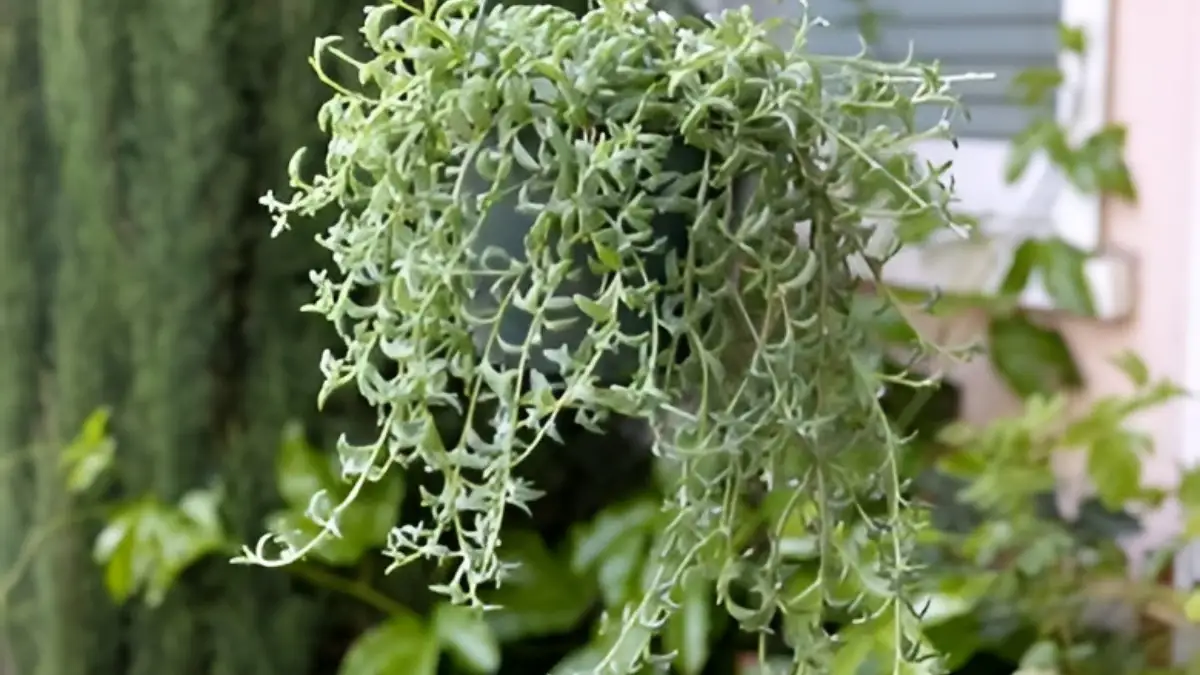
The string of dolphins (Senecio peregrinus, also known as Curio × peregrinus) is a rare hybrid succulent – a natural cross between the string of pearls (Senecio rowleyanus) and candle plant. The end result is one of the most unique and visually gorgeous succulents. Each leaf is a tiny, curved crescent shape with two translucent “windows” that make an unmistakable dolphin silhouette. On long trailing stems that can exceed 90cm, dozens of these tiny jumping dolphins cascade in perfect order.
The string of dolphins, which is native to South Africa and the Canary Islands, thrives in the sunny, dry circumstances that characterize its succulent origin. It is a small, slow-growing plant that seldom grows taller than 15-20cm and spreads freely along its trailing branches. In April, older plants may produce little white or pale lavender flowers with a nice cinnamon-like aroma – a delightful addition to the already exceptional leaves.
String of dolphins care:
1. Light requirements — the key to keeping dolphin leaves looking perfect
The string of dolphins, which is native to South Africa and the Canary Islands, thrives in the sunny, dry circumstances that characterize its succulent origin. It is a small, slow-growing plant that seldom grows taller than 15-20cm and spreads freely along its trailing branches. In April, older plants may produce little white or pale lavender flowers with a nice cinnamon-like aroma – a delightful addition to the already exceptional leaves.
2. Watering and soil — the soak-and-dry method that saves every succulent
Like many succulents, a string of dolphins retains water in its leaves and is significantly more susceptible to overwatering than drought. The proper procedure is the soak-and-dry method: water deeply and thoroughly until water runs freely from the drainage holes, then let the soil dry fully before watering again. In the spring and summer, this usually requires watering every 10-14 days. In the fall and winter, increase this to every 3-4 weeks — or just ensure that the soil is entirely dry before each watering rather than following a set timetable.
Use a commercial cactus and succulent potting mix, or make your own by mixing 50% normal potting soil and 50% perlite or coarse horticultural sand. The aim is to create a mix that drains immediately, meaning water should flow through within seconds of application. Never use regular potting compost alone because it absorbs too much moisture and generates continuously wet conditions that cause succulent roots to rot. This plant requires good drainage without exception.
3. Temperature, fertilising and repotting
It thrives around 16-24°C (60-75°F). Avoid temperatures below 10°C, since frost can destroy it fast. Avoid chilly drafts, windows in winter, and air conditioning vents.
Feed regularly in the spring and summer, using a quarter-strength cactus fertilizer. Overfeeding produces lush but structurally weak growth, which can burn the sensitive root system.
Repot every 2-3 years, or whenever roots grow from drainage holes. Choose a container that is only one size larger — string of dolphins loves to be little root-bound and blooms more dependably in cramped circumstances.
4. How to propagate string of dolphins — make more for free
String of dolphins is one of the simplest succulents to reproduce and one of the most rewarding—in just a few weeks, you may have numerous young plants to grow on, give, or use to make fuller-looking hanging displays.
Stem cutting method (most dependable): Choose a healthy stem with several dolphin leaves and cut an 8-10cm portion cleanly with sterile scissors. Allow the cut end to callous for 24-48 hours in a dry, shady area to avoid decay when it comes into touch with soil. Once calloused, immerse the cut end in a somewhat moist cactus mix. Do not water for the first week; a little mist every few days will be enough. Roots grow between 2-4 weeks. Once the cutting resists a little tug, it has roots and may be handled like a mature plant. During the roots phase, keep young cuttings in bright indirect light and warm temperatures.
5. Common problems and how to fix them
| Mushy leaves | Stop watering immediately. Remove from pot, inspect roots — trim any black/mushy roots. Repot in fresh dry cactus mix. Allow to dry for 1 week before watering. |
| Flat leaves | Move to a brighter location immediately — within 60cm of a well-lit window. New growth will show the correct dolphin shape once light improves. |
| Wrinkled leaves | Water thoroughly using the soak-and-dry method. Leaves should plump up within 24–48 hours. If they do not, check roots for rot or pest damage. |
| Long bare stems | Increase light. Trim bare stem sections and propagate the healthy tips to create fresh, dense new growth in the same pot. |
| Pests | Treat mealybugs with neem oil or rubbing alcohol on a cotton bud. For fungus gnats, allow soil to dry fully between waterings — they cannot breed in dry compost. |
| No growth | Check light levels first. Begin monthly feeding in spring. If heavily rootbound, repot into the next size up in fresh cactus mix. |
Conclusion:
The string of dolphins is more than simply a plant; it is a little, living work of art that captivates everyone who sees it. Bright indirect sunshine, rarely thorough watering, fast-draining soil, and a warm location away from chilly drafts are truly all it takes to cascade attractively from any shelf or hanging basket. Master these four foundations, and your string of dolphins will reward you with healthy dolphin-shaped leaves, powerful trailing stems, and the occasional miraculous flood of fragrant spring blooms. Few succulents available to plant enthusiasts today can compete with this one for sheer enjoyment.
Certainly! If you’d like to learn more, please consider following our WhatsApp Channel, Facebook, Instagram, YouTube, Twitter, and Pinterest.
Frequently asked questions about string of dolphins plant
Q1: Why are my string of dolphins leaves losing their dolphin shape?
A1: Flat or extended leaves that have lost their characteristic dolphin curve are nearly usually indicative of inadequate light. The plant spreads its leaves towards any accessible light source, losing its plump, curved form in the process. Move your plant to a brighter location, preferably within 60-90cm of a light window, and new growth will revert to the proper dolphin form. The present flat leaves will not return, but any new leaves grown under better lighting will appear excellent.
Q2: Is string of dolphins easy to grow?
A2: Yes, a string of dolphins is rather simple to produce if you grasp its two non-negotiable requirements: strong sunshine and occasional watering. It is significantly more tolerant of drought than overwatering, so when in doubt, water less rather than more. Provide a bright place, use fast-draining cactus soil, and water only when the soil is totally dry, and you will be rewarded with lovely trailing growth and fragrant spring blooms.
Q3: Are string of dolphins toxic to cats?
A3: Yes, dolphins (Senecio peregrinus) are harmful to cats. It is a poisonous plant and not a pet friendly plants.The plant contains pyrrolizidine alkaloids, which can induce gastrointestinal upset, vomiting, drooling, and drowsiness if consumed. In greater doses, these alkaloids can cause significant liver damage over time. If your cat chews or consumes any part of the plant, including leaves, stems, or sap, call your veterinarian immediately. The safest way is to hang the dolphin rope high or place it in an area that your cat cannot access.