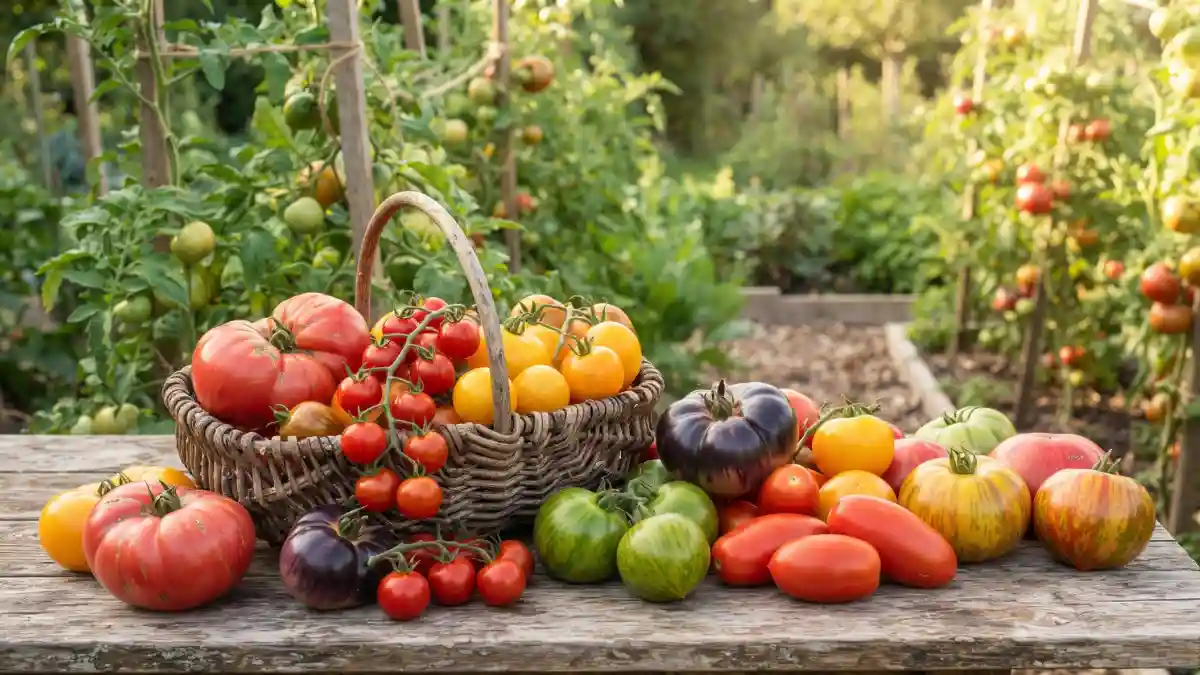
Walk into any farmers’ market in summer and you will see it right away: tomatoes in red, orange, yellow, green, purple, even striped. Some are as small as a marble, others as big as a softball. The world has more than 10,000 tomato varieties, and every one of them has a different flavor, shape, growth habit and ideal use in the kitchen.
Some tomato varieties produce small, sweet fruits that are perfect for snacking, while others develop large, juicy tomatoes ideal for sandwiches, salads, and homemade sauces. Certain plants remain compact and produce most of their harvest within a relatively short period, while others continue growing and producing tomatoes throughout the growing season.
That is great news for gardeners, and slightly overwhelming too. Which tomato varieties are easiest for beginners? Which ones give the sweetest snacking fruit? Which are best for sauce, slicing, or a small balcony pot?
This guide answers all of that. You will learn how tomato varieties are classified, the difference between determinate tomato varieties and indeterminate tomato varieties, the charm of heirloom tomato varieties, the sugar-bomb appeal of cherry tomato varieties, plus the best picks in every category and how to match them to your garden. Bookmark this page before your next seed order.
What Are the Main Tomato Varieties?
Tomato varieties are grouped in three main ways:
- By growth habit: determinate (bush), indeterminate (vining) and semi-determinate.
- By origin: heirloom, hybrid (F1) and open-pollinated.
- By fruit type and use: cherry, grape, slicing, beefsteak, plum/paste and specialty.
Most tomato varieties fit into one of each group’s categories. For example, Sungold is an indeterminate hybrid cherry tomato, but Roma is a determinate paste tomato. Once you grasp these labels, any seed packet will be straightforward to read.
How Are Tomato Varieties Classified?
1. Growth habit: Determinate vs Indeterminate
This is the most significant label for garden design because it determines plant size, harvest date, and the amount of support required. We go into detail about it below.
2. Heirloom, hybrid and open-pollinated
- Heirloom: open-pollinated varieties passed down for generations (commonly 50 years or more). Seeds saved from the fruit grow true to type.
- Hybrid (F1): a deliberate cross between two parent lines, bred for traits like disease resistance, uniform fruit or high yield. Saved seeds will not match the parent.
- Open-pollinated: pollinated naturally by wind, insects or the flower itself, so seeds breed true. All heirlooms are open-pollinated, but not all open-pollinated tomatoes are old enough to be called heirlooms.
3. Fruit size, shape and use
- Cherry and grape: small, sweet, snackable.
- Slicing: medium to large, juicy, perfect for sandwiches.
- Beefsteak: very large, meaty, with few seeds relative to flesh.
- Paste/plum: dense, low-moisture flesh ideal for sauces and canning.
- Specialty: stuffing tomatoes, tomatoes for drying, and novelty colors.
Determinate vs Indeterminate Tomato Varieties at a Glance
| Feature | Determinate | Indeterminate |
| Plant size | Compact, usually 3 to 4 ft | Tall, 6 to 12 ft or more |
| Growth | Stops at a set height | Keeps growing until frost |
| Harvest window | Concentrated, 2 to 3 weeks | Extended, many weeks to months |
| Staking/caging | Light cage or none | Strong stake, trellis or cage |
| Pruning | Little to none | Regular sucker removal helps |
| Best for | Containers, canning, small spaces | Fresh eating all season, big gardens |
Determinate Tomato Varieties: Compact Plants, Big Harvest Days
Determinate tomato varieties reach a genetically fixed height, form flowers at branch tips, and then ripen most of their fruit within one relatively short, concentrated period of time. Consider them to be “bush” tomatoes. If you want a large batch for sauce, salsa, or canning, or you grow on a balcony or in pots, determinate varieties are hard to surpass.
Why grow determinate tomato varieties?
- They stay compact, so they suit containers and small beds.
- Fruit ripens at about the same time, which is ideal for preserving.
- They need less staking and almost no pruning.
- Many mature earlier than vining types, which helps in short-season climates.
One caution: do not prune the suckers on determinate plants. Removing them cuts the number of fruiting branches and lowers your yield.
Best determinate tomato varieties
Roma side. The traditional paste tomato. Roma yields abundant harvests of dense, fleshy, plum-shaped tomatoes with minimal seeds, making them perfect for sauce-making and home canning. Resistant against verticillium and fusarium wilt.
Rutgers. A renowned heritage cultivar originated in New Jersey during the 1930s. It yields deep-red, medium-to-large fruits with a rich, balanced flavor, making them ideal for slicing or cooking.
Star. Often categorized as determinate or semi-determinate, Celebrity is a reliable, disease-tolerant, versatile variety yielding consistent, flavorful slicing tomatoes. An excellent initial option.
Terrace and Tiny Tim. Dwarf varieties bred for containers. They remain below 2 feet yet produce ample cherry-to-small slicer fruit on a bright balcony in sunlight.
Alpine Fresh. Selected for robust disease resistance and consistent, firm red fruit that retains quality well after harvest.
Warmthmaster. A determinate variety developed to keep producing fruit during hot conditions, useful in areas where many tomatoes shed their blossoms because of heat.
Indeterminate Tomato Varieties: Vining Plants, Months of Fruit
Indeterminate tomato varieties continue to grow, blossom, and fruit until frost or disease stops their season. They are the vines you see reaching eight feet up a trellis, filled with fruit at various stages of ripeness. Most heirlooms, cherry tomatoes, and many of the best-tasting slicers are appropriate here.
Why grow indeterminate tomato varieties?
- You get a steady supply of fruit for weeks or months instead of one flush.
- They tend to produce more total fruit per plant over the season.
- Vertical growing saves ground space in a small garden.
- Many of the most flavorful varieties are indeterminate.
How to support and prune indeterminate plants
Prepare for stature from the outset. Pick a strong 6 to 8 ft stake, a livestock-panel trellis, or a tall, sturdy cage; flimsy cone cages sold in stores may frequently fail. Loosely secure stems with soft cloth or string as they climb.
Remove suckers, the little shoots emerging in the “V” where the main stem meets a branch, to control plant size and promote better overall airflow. Remove suckers early with clean fingers or snips, and avoid pruning wet plants to lessen the spread of disease.
Best indeterminate tomato varieties
Better Boy. A reliable red hybrid giving large, smooth, flavorful fruit and strong disease resistance.
Big Boy. The nostalgic backyard favorite. Large, classic red slicers with old-fashioned flavor and good productivity.
Early Girl. One of the best early tomatoes. Medium-sized fruit ripens in roughly 50 to 60 days from transplanting, ideal for short seasons.
Brandywine. The most famous heirloom of all. Huge pink fruit with a rich, complex, sweet flavor, though yields are modest and the season is long.
San Marzano. The legendary Italian sauce tomato. Long, pointed, low-seed fruit with a sweet, mellow taste and thick flesh.
Sungold. An orange cherry hybrid so sweet it is nearly candy. Extremely productive and a must for any snacking garden.
Amish Paste. A large, oxheart-style paste heirloom with juicy, sweet flesh that works for both slicing and sauce.
Semi-Determinate Tomato Varieties: The Middle Path
Semi-determinate cultivars grow larger than determinates but do not continue to vinify indefinitely like indeterminates. They provide a longer harvest than a pure bush tomato in a package that is more manageable than a massive vine. Many recent hybrids fall into this category, and seed catalogues may simply call them as “determinate” or “indeterminate,” thus referring to the plant description for expected height.
Heirloom Tomato Varieties: Flavor, History and Wild Color
When you have once tasted a tomato that seemed to capture the essence of summer itself, it was quite possibly one of those heirloom tomato varieties. Heirloom tomatoes are open-pollinated varieties cultivated, selected, and shared by families and communities for many generations. People cherish them for their rich, layered flavor and uncommon colors and shapes.
Why choose heirloom tomato varieties?
- Outstanding taste. Many heirlooms balance sugar and acidity in a way supermarket tomatoes rarely match.
- Seed saving. Save seeds from your best fruit and they will grow true next year, saving money and preserving genetic diversity.
- Rainbow of colors. Pink, purple, black, green-when-ripe, yellow, orange, white and striped.
- Story and heritage. Many have fascinating histories, which makes them great conversation pieces.
The trade-offs
Heirloom plants are often more disease-prone and less consistent than modern hybrids. They might split, scar, or develop catfacing, and harvests can be reduced. The fruit tends to be softer, making it less suitable for shipping or long-term storage. Gardeners often find its flavor worth overlooking every imperfection.
Best heirloom tomato varieties
Brandywine (pink, red, yellow). A benchmark for rich tomato flavor and a gardener favorite for decades.
Cherokee Purple. A dusky rose-purple beefsteak with a smoky, sweet taste and juicy flesh. One of the most popular heirlooms in the world.
Black Krim. A dark, mahogany-shouldered tomato from Crimea with a slightly salty, rich flavor. Handles heat reasonably well.
Green Zebra. Lime-green fruit with darker green stripes and a bright, zesty, tangy taste. Ripe when it softens and gets a yellow blush.
Mortgage Lifter. A giant, pink, meaty slicer with a mild, sweet flavor and a famous backstory about paying off a house with plant sales.
German Johnson. A large, pink-red beefsteak with a robust, old-time flavor and good yields for an heirloom.
Oxheart. Heart-shaped fruit that can weigh a pound or more, with thick flesh and few seeds.
Moneymaker. An English heirloom that has long been valued for reliable fruiting and decent disease tolerance.
Mr. Stripey (Tigerella). Yellow-and-red marbled beefsteaks with a mild, low-acid, fruity taste.
Cherry Tomato Varieties: Small, Sweet and Super Productive
Few pleasures in the garden are as delightful as stepping outside and popping a warm, sweet fruit straight into your mouth. That is the appeal of cherry tomato varieties. These are among the simplest tomatoes to cultivate, mature early, and keep producing abundantly, making them ideal for beginners, children, and anyone with restricted amounts of garden space.
Why grow cherry tomato varieties?
- Reliable, high yield from just one or two plants.
- Naturally high sugar content for snacking, salads and roasting.
- Better tolerance of heat and uneven watering than most big tomatoes.
- Excellent for containers, hanging baskets and vertical gardens.
Cherry vs grape vs currant Tomatoes
- Cherry: round, about 1 inch across, juicy and sweet.
- Grape: oval and slightly firmer, with thicker skin and a long shelf life.
- Currant: tiny, pea-sized fruit with intense flavor, often from wild-type plants.
Best cherry tomato varieties
Sungold. Orange, incredibly sweet, fruity and tropical in flavor. It is often named the best-tasting cherry tomato ever bred. Crack-prone if watering is irregular.
Sweet 100 / Sweet Million. Prolific red cherry tomatoes that produce in huge trusses of 50 to 100 fruits. Reliable and very sweet.
Supersweet 100. An improved, disease-tolerant relative of Sweet 100.
Black Cherry. A deep, brownish-purple heirloom cherry with rich, complex, almost smoky sweetness.
Juliet. A grape-type hybrid with long, glossy fruit that resists cracking and stores for weeks.
Matt’s Wild Cherry. A tiny, red, wild-type cherry with intense sweet-tart flavor and vigorous growth, good for hot, dry weather.
Yellow Pear. A heirloom with cute, pear-shaped yellow fruit and mild flavor, great for salads.
Tumbling Tom and Tumbler. Compact, trailing plants that perform beautifully in hanging baskets and window boxes.
Slicing and Beefsteak Tomato Varieties
If you love building the perfect sandwich or burger, you need large, juicy fruit.
- Slicers (Better Boy, Celebrity, Big Beef) produce medium-large, round fruit with a balance of juice and flesh.
- Beefsteaks (Brandywine, Cherokee Purple, Mortgage Lifter) produce very large, irregular fruit that can weigh over a pound.
Beefsteak plants usually need a longer season and more care, so give them rich soil, consistent water, and strong support.
Paste and Plum Tomato Varieties for Sauce and Canning
Paste tomatoes have thick, dense flesh with fewer seeds and less water, so they cook down into rich sauce faster. Top choices include Roma VF, San Marzano, Amish Paste, Opalka and Plum Regal. If your goal is a freezer full of marinara, plant paste varieties, and consider a mix of determinate types for a big batch and indeterminate types for a longer picking window.
Tomato Varieties for Indian Gardens and Warm Climates
If you are gardening in India or another warm region, heat tolerance and disease resistance matter more than almost anything else. Tomatoes generally set fruit best when night temperatures stay roughly between 15 and 21 °C and struggle with blossom drop in extreme heat. In many parts of India, the cooler months are the best window for planting.
Well-known Indian varieties and hybrids include Pusa Ruby, Arka Vikas, and Arka Rakshak, a high-yielding hybrid bred for resistance to key diseases. Local seed shops and agricultural universities can recommend the best-performing tomato varieties for your district. For hot climates worldwide, look for heat-set labels such as Heatmaster, Solar Fire or Black Krim.
How to Choose the Right Tomato Varieties for Your Garden
Ask yourself these questions before you buy seed:
- How much space do I have? Small balcony or pots: choose determinate or dwarf varieties. Big beds or a trellis: indeterminate tomato varieties will pay you back.
- What will I use them for? Sauce and canning: paste types. Salads and snacks: cherry tomato varieties. Sandwiches: slicers and beefsteaks.
- How long is my growing season? Short season: early varieties like Early Girl or Stupice. Long season: late heirlooms like Brandywine.
- What diseases are common where I live? Choose varieties with resistance codes on the label.
- Do I want to save seeds? Pick open-pollinated or heirloom tomato varieties.
A smart strategy is to plant a mix: one or two reliable hybrids for guaranteed harvests, a few heirloom tomato varieties for flavor, and a cherry plant for constant snacking.
Growing Tips That Work for Almost All Tomato Varieties
Start with strong seedlings
Sow seeds indoors about 6 to 8 weeks before your last frost, or buy healthy, stocky transplants. Bury the stem deep when planting, since tomatoes root along the buried stem and become stronger plants.
Give them sun and space
Tomatoes need at least 6 to 8 hours of direct sun. Space determinate plants about 18 to 24 inches apart and indeterminate plants 24 to 36 inches apart so air can circulate.
Feed the soil
Work in plenty of compost before planting. Use a balanced fertilizer at transplanting, then switch to one lower in nitrogen and higher in phosphorus and potassium once flowering starts, so you get fruit instead of just leaves.
Water deeply and evenly
Erratic watering causes blossom end rot, cracking, and splitting fruit. Irrigate thoroughly at plant bases early each morning, then mulch around them to maintain consistent moisture levels. Tomatoes in pots dry fast, so check them daily during warm weather.
Prevent problems early
- Rotate tomatoes so they do not grow in the same spot more than once every three years.
- Avoid overhead watering to reduce fungal disease.
- Remove lower leaves that touch the soil.
- Inspect plants weekly for pests such as hornworms, whiteflies and aphids.
Harvest at the right time
Pick tomatoes when they are fully colored and slightly soft to the touch. Do not refrigerate them, since cold dulls flavor and damages texture. If frost is coming, harvest green fruit and ripen it indoors.
Common Mistakes When Choosing Tomato Varieties
- Ignoring the growth habit. A giant indeterminate in a small pot will disappoint you.
- Buying only for looks. A dramatic color is no use if the plant is not suited to your climate.
- Skipping disease resistance. Heirlooms are lovely but can struggle in humid, disease-prone areas.
- Planting too early. Cold soil stunts plants and stalls growth.
- Overcrowding. Dense plants trap moisture and invite disease.
Final Thoughts: Your Perfect Tomato Is Out There
Among thousands of tomato varieties, the ideal choice depends on your available space, local climate, and personal taste. Pick determinate tomato varieties, including Roma and Rutgers, for compact plants and plentiful sauce-making harvests. Plant indeterminate tomato varieties such as Better Boy, Early Girl, and San Marzano for months of fresh produce. Plant heirloom tomato types like Brandywine and Cherokee Purple for exceptional flavor, and include a Sungold or Sweet 100 with cherry tomato cultivars for easy summer garden snacking straight off the vine.
Begin with three or four types this season, record what flourishes, and expand the range next year. Soon, you will have your very own personal list of the finest tomato varieties.
Certainly! If you’d like to learn more, please consider following our WhatsApp Channel, Facebook, Instagram, YouTube, Twitter, and Pinterest.
Frequently Asked Questions About Tomato Varieties
Q1: How many tomato varieties are there?
A1: There are more than 10,000 recognized tomato varieties worldwide, including heirlooms, hybrids and open-pollinated types, in every size, color and shape.
Q2: What is the difference between determinate and indeterminate tomato varieties?
A2: Determinate tomato varieties grow to a set height and mature most fruit all together, making them suitable for containers and canning. Vining tomato types continue growing and fruiting until frost, providing an extended harvest but requiring sturdy support and occasional pruning.
Q3: Which tomato varieties are best for beginners?
A3: Easy choices include Celebrity, Better Boy, Early Girl, Roma VF and Sungold. They are productive, widely available and resistant to common diseases.
Q4: Which tomato varieties are best for containers?
A4: Choose determinate or dwarf types such as Patio, Tiny Tim, Tumbling Tom and Roma. Use a pot of at least 5 gallons for full-size plants and make sure it has good drainage.
Q5: Are heirloom tomato varieties better than hybrids?
A5: Heirlooms are often more flavorful and let you save seeds, but hybrids usually offer stronger disease resistance and higher, more uniform yields. Neither is “better” in every case, so many gardeners grow both.
Q6: What are the sweetest cherry tomato varieties?
A6: Sungold, Sweet 100, Supersweet 100 and Black Cherry are among the sweetest cherry tomato varieties. Sungold is widely considered the top choice for sweetness.
Q7: What are the best tomato varieties for sauce?
A7: San Marzano, Roma, Amish Paste and Opalka are top picks because of their meaty flesh, low moisture and few seeds.